
Turning a Blind Eye. How West Yorkshire Combined Authority Helps Local Police to Evade Accountability.

In this blog post you will learn how local authority organisations tasked with holding the police to account will fail to do so. Because even when there is significant evidence of misconduct on the part of the force, including attempts to suppress a reasonable investigation, the supervisory organisation will ignore this and prefer instead their own tick box review of police misconduct which fails to address or examine the policeโ€™s deliberate mishandling of a complaint.

The issues raised concern West Yorkshire Police and West Yorkshire Combined Authority.

One of the issues we continue to return to in this blog is the inability of supervisory organisations to be able to hold other organisations lower down the food chain to account.

This occurs for a number of reasons. In this matter it is both historically the case that locally based organisations tasked with holding West Yorkshire Police to account are incapable of doing so, but also when such organisations commit an error in their own review of an investigation they ignore the error in any subsequent correspondence. At all stages the emphasis is maintenance of public confidence in the police complaint system, which results in a failure to properly examine and investigate complaints raised with proper rigour.

This matter concerns West Yorkshire Combined Authority and their inability to be able to hold West Yorkshire Police to account when the policeโ€™s Professional Standards Department Standards Dept. fail to properly investigate a complain. Indeed even when they appear to have deliberately scuppered a complaint investigation WYCA do nothing. The authorityโ€™s website states that one of their functions is โ€œholding the Chief Constable to accountโ€ categorically this is not true. When an instance of abuse of power or process occurs WYCA look the other way.

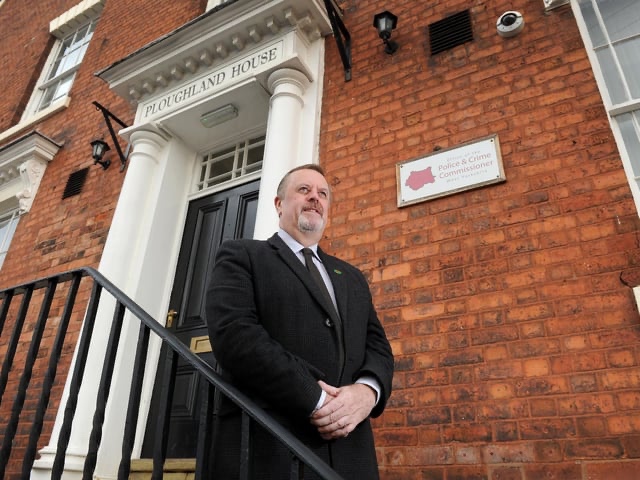
Alison Lowe OBE is the West Yorkshire Deputy Mayor for Policing and Crime (DMPC). She is pictured below. The supervision of the local force is her responsibility and ultimately that of West Yorkshire Mayor Tracy Brabin.

Alison Lowe is currently the person next in line responsible for supervision of police after the local mayor.

But first letโ€™s travel back into the mists of time. 

Prior to West Yorkshire Combined Authority taking over supervision of police complaints in relation to West Yorkshire Police there existed a Police and Crime Commissioner. This was Mark Burns-Williamson.

During his time as police and crime Commissioner for West Yorkshire he proved not only significantly gaffe prone but also incapable of holding West Yorkshire Police to account.

The reason for this inability to hold the force to account is widely known. Burns-Williamson was involved in a messy love triangle in which he wrote an unfortunately worded letter to his rival. This matter was suppressed by West Yorkshire Police DI Simon Bottomley and since then until the end of his tenure in post in 2021 Burns-Williamson would avoid using PCC powers to hold the force to account. He was literally caught by the nuts by West Yorkshire Police who because of their suppression of the complaint about the letter had a significant hold over him. This prevented the Police and Crime Commissioner from fully exercising their reasonable duties in holding Police to account.
The Burns-Williamson inaction figure is available in bearded and clean-shaven variants. Optional dodgy contents of his office safe play set also available!

Burns-Williams time as commissioner was characterised by a series of notorious exposures of misconduct in public office on the part of the organisation he was tasked with supervising. West Yorkshire Police have an international reputation for incompetence and dishonesty practiced even on those in their own ranks and the period of a Police and Crime Commissioner supposedly supervising them was characterised by a new intensity of incompetence, corruption and smearing from all levels of the force.  

Now let us move forward to the present. 

The College of Policing publishes a Code of Ethics, which is routinely ignored and in fact the subject of of humour amongst many police forces. It also provides a series of guides of behaviour and conduct that it deems reasonable for officers to be able to show in the course of their duties. This covers a number of different aspects of policing and is in effect a Code of Conduct broadly similar to The Highway Code in that it provides a structure of behaviour that would give the public confidence they are being policed correctly. The more an officer adheres to what the College of Policing guidelines are in a situation the less likely it is that they will go off on their own tangent and open themselves and their Chief Constable to a charge of misconducting themselves.  

One of these guidelines covers how officers should conduct themselves when undertaking visits to the home of a member of the public. The code is clear in how officers should behave when on home visits.

This isnโ€™t photoshopped.
A lot of modern Plods really are this out of condition!

In an October 2020 visit to a member of the publicโ€™s home two officers of West Yorkshire Police attended. One of them breached the guidance in a clear and obvious way. So clearly in fact that the breach was obvious to all, including the colleague they attended with. This was subject to a complaint to West Yorkshire Police made shortly afterwards.

Complaints to West Yorkshire Police are examined and considered โ€“ although more often than not dismissed on spurious grounds โ€“ by their Professional Standards Department. The logic of allowing police to investigate themselves is perhaps better left to others to explain.

In this matter they did three things to dishonestly skew the complaint in their favour. The three facts below represent a salutary warning to anyone who makes a complaint regarding the police that they will seek to loose evidence not in their favour and misdirect the investigation.

One

A complaint of the breach of the Code was made shortly after the visit. The officers in attendance wore body worn video, which could have proved the substance of the complaint to be factually accurate. But the body worn video was allowed to be destroyed before being viewed by Professional Standards Department at West Yorkshire Police. No attempt to retain the material for viewing was made. Thus the first piece of clear evidence that misconduct occurred on the home visit was lost. Likely deliberately.

Two

Significantly also a witness present at the home address during the visit was not questioned or approached in any way by police investigating the complaint. Again as with the loss of the body worn video footage this likely occurred to skew the process of the complaint investigation in favour of West Yorkshire Police exonerating the officer whose conduct had been highlighted. In the same way police failed to interview the other officer not subject to the complaint of a breach of the Code. Again this is deliberate action to skew the complaint investigation in the policeโ€™s favour.

Three

Then in the most devious manipulation of the complaint process West Yorkshire Police misdirected the complaint by investigating the officer who had not committed the breach of The College of Policing guidance rather than the one who clearly did. This together with the destruction of body worn video footage – which would have proven the complaint was factually sound – and the refusal to approach a witness to the facts are suggestive of an organisation which has attempted to suppress an investigation which would have found against one of their officers.

This is not however a new thing for West Yorkshire Police. Their Professional Standards Department standards department has dozens of different ways of minimising, trivialising, diffusing and reducing a complaint to the point where, however reasonable and valid it may be, the matter will not be investigated or assessed with rigour due to it. The point of this is of course the maintaining of professional reputation.
What price police reputation and integrity? Well at the moment about the same as this old badge goes for on eBay.

The 2021 independent report into the murder of journalist Daniel Morgan and the failure to solve the crime by the Metropolitan Police defined institutional corruption as:

“Concealing or denying failings, for the sake of the organisation’s public image, is dishonesty on the part of the organisation for reputational benefit and constitutes a form of institutional corruption.”

In circumstances large or small the police are prepared to manipulate cynically the complaints system in order to get officers off the hook. And in such situations the need for reasonably effective and careful supervision of police Professional Standards Departments is clear.

However staff at West Yorkshire combined authority specifically the Deputy Mayorโ€™s office, who are tasked with supervision of police complaints where the complainant seeks review, seem to be suffering an unfortunate hangover from the days of Mark Burns-Williamson.

Police failed to find in favour of the complainant. The mishandling of the complaint worked rather well for them. So the matter was referred to the Deputy Mayorโ€™s office at West Yorkshire Combined Authority. This is the next stage in the procedure of the complaints process. 

The matter was initially assessed and investigated by Karen Grey of West Yorkshire Combined Authority. 

And important fact to remember in relation to any complaint that you may refer to such as a Police and Crime Commissioner, a local authority, or The Independent Office of Police Complaints is that the matter that was originally under investigation by the policeโ€™s Professional Standards Department will not be investigated again.  

This means that police can misdirect any complaint made about their behaviour at the initial stages of that complaint and that the later appeals stages will not look for or attempt to correct those errors. The complaints system is being tactically gamed therefore to maintain the policeโ€™s professional reputation. Local authority organisations and IOPC are assisting in this.

The body tasked with review of the Police findings in respect of a complaint will conduct a tick box exercise which is essentially to review if the police have fulfilled their own tick-box exercise within their earlier complaint investigation. There will be no investigation into egregious breaches of procedure or abuse of process.

In keeping with this the investigation of the wrong person was missed by Karen Gray. The destruction of body worn video footage barely warranted a mention and the failure to interview a witness or the other officer present likewise. In short the means by which West Yorkshire Police had skewed the investigation, by dishonest means and to evade finding against one of their own officers for a breach of the College of Policing Code, were ignored by the review process.

This does not in anyway represent effective oversight of the policeโ€™s own handling of complaints. The same personnel who were present when the organisation was the Police and Crime Commissioner up until 2021 have moved to the new Combined Authority / Mayorโ€™s office. Given that the reasons PCC Mark Burns-Williamson was incapable of holding police to account are well-known Iโ€™m forced to ponder what the WYCAโ€™s excuse for the same lamentable lack of diligence is?

The suboptimal nature of the Combined Authorityโ€™s review of the police handling of a complaint, the critical facts of West Yorkshire Policeโ€™s own purposeful mishandling of the complaint in order to draw conclusions that police had handled the complaint in line with their obligations

A further review by Julie Reid, Head of Policing and Crime at West Yorkshire Combined Authority, failed to acknowledge that Karen Grey had made any errors in the handling of the complaint. So in effect then while the original complaint was subject to malfeasance from police, the complaint to WYCA about Grayโ€™s mishandling of the original matter was also covered-up.

The ultimate price of this is paid by the public of course. While police are able to cover up misdeeds with impunity and the review organisation also fails to admit it has failed to spot key errors in its own investigation the standard of policing will never improve
An Easter Miracle!

Only around one in ten complaints made to the police of poor conduct, breach of the College of Policing Code of Ethics etc. are found in favour of the person whoโ€™s complained.

This is because poor, ineffectual and incompetent investigations into complaints are par for the course from police forces. The more misconduct thatโ€™s happening in a force the greater the urgency to suppress public admittance of this by mishandling complaints.

The mantra is โ€œWe investigated ourselves and found nothing wrongโ€. Every police force does this.

As a police force West Yorkshire Police has more to hide than most. Theyโ€™ve an international reputation for corruption and incompetence but also an obsession with maintaining a public image. Consequently obtaining agreement from them about their low standards of policing requires more of an effort than with most other forces.

In this instance however they were banged to rights.

A transcript of a online live chat with an officer left them with no wriggle room. This is proof of why all your interactions with the police should always be recordedโ€ฆ because the first instinct of most police officers when caught out is to lie.

The report made concerned a crime committed in the breach of s.92 of The Care Act 2014 (as amended). Wakefield Council had knowingly as a care provider created false information on a person receiving care in their area. This is a criminal offence under the Act.

Iโ€™ll write more on this in a blog entry one day soon.

Note also the length of the replies given. When police are trying to hide something in a complaint response they avoid discussing the subject, fail to speak to relevant people and avoid issues theyโ€™d find uncomfortable to discuss. Here, as I said, a transcript of the chat means they canโ€™t avoid making a finding against themselves.

It should be noted that police have still failed to investigate this offence reported. So despite an unusual degree of honesty seen below itโ€™s still a case of โ€œbad cop – no donut for youโ€.

I present the Professional Standards Department response in full with a few small redactions.


From: Allen, Gemma <gemma.allen@westyorkshire.police.uk>
Sent: 14 April 2022 07:32
To: XXXXXX
@XXXXXX <XXXXXXXXXX>
Subject: Your complaint to West Yorkshire Police [OFFICIAL]

Classification: OFFICIAL

Dear Mr. XXXXX,

I refer to the complaint that you made to West Yorkshire Police. I am sorry that you have felt dissatisfied with the service offered by West Yorkshire Police on this occasion and, where we can, seek to learn from feedback offered by members of the public.

I can confirm that this matter has been recorded in accordance with the Police Reform Act 2002 under Complaint reference CO-2675-21. Please quote this reference number in any future correspondence regarding your complaint arising from the same matter.

It has been established that your complaint raised the following concerns / allegations. In response, I have made reasonable and proportionate enquiries into this matter and can offer you the following explanation of the enquiries conducted, what facts have been established, the outcome and any proposed action to be taken:  

Complaint 1: Delivery of duties and services

Employee concerned:  Staff member 730037 Maroof

Details of allegation:

You state that the call taker has incorrectly referred you to the council to make a complaint whom you state have committed a criminal offence under The Care Act.

The operator has asked you to provide evidence that the councilโ€™s acts were purposeful and fraudulent however you believe that this should be the role of the police and is not your responsibility.  

Enquiries conducted: 

The details of the Police chat transcript have been reviewed. 

The call taker, staff member 730037 Maroof has been requested to provide a response.

The Department of Health guidance for providers regarding The False or Misleading Information Offence has been reviewed.

I have consulted with The Police National Legal Database (PNLD). 

A request for review has been made to The Force Crime Registrar. 

Facts established: 

The Police chat transcript shows that you have made an allegation to West Yorkshire Police that Wakefield Council have produced a social care document which includes the purported current health situation of a family member which is out of date. You state that your family members health has deteriorated over the past year and yet old records have been used to produce the report. You report that you believe this was an intentional act by a social worker as it was likely to avoid the provision of social care for the patient who would otherwise be identified as having clear social care needs. The chat transcript shows that the call taker, 730037 Maroof sought advice and directed you to make a formal complaint against the council in the first instance. You state to the call taker that the โ€œArticle 16 right to restrict the processing of the data has been applied.โ€

The call taker, 730037 Maroof has responded to your complaint to state that he felt that referring you to the Councils complaints process was an appropriate response at the time. The call taker has expressed his apologies if his assessment of the information was incorrect. 

It has been confirmed that The Care Act 2014 has put in place a new criminal offence applicable to care providers who supply, publish or otherwise make available certain types of information that is false or misleading, where that information is required to comply with a statutory or other legal obligation. The offence is contained at Section 92 of the Care Act 2014. FOMI is a criminal offence and the investigating body for that offence will be the police, conducted in line with the โ€œThe Director’s Guidance On Chargingโ€. The police can pursue all reasonable lines of enquiry. FOMI is a strict liability offence that applies to providers of care services as corporate bodies or partnerships. This means that a prosecutor has to prove that the information was, as a matter of fact, false or misleading, but does not have to prove that there was intent to provide false or misleading information on the part of the corporate body or partnership.

The Police National Legal Database (PNLD) outlines that Section 92 of the Care Act 2004 creates an offence so that providers of health services and adult social care in England, which supply, publish or otherwise make available information that is false or misleading, could be subject to criminal sanctions. The offence applies to a care provider as a corporate body.

92(1) A care provider of a specified description commits an offence if –

(a) it supplies, publishes or otherwise makes available information of a specified description,
(b) the supply, publication or making available by other means of information of that description is required under an enactment or other legal obligation, and
(c) the information is false or misleading in a material respect.

However, it is stated in law that it is a defence for a care provider to show that it took all reasonable steps and exercised all due diligence to prevent the provision of false or misleading information as mentioned in subsection 1. This means that if the Council have already taken reasonable steps to rectify the matter then the offence has not been committed. By taking steps to restrict the data by invoking Article 18 of the General Data Protection Regulation (GDPR) which provides an individualโ€™s right to restrict the processing of the data, they have fulfilled this responsibility. Article 16 of GDPR then covers the rectification of the data.

Detective Chief Inspector (DCI) Fraser from the Force Crime Registrar has reviewed the matter and confirmed that your report is a state based crime therefore the Police only have to record the offence when the relevant โ€œpoints to proveโ€ are made out. Unlike victim based crimes the Police do not have to record these offences at the point they are reported.

Finding: The service level was not acceptable under the circumstances

Rationale: 

The information you have provided on the chat record shows that the matter has been reported to the council and that they have already taken reasonable steps and exercised due diligence in restricting the data. The matter does not require recording or further investigation at this time. 

My enquiries show that Call taker Maroof has attempted to ask reasonable questions during your chat report when he has asked you if you have evidence to prove that it was done purposely and fraudulently. The call taker appears unfamiliar with Police Procedures around reporting of potential state based offences however he is not a Police Officer and could not reasonably be expected to know that the offence of FOMI does not require criminal intent on the part of the perpetrator. The call taker has attempted to seek advice whilst you remained on the chat facility and it appears he has been given information which has led him to make a recommendation that you should firstly report the matter to the council. His assessment would have been reasonable and proportionate under the circumstances if you had not already provided information to suggest that you had already reported the matter to the council. It appears that the matter was not fully understood and that you required further clarification before the chat was ended. It would have been more helpful to your understanding for the call taker to refer you for an appointment with a Police Officer so that the outcome could be fully understood and explained in more detail.

In conclusion, it is considered that learning has been identified in respect of this complaint.

Outcome/Action: Learning from Reflection

Details: An opportunity for learning has been identified which has been provided to the call taker through his direct supervisor.

Complaint 2: Individual behaviours

Employee concerned:  Staff member 730037 Maroof

Details of allegation: You state that the call taker terminated the chat abruptly with no explanation

Enquiries conducted: 

Call taker Maroof has been requested to provide a response. 

The chat transcript has been reviewed. 

Facts established: 

Call taker Maroof has responded to state that due to time passed he cannot fully remember his reasons for ending the chat at the time. After review of the transcript he states that he may have felt that he had advised you what to do and so believed the chat could be closed. It may have been that you had gone offline after receiving his response so he assumed it was completed. He added that he canโ€™t say for sure given the time that has passed but either way he does not think that he gave โ€œno explanationโ€ as he clearly provided advice on what you should do.

The chat transcript shows that the chat was ended 20 seconds after the call takers last response to you.

Finding: The service level was not acceptable under the circumstances

Rationale: 

The outcome of this complaint should be read in conjunction with the information provided in Complaint 1. Although the call taker has remained respectful throughout the chat, it does appear that you had not been provided with a sufficient explanation of the outcome or the opportunity to understand the advice provided. This is believed to be because the call taker did not fully understand the police procedures around state based crime reporting.  

In conclusion, it is considered that learning has been identified in respect of this complaint.

Outcome/Action: Learning from Reflection

Details: An opportunity for learning has been identified which has been provided to the call taker through his direct supervisor

It is considered that reasonable and proportionate enquiries have been made into this matter. The issues you raise in your complaint do not justify criminal or disciplinary proceedings against any officer concerned and therefore the matter has not been considered by the Crown Prosecution Service. 

You have the right to a review of the above decision. Should you wish to request this, please contact the below review body by the 13th May 2022. Please quote the relevant complaint reference number (above) if you request a review. 

Due to the wording of your initial complaint, the review body is: 

West Yorkshire Mayorโ€™s Office for Policing and Crime. Should you wish to request a review, please contact:https://www.westyorks-ca.gov.uk/policing-and-crime/complaints-and-conduct.

Please accept my apology on behalf of West Yorkshire Police for any confusion, inconvenience or distress that this incident has caused, and I thank you for bringing this matter to our attention. I hope the above action taken re-assures you that your complaint has been taken seriously and demonstrates West Yorkshire Policeโ€™s commitment to continuous improvement.

I hope that any future contact you may have with West Yorkshire Police will not be adversely affected by this experience.

Yours sincerely,

PC 1449 Allen

Service Review Team

22566

Professional Standards Directorate

*   Email: Gemma.allen@westyorkshire.police.uk

+ Address: West Yorkshire Police, Professional Standards Directorate, Headquarters, WF1 3QP


How South Yorkshire Police Evade Investigating Crimes & Evade Accountability

On Tuesday 22nd of September 2020 I alerted South Yorkshire Police to a crime taking place in their area.

This followed the original reporting of this matter via an online form for just such a purpose. The online form had not received a response some considerable time after being completed, so the appropriate phone call was made.

This call was to the non-emergency number and it took the duration of a trip from Leeds to Bridlington on the East Yorkshire coast for the police to pick up the call, so around one and a half hours.

Finally managing to speak with an officer he disputed that the incident being reported was a crime. In fact I was advised to call South Yorkshire Police in relation to this matter by two other agencies that I had already reported the crime to: they considered the seriousness of the matter sufficient to warrant police attention. The officer spoken to was a PC PC Marc Horsbrough.

In the call Horsbroughโ€™s behaviour and attitude was lazy, gave the impression he couldnโ€™t care less and was reluctant to record the crime even when the relevant legislation was pointed out to him. More seriously he later he called me back and the content of that call amounted to unwarranted personal attack on me and a flat refusal to record a crime.

I should point out at this stage that the crime has now been recorded and the suspect interviewed: further developments are awaited. This took place only after the completion of a futher online form, not via the non-emergency phone service to South Yorkshire Police.

A formal complaint was made to South Yorkshire Police Complaints and Discipline Team:

  1. A complaint of a crime was made. This was done via the online form. That the response from the online form took longer than the 72 hours it states online for any action to be taken in respect of the referral of a crime.   
  2. That the online form had still not been processed some 7 days later.   
  3. That from comments made by Complaints and Dicipline in their email of 2.10.20 it would appear that this online referral has been lost.    
  4. That a series of phone calls were made by me on Tuesday 22.9.20 and Wednesday 23.9.20 to SYP to establish what was happening in relation to the online referral.   
  5. That these calls were either cut off when transferred to the appropriate department or else rang out for an exceptionally long period.   
  6. That on eventually speaking to an officer he stated that he had no copy of the online form in front of him but proceeded to dismiss the referral to SYP as being not something that police would deal with. This is incorrect. CPS guidance has been quoted that clearly shows the activity being reported is a criminal offence. The officer was Marc Horsbrough. working in either the Comms dept or Crime Recording around 12:45 – 1.30pm on 23.9.20.    
  7. That the same officer rang me back several minutes later.  
  8. That his comments on the call back amount to harassment and intimidation. His manner during this second call was offensive, uncivil and harassing.    
  9. That the officer concerned did this solely for the purpose of causing harassment, vexation and distress. On the second call he refused to give his name or service number when asked which is usually indicative of an officer misconducting himself.   

    That overall the standard of conduct in relation to this matter is sufficient to cause loss of reputation for the force. 
      

The complaint was given the reference number CO/665/20.

Calls to and from police stations are recorded on a system called Airwave. When South Yorkshire Police later claimed that they could not trace the officer involved they were simply being disingenuous: the record of all calls will have enabled an easy trace of officer identity and indeed the identity of the officer has been found out by other enquiries.

From 5th of November 2020 to 13th of March 2020 no communication from police was received in relation to this complaint. They additionally failed to respond to emails requesting a progress update. The Police Reform Act 2002 states that police should keep complainants updated every twenty eight days with a progress update on the complaint.

So I wrote to The Independent Office for Police Complaints (IOPC). I have addressed the issue in prior blog entries that IOPC is very significantly staffed by former police officers, and provided the results of a data access request showing this, and so they cannot in any way claim to be “independent”. IOPC wrote back on 23rd of March to state:

“Upon receipt of your correspondence, we contacted the Complaints and Dicipline [sic]Team Department (PSD) of South Yorkshire Police to ascertain the status of your complaint. The PSD have advised that your complaint has been recorded under their reference CO/665/20, and that the investigation of the matter is still live. They stated that they have asked the case handler of your complaint to make contact with you.”

Around a month later still no response from South Yorkshire Police. IOPC cannot investigate a complaint when it is still with the relevant force, meaning that they cannot step in on this matter and compel South Yorkshire Police to act.
So I again wrote to IOPC who stated:

“I have contacted the PSD and asked them to make contact with you and provide an update.”


I then wrote to police a few more times to chase an update on the basis that they had failed to comply with the instructions of their professional regulator. On 15th of June, some three months after IOPC originally made contact with South Yorkshire Police on this matter the following came from George Henson at their Complaints and Discipline Team:

“I can confirm the receipt of your email and I have passed it onto the case handler of your complaint referenced above.”

…which tells me nothing about the progress of the complaint. This was the last communication received from South Yorkshire Police in relation to this matter.

A recent update to The Police Reform Act 2002 states that police are only obligated to inform a complainant when something has taken place in relation to the complaint investigation. As there has been no such update the clear conclusion is that there has been no proper investigation of this matter. We are now over one year elapsed from the complaint being made.

Likely this is because the Airwave system on which calls to and from police stations are recorded retains data for a set period. The failure to investigate this complaint is probably down to South Yorkshire Police attempting to “run down the clock” towards the deletion of this data which will show clear misconduct on the part of one of their officers. This will enable their Complaints and Discipline Team to then dismiss the complaint on the basis of lack of evidence.

The original crime was referred to an Inspector Stephen Fennell and has been investigated, albeit at a very slow pace.

The exceptionally poor service received before this investigation took place suggests anyone living in South Yorkshire who has a crime to report should really not bother. The delays and wasted time attempting to contact police on their non-emergency number and their lethargic attitude which attempts to actively put people off referring a crime are bad enough. However in my case the officer, because I had quoted the relevant section of law at him, took umbrage. His fragile police ego had been dented and his response was to abuse me on a call back and refuse to record the crime. The actions of South Yorkshire Police since have all been directed towards evasion of responsibility for the actions of this officer in a way which breaches their duty of care and obligations to investigate complaints under the relevant law.

The Not-Independent Office of Police Complaints

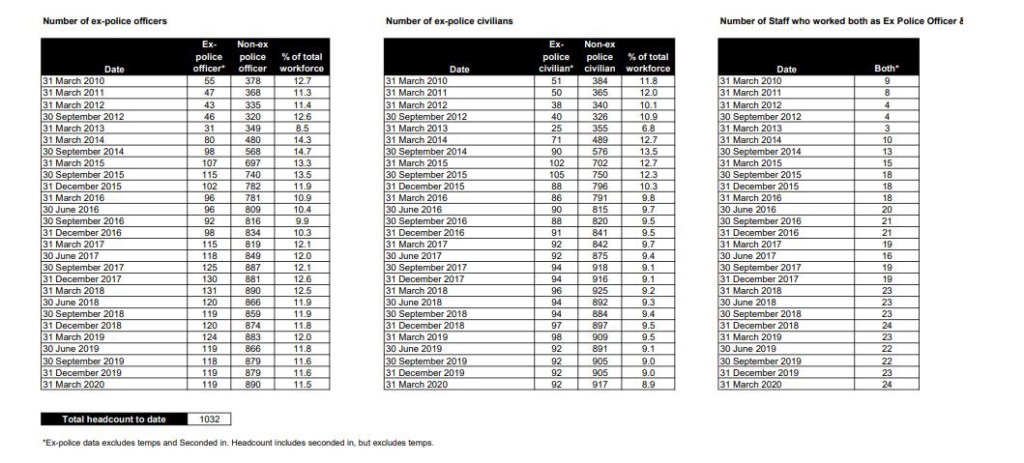
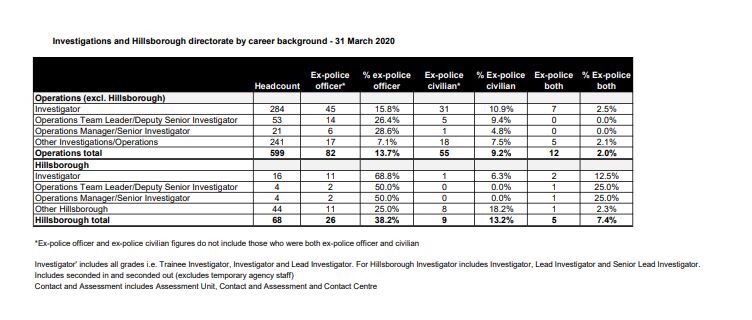
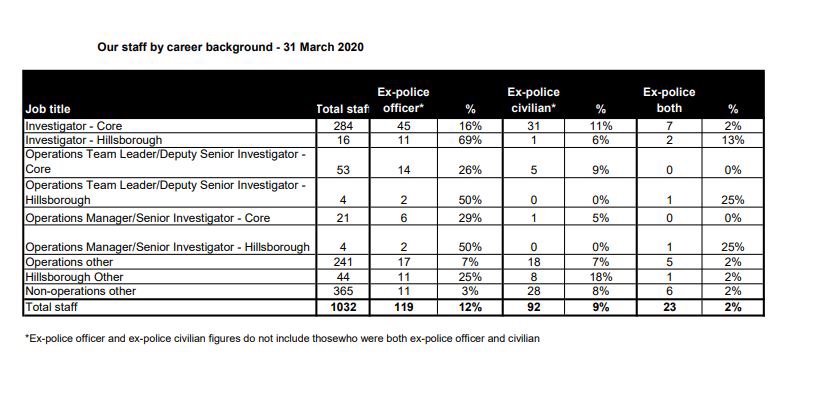
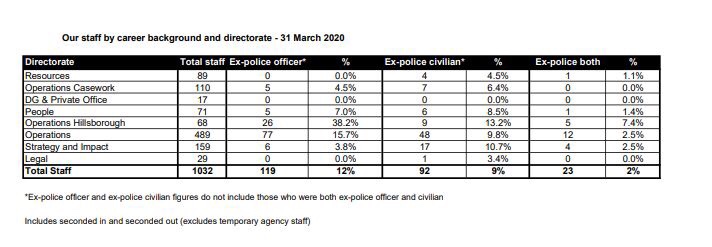
Were you aware of the numbers of former police officers working for the supposedly Independent Office of Police Complaints?

The organisation describes itself on its own website:

We are independent, and make our decisions entirely independently of the police and government.

But a document that IOPC prefers not to draw attention to can be accessed online at:

Copy of IOPC staff diversity stats 310320 FINAL proofread.xlsx (policeconduct.gov.uk)

This shows the – frankly – shocking numbers of former officers and former police civilian staff employed at IOPC. An organisation that is supposed to be independent in relation to complaints made against the police.

Can it really be expected that staff working for IOPC are prepared to justly and reasonably criticise their former force or colleagues they’ve worked with hand in glove for years? Of course not. Thereโ€™s a reason officers on Twitter use the hashtag #PoliceFamily

Indeed the figures speak for themselves: thereโ€™s a roughly one in ten chance of a complaint made about the police being upheld.

In the event of a complaint against the police you would be better off ignoring the police complaints process altogether and moving directly to instruct solicitors.

More seriously in the event of a fatality during contact with the police the staffing ratio of former officers presents a considerable barrier to a free and open investigation of the facts in such serious cases.

Ainโ€™t life in Britain grand!


Top Tips for Aspiring Criminals

Have you ever seen a magician who happens to be very capable at making watches, wallets and suchlike vanish from your pocket or wrist? Itโ€™s quite a sight when someone that capable manages to remove something from your person without you being aware of it.

A friend of mine works for a local police force. Every so often he updates me on all the recent criminal activity theyโ€™ve not been able to stop. Generally itโ€™s quite a lot: theyโ€™re forever behind the curve and not in front of it.

But like with the magician who can remove your watch or wallet in a stage show once you know whatโ€™s happening itโ€™s easier to not let it happen to you. So hereโ€™s a couple of tips which might help you to protect yourself.

There are two big recent growth areas of crime. The first of these is the theft of high powered vehicles. Audiโ€™s seem to be targeted especially at present and are then broken down for parts: Audi spares being especially expensive.

A nice new Audi.
Probably wonโ€™t be there for long!

One village with only about 140 homes was recently targeted. Each night over seven nights two homes were burgled and car keys removed. These days this sometimes comes with an assault on the homeowner if the burglar is disturbed. In the olden days such a thief would make off in fear when an upstairs light came on.

The second growth area is the wedding robbery. This again takes place by stealth. At a busy wedding the criminal (often a young woman between 18-30 years old who no-one would otherwise suspect) invites herself. When everyone is dancing around at the end of the night jewels, gold and expensive watches are removed from wrists, necks etc. and often looked after by elderly relatives who are not dancing themselves. This is when the sneak thief strikes & distraction techniques seem to be used. The gangs concerned in this type of robbery seem especially to be targeting Asian weddings.


ICO Address Police Breaches of the Law on GDPR

Police forces are notoriously bad at responding to subject access requests (those are requests for your own personal data) as well as requests for data overall from the force, especially if the request for access is made by the public.

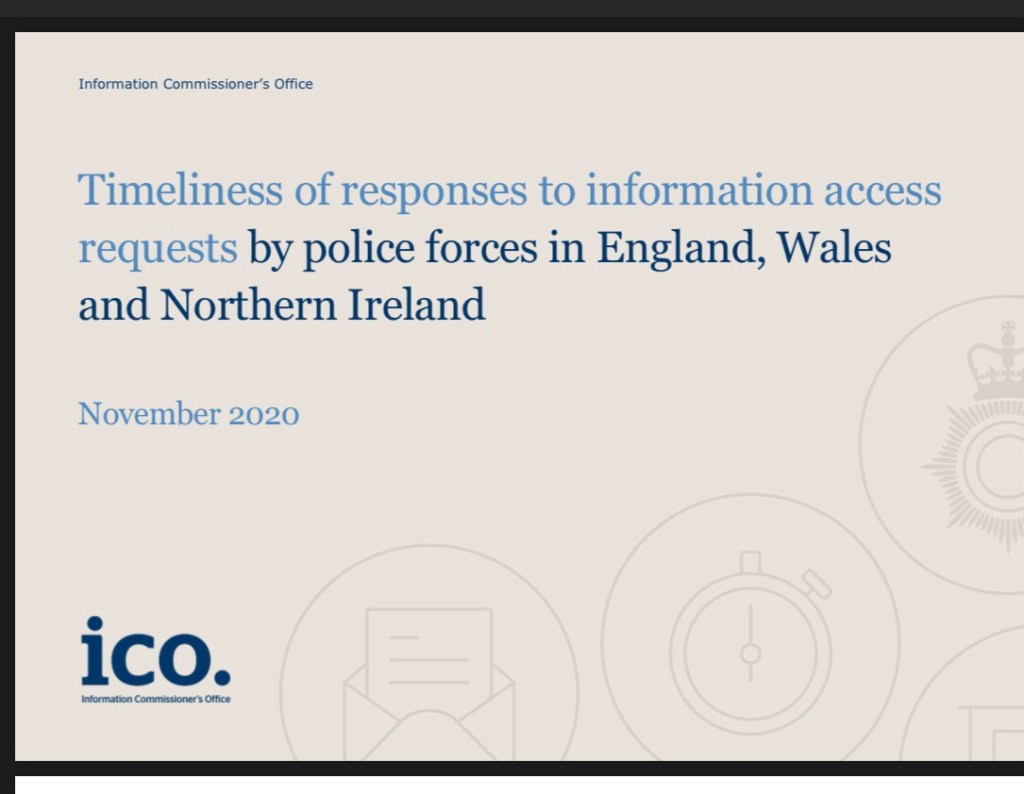
The Information Commissionerโ€™s Office has recently published a report (link seen below) outlining just what an absolute catastrophe police responses to these requests are.

Click to access timeliness-of-responses-to-information-access-requests.pdf

As ever with such a report the real eye-opener are the recommendations made by ICO. In this instance these are nine points which show how UK police forces are failing to deal with data access requests in anything like an efficient and professional way. Often this is because the purpose of data access legislation clashes with policeโ€™s wish to keep information regarding errors in procedure and process wholly secret.

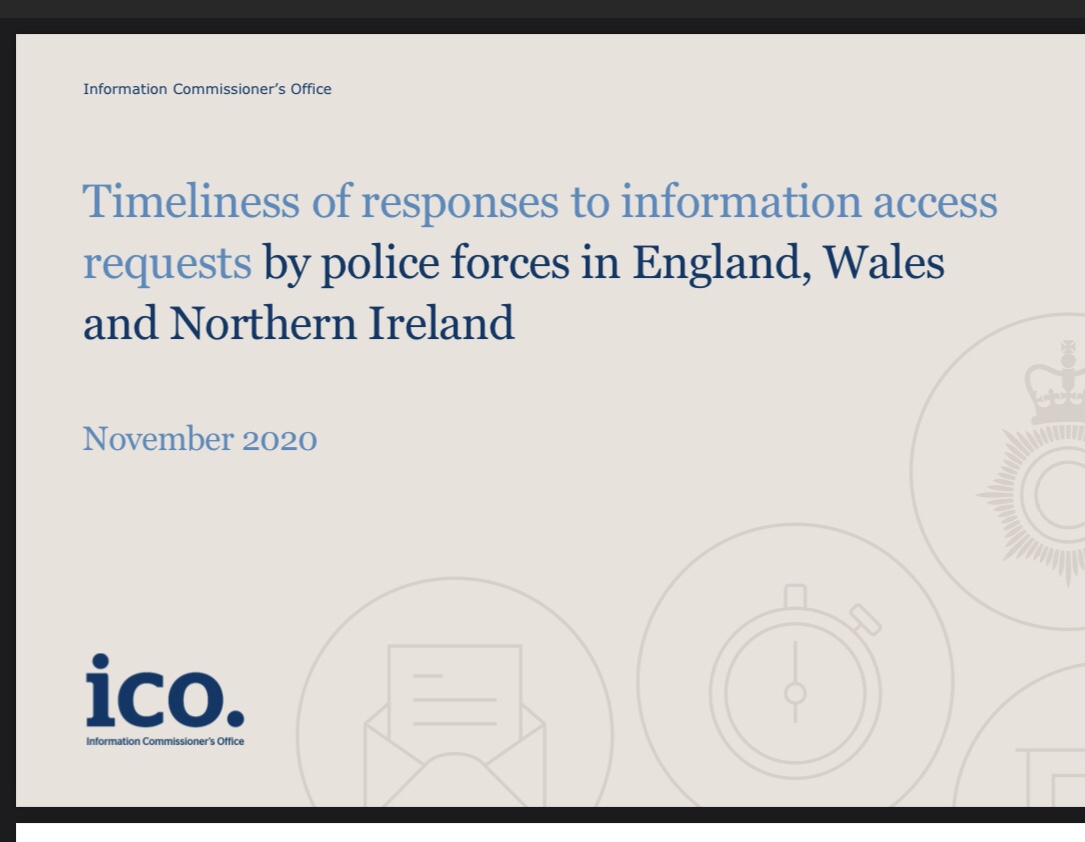
Title page of ICOโ€™s report.

This report will cause consternation in particular at failing Humberside Police, a force subject to many eye-watering fines from ICO in the past for failures to comply with the law on data access by the public. The recommendations ICO suggest will likely be impossible for the force to implement.

West Yorkshire Police – as expected one of the forces most likely to break the law to try to avoid the production of data – said at a meeting convened by their Police and Crime Commissioner recently that they would be looking at increasing the staffing in the Information Management Department in the next year (budget permitting) to cope with the demands made upon it. โ€œLooking atโ€ and โ€œbudget permittingโ€ is another way of saying that nothing will be done to address the problem.


A Christmas Card from Humberside Police!

Iโ€™ve written on here many times before about how Humberside Police are particularly useless, even in a hotly contested field of local forces.

However even I fell off my chair at the sheer incompetence of the subject access response provided by their Information Compliance department this week.

A subject access request provided by the force amounts to a nonfeasance as the response:

1. Fails to provide the data requested.

2. Is issued outside the legal time limit for a response to be provided.

3. Repeats back the same information put in the original request.

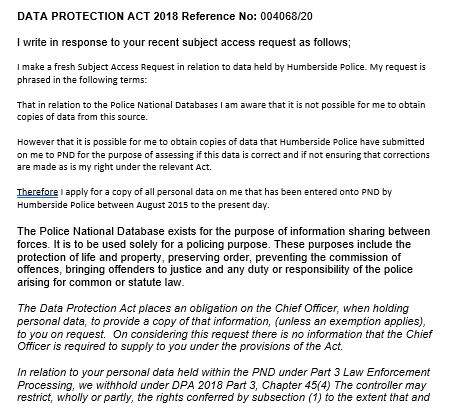
Hereโ€™s the letter in full. I have redacted the header.

The key sentences are in the fourth and fifth paragraphs seen above. These are reproduced from the original request. Data cannot be obtained from the Police National Computer – however data that has been entered into the PNC by a local force can be obtained from the same regional police force. Hence the request to Humberside Police.

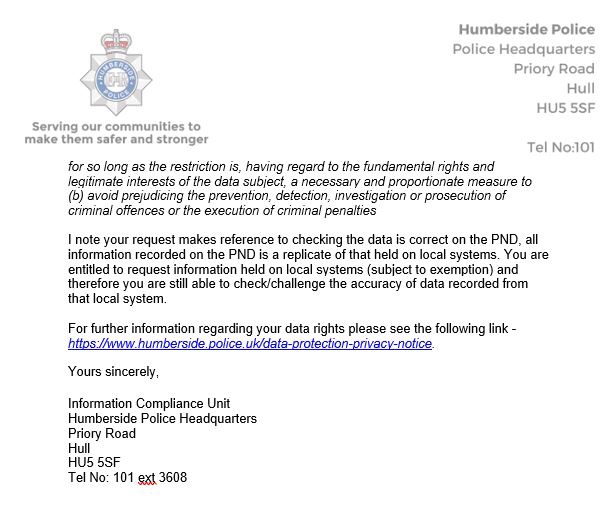
The substantive reply is seen below:

Here we focus on the second paragraph. It essentially repeats the data I put to police in the first instance.

Consequently the force has failed to react correctly to the subject access request in every conceivable aspect.

This suggests that the intention is to continue frustrate any further request made for the data using the rights conferred in italics in the letter to do so as the response to any further requests that might be made.

The Information Commissionerโ€™s Office has been informed.


Greater Manchester Police in Special Measures

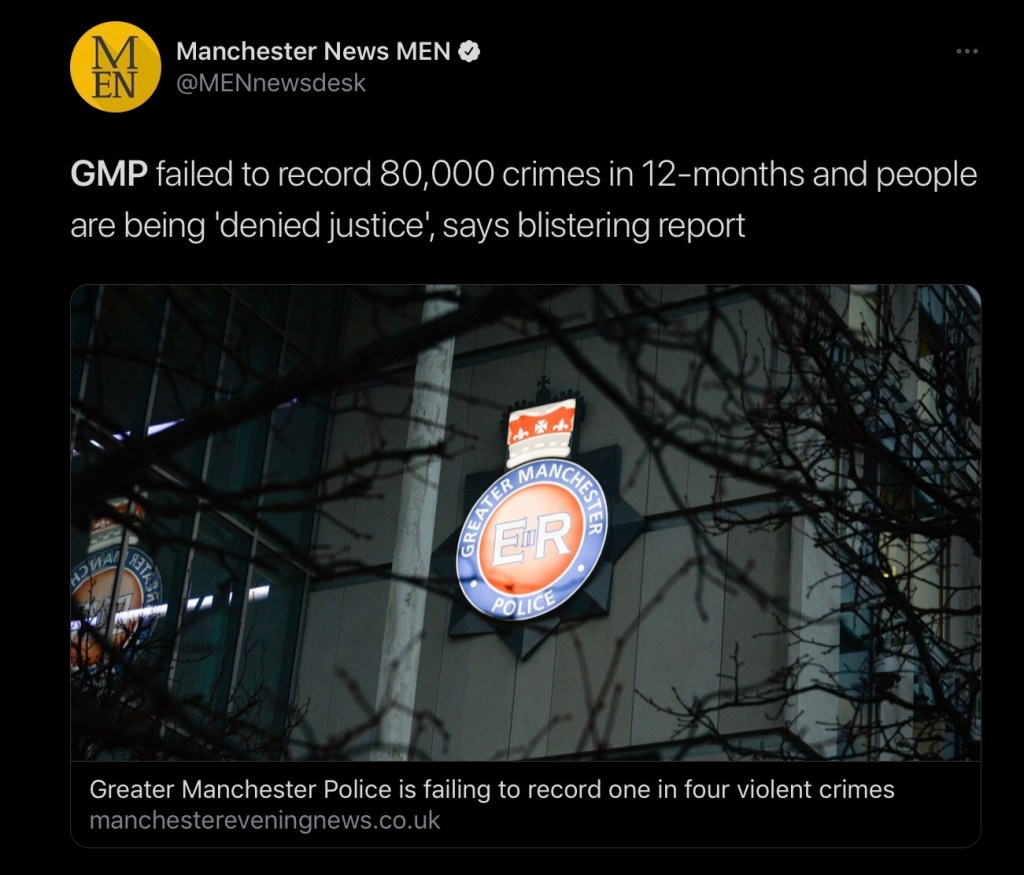
Flurry of activity at GMP in the last few days starting with this considerable shocker:

Overall GMP has been known to be a failing organisation for some time but no active intervention to stop the fall in service standards has been made by GMP itself, The Home Office or HM Inspectorate of Constabulary.

On Wednesday the Chief Constable, reckoned to be amongst the worst in a very competitive field, resigned citing โ€œlong term health issuesโ€. None of these issues had been apparent or seemed to prevent him discharging his duties prior to Tuesdayโ€™s news regarding non-recording of crimes.

On Thursday the force was placed into special measures following Home Office intervention.

Thatโ€™s a triple whammy of connected events.

Most interesting from my perspective is how GMP denied any failings in regards to service standards until the scandalous failure to record crimes became public. Like every British police force at present the effort made to hide errors and failures is tremendous. The mantra of the modern Chief Constable is that the professional reputation of the force must be maintained at all costs.

How many other forces will end up in special measures by the end of 2021? Iโ€™m willing to take bets on at least two.

Itโ€™s Miller Time! How Police Cover Up Allegations of Racism.

Iโ€™ve written on here before regarding Humberside Police. There’s something about that force that’s rather disturbing: a more blatent flouting of the College of Policing Code of Ethics, a lower standard of behaviour overall from the force towards the public and an open willingness to treat reports of crime and complaints with equal contempt.

Part of this is down to the geographical isolation of East Yorkshire and especially Hull from the rest of the UK. Humberside Police seem to have a genuine and recurring belief that they can do as they wish well away from prying eyes. The largely inept local media such as The Hull Daily Mail pay a part in assisting this of course. Rather than investigateve journalism that would reveal scandals in local policing they opt for click-bait thrill-a-minute headlines that drive traffic towards advertising. The PCC Keith Hunter is perenially inept at holding the force to account and the overall feeling is that he’s happy to sit out his tenure until pension day arrives. 

Some of this flouting of the conventions of good policing can be traced back to the period in which Humberside Police were a Chief Constable-less, rudderless and struggling force on the verge of being put into special measures. Audits routinely returned appalling reports by any metrics devised. Nor has the situation and service standards improved greatly in the four years since minor improvements began.

Like most police forces they have a unique ability to both say one thing and do another, as well as shoot themselves in the foot. While professing to detest and crack down on racism within their ranks the actual tale is quite different.

Which brings us to our story for today.

There’s a page on the Humberside Police website which details upcoming misconduct hearings for the force.

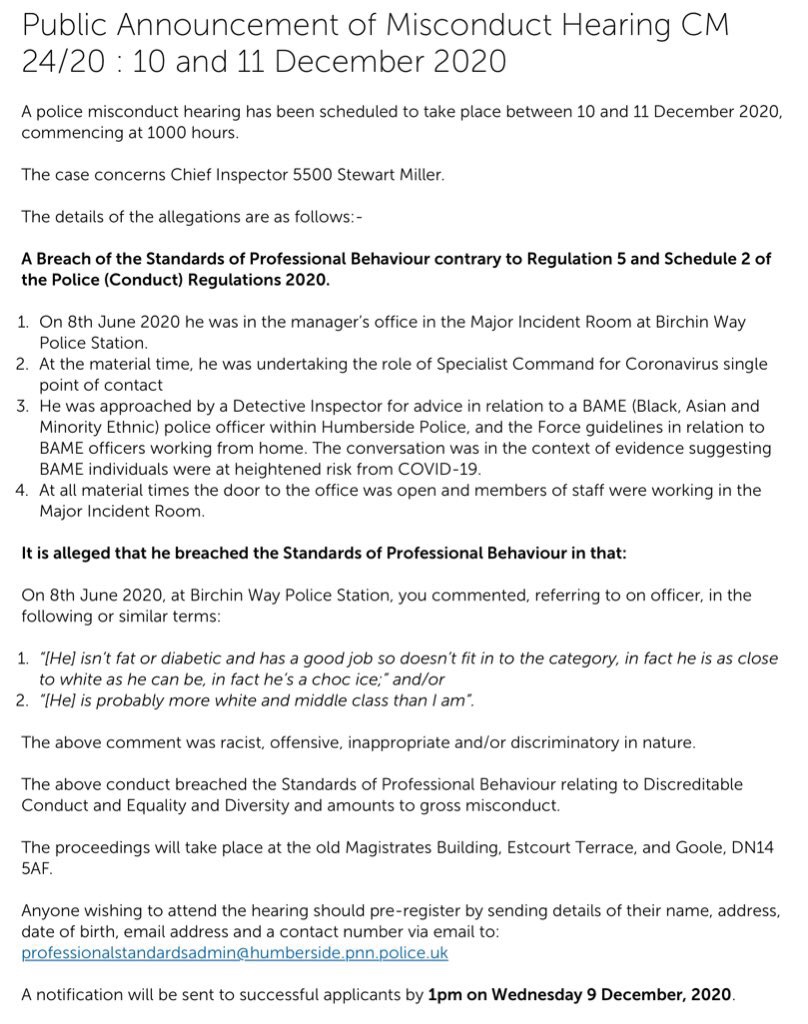
Within the last few days this was changed – without any member of the public being informed or the change advertised. The content on the โ€œnewโ€ URL as it appears currently (9.12.20) can be seen below.

The reason for this sudden change is that a senior officer has been chaged with the use of racist language. This is Stewart Miller, a high-profile DCI with Humberside Police who correspondingly have a lot to loose if the revelation of his conduct is proven true and receives appropriate levels of national publicity.

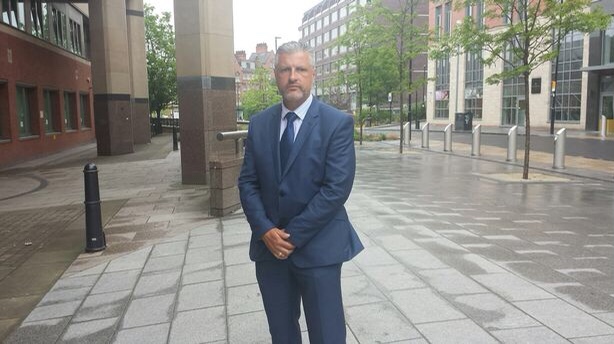
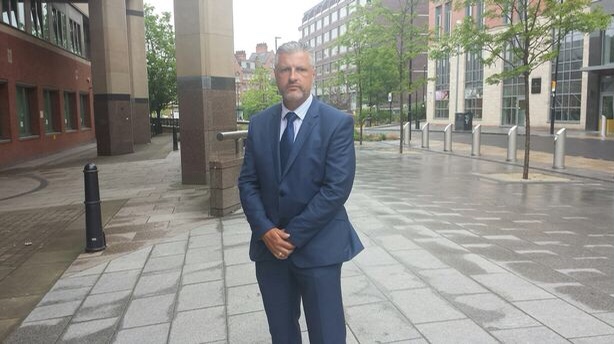
Humberside Policeโ€™s Stewart Miller pictured outside of Sheffield Crown Court.

The details of the alleged offence can be seen in the “new” misconduct page the image of which I have provided above. If true this behaviour constitutes an exceptionally severe breach of ethical and moral codes of conduct by this officer. Racist language, discrimiation and suchlike are uttely unacceptable in 2020 and repellant to the majority of civilised people. 

However aware that the revelation of this allegation may cause a stir in the national media Humberside Police have changed the URL of the misconduct hearings page just before posting details of this forthcoming hearing.

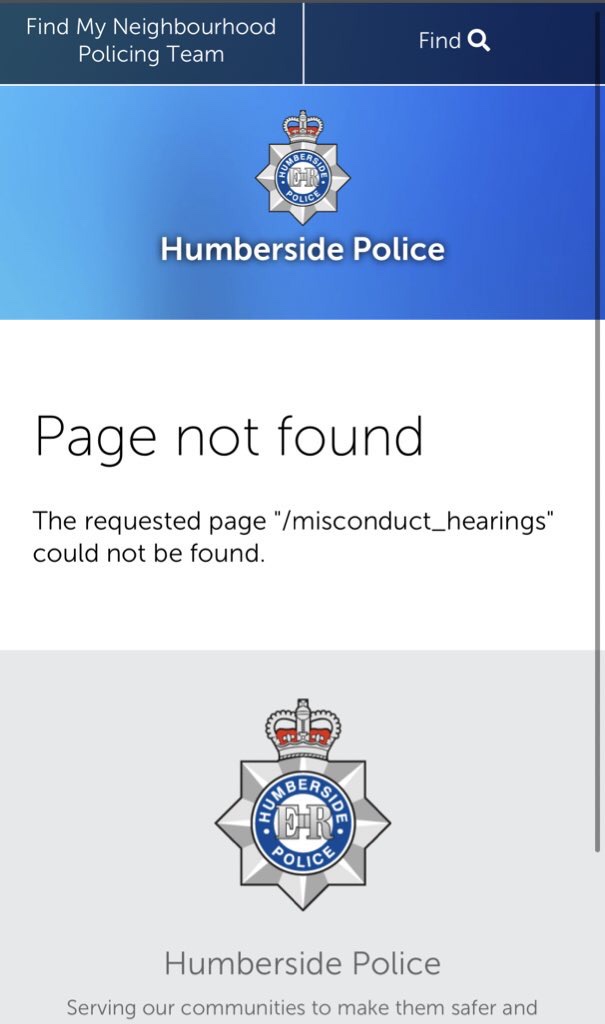
The โ€œoldโ€ page that the majority of people would see or have an existing shortcut to as of 8.12.20

This is a deliberate and purposeful act to attempt to stop the public becoming aware of these allegations against a senior officer. To see the โ€œnewโ€

The data about the hearing I have shown above can only be located from a careful search on the force’s website. This in itself is cause for concern: Humberside Police can of course claim that they have published the details of the misconduct hearing: but they have done so in a way tactically designed to hide the allegations and the public’s knowledge of the hearing. This is of course deplorable but entirely in keeping with that force’s general obsession with bad publicity. Of course now this matter is out in the open the changing of the URL looks even worse.

The effective hiding of the data regarding this misconduct hearing is also designed to protect this officer and his professional reputation. One wonders how this matter will play out in the event of a guilty finding by the force’s PSD and to what extent they will be prepared to publicise any disciplinary measures against this officer.

The alleged comments were made in summer 2020 just a few days after Humberside Police posted on their site positive content from The Association of Police Chiefs regarding the (as it turns out) aspirational aim for the UK police to be anti-racist following the death of George Floyd in the USA during contact with police.

Nor is Humberside Police the only force to be mired in a racism scandal this week as a post from investigative journalist Neil Wilby shows: https://neilwilby.com/2020/12/04/say-one-thing-do-another/

This sort of behaviour amounts to that which will not surprise seasoned watchers of Humberside Police.


9.12.20 update:

Having been caught out over this matter and it having received some publicity via Twitter on 8.12.20 Humberside Police have corrected the changed URL as of this morning, 9.12.20 so that the misconduct hearing for Mr. Miller is now advertised on the main page that most journalists and public would have a link to.

Design a site like this with WordPress.com
Get started