Introduction
This blog entry gives a glimpse into how The Information Commissioner’s Office (ICO) operates. ICO is charged with supervision of information rights in the UK and acting to assist when things go wrong.
On 5.7.21 I contacted The Information Commissioner’s Office with a complaint. This stated:
For a civil hearing on 9.6.21 a copy of any criminal record regarding me was requested. CPS supplied erroneous data to the Court. The error was a serious and significant one… This is not only offensive but also a matter to cause exceptional damage within the hearing. Such [the retention and supply of incorrect data] being an exceptionally serious offence.
In 2019 I had been made aware that this incorrect offence was recorded against me and had requested a correction. It appears CPS [The Crown Prosecution Service] did not correct the error, as they admitted only after the hearing.
The incorrect data was supplied to The High Court sitting at Leeds County Court for a hearing on 9.6.21. This caused embarrassment, distress and actual loss.
CPS were informed of the error prior to the hearing. They failed to correct the record prior to the hearing and failed to inform the Court prior to the hearing also.
CPS did not correct the error for the hearing as the transcript of the hearing also shows: the matter of them providing incorrect data to the Court became a significant issue within the proceedings and I was left unable to prove that this record of this offence was wrong. Since the record however came from an official source the Court will have been inclined to believe it.
Accordingly I looked to ICO on this matter to enforce my right to be protected from the incompetence clearly shown by CPS on this matter and the effects that this has had on me.
I sought from ICO first a detailed ruling in relation to this matter that CPS has breached the law. I sought also that CPS should be subject of a fine or other action from ICO in relation to the significance of the error made. Especially when they failed to correct a prior record showing the data to be in error and failed to act to correct the record when informed of the error prior to proceedings.
Finally I required assistance from ICO to correct the records of CPS.
CPS have previously stated in 2019 that the error has been corrected only for it to be repeated again in June 2021: this shows that they cannot be trusted to hold correct data or act properly in line with their legal obligations. Spoiler alert: neither can ICO!
One thing in their credit it that CPS admitted to ICO the error in a letter sent to me. However account details a series of errors that should not have been made had CPS been compliant with and following the law.
CPS Legal Services claimed to ICO that the record was corrected with the Court. What they failed to state was that the record was only corrected a substantial time after the hearing had concluded. A data request to the Court showed this and caught CPS out. It might be thought that ICO would look more severely on this matter for this. They failed to even properly consider all of the data put in front of them.
This blog entry therefore details how and why ICO are unwilling or unable to hold CPS to account even in a situation in which there has been a clear and catastrophic data mishandling.
What Went Wrong
CPS failed to correct data held on me in error in 2019. ICO were aware of this matter at the time. Art. 16 of GDPR relates to the right to rectification. Data was held on me in error by CPS showing a supposed offence had been committed when in fact it had not. The nature of this offence was exceptionally serious and so the onus was on CPS to create and maintain correct records even more strongly than normal due to the exceptional damage such incorrect data could create if released to a third party. CPS previously claimed to have corrected the record in January 2019 but it subsequently emerged that this was not done, breaching my relevant rights (Article 16) and CPS’ legal obligations in the process.
In a matter at The High Court sitting at Leeds in June 2021 however a copy of this incorrect data on me was produced. I contacted CPS prior to the hearing to inform that an urgent correction was required. They failed to make this correction prior to the hearing. This amounts to an exceptionally serious data error and is the cause of loss and embarrassment.
On 5.7.21 I wrote to ICO and made the following complaint regarding CPS:
I refer also to the email to CPS in respect of their illegal retention of incorrect data on me and their sharing of this to third parties in June 2021.
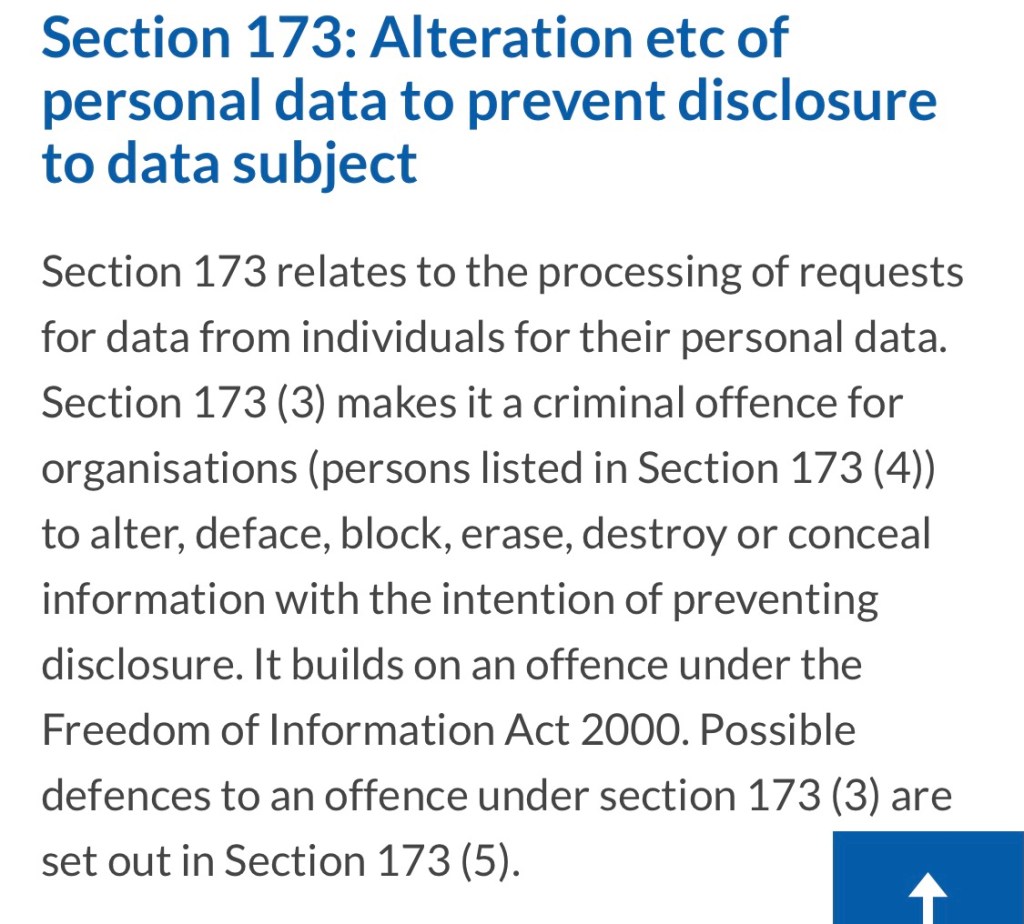
A series of questions are asked of CPS in the email from me below of 3.8.21. I also request additional data from them. I exercise my Article 16 GDPR rights also. CPS’s response to this of 11.8.21 is to ignore all these matters and refuse further correspondence. I consider this to be the criminal office of attempting to conceal, destroy or hide data from disclosure.
On 23.12.21, some five months after alerting ICO of this matter they wrote back to me to request further information. The Case Officer for ICO was Ian Sangan.
By the end of January 2022 there had been no movement in the complaint made to ICO and so I chased the matter up. This produced a response one day later which stated:
We have considered the information available in this case, and we are of the view that CPS have presently complied with their obligations under data protection law. We will now outline the reasons why we believe this to be the case.
We can see that the last meaningful correspondence received from the CPS was July 2021. Our view is that the CPS addressed the issues surrounding the erroneous data still held on record, and advised this has been rectified and removed. The CPS have also advised that the relevant court appear to have been notified of the rectification, and were made aware of the lack of reliability of this data. The CPS have clarified to you that this was rectified prior to the hearing itself.
We can see that the organisation historically received a rectification request in 2018, and that some of the erroneous data remained on your record. Ultimately this is not something that the ICO can reasonably ignore. As such, we have today contacted the organisation and provided them with some best practice advice going forward.
In other words for a matter of a major data error with that data released to a third party, and data which the Data Controller claimed had been corrected in 2019 ICO chose to take no action bar some advice to CPS. It is difficult to imagine a more serious breach of GDPR and the obligation to retain correct data on a person than the failure to correct information pointed out to be in error in 2018 and yet retained until 2021, then supplied to a civil court in proceedings. This is what has happened here. That this matter is not treated with the seriousness it so clearly merits forms the initial issue in a complaint of poor service to ICO.
It is of course clear that the data provided by the Court showed that CPS only corrected the record with the Court AFTER the hearing had taken place, and this data was provided to CPS which makes their comment that The CPS have also advised that the relevant court appear to have been notified of the rectification, and were made aware of the lack of reliability of this data even more puzzling.
I appealed the decision of ICO on that basis and also that:
The ICO findings admit that you are aware that data was not corrected in 2018 and CPS admit this also. ICO has not concluded that CPS breached GDPR in the retention and supply of data in error. This is the minimum that can be expected in this matter in respect of an adjudication from CPS’ professional regulator for data issues. The original issue is the creation and retention of incorrect data in 2017 – 2018 which ICO ruled on in 2018. The seriousness of the matter is increased by the failure to correct under Article 16 in 2018 following the ICO ruling then.
ICO in effect failed to assess if my Article 16 rights were breached by failure to correct the record acknowledged by CPS to be held in error in 2019.
ICO’s response was to refer the matter to a reviewing officer. The response was:
In this case the CPS acknowledge their mistake in their letter of 02 July 2021 when they stated that they had retained a reference to a conviction… which was incorrect. In their letter of 02 August 2021 they stated; ‘This file has now been rectified and the information removed as soon as the error was noted’.
No interest in the significance of such an error or the consequences of it. The creation and retention of incorrect data is ignored by ICO as is the continued retention of it past 2019 despite CPS being aware of the error from that point. In effect ICO fail to reach the obvious conclusion suggested by the data supplied to them that CPS failed in their key duties and then attempted to cover the error up by lying that the record had been corrected with the suggestion this was done in time for the hearing.
It is my view that historically the CPS retained incorrect personal data about you which they went on to share with Leeds County Court and at that time it appears that this would have infringed data protection legislation. However when Ian Sangan assessed your case he was doing so based upon the knowledge that the CPS had rectified the inaccurate information in 2018. On this basis he reached his view in January 2022 that the CPS were complying with data protection legislation. With regards to the erroneous data that was held on your record prior to 2018; the actions of the CPS in sharing inaccurate information with Leeds County Court appear not to have been compliant with data protection law, at that time.
Clearly CPS failed to correct the data in 2018 / 2019! Apart from the judgment that inaccurate data was shared with the Court no action was taken by ICO. Truly a toothless watchdog!
ICO’s John Turner wrote to me on 16.2.22 to state:
If you would like to complain about the service you have received from us I would remind you that you may be able to complain to the Parliamentary and Health Service Ombudsman via your MP.
He of course failed to mention that the matter could be put to the First Tier Tribunal who deal with matters related to information rights issues and complaints about ICO handling of matters. Possibly this was deliberate to avoid such clear evasions of responsibility by ICO being adjudicated against.

On 12.8.22 I wrote to CPS again to state:
In your response of 11.8.21 you fail to take action in respect of the request at c) to show that the records have been corrected. This is a second breach of my Article 16 rights. I have strong grounds to believe that you continue to retain wrong data on me with the potential to cause significant damage if this is released to third parties.
I believe CPS continue to hold incorrect data and that ICO has failed to take action to assist
Following all this two data access requests made of CPS on 16.2.22 and 2.3.22.
Neither of these requests has received a response or acknowledgment from CPS who are again in breach of the law. The time period given under law has now lapsed and the Data Controller has now broken the law by failure to respond. The matter was referred to ICO.
You will likely not be surprised to hear that the response came from ICO’s master of deflection John Turner who stated:
I can concur that there has been no communication between ICO and CPS since 28 January 2022. The only communications on the case since that date have been between the ICO and you.
Following your request for a case review this was conducted on 14 February 2022 and you were sent a copy. There was no purpose to involve the CPS in the review and they were not contacted.
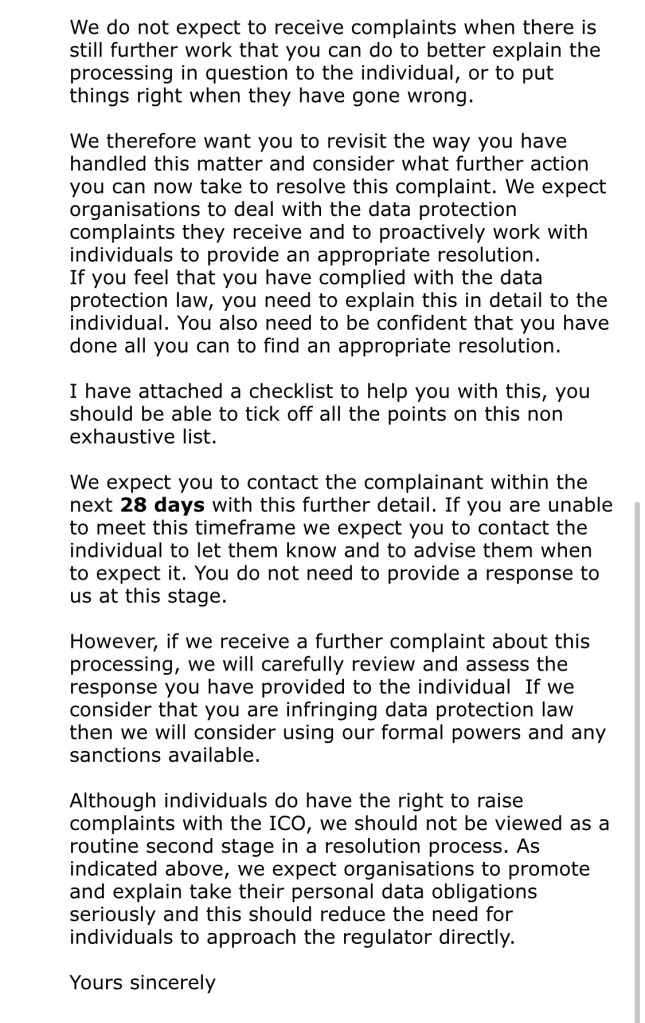
I re-iterate your case is now closed and the ICO will not be taking further action
…in other words the issue raised of two further breaches of information rights law by CPS has been cuffed off and ignored by ICO.
Conclusions
A significant series of breaches of the law have been committed by CPS and yet ICO’s investigation into these has been weak, evasive and failed to consider key evidence which shows that CPS sought to mislead ICO.
A more recent data access request to CPS has again breached the law by their failure to reply or disclose the data. Again in this matter the response of ICO is exceptionally weak and evasive. They are taking exceptional steps to avoid action to enforce the law.
ICO appears to have a “special relationship” with certain other organisations. For example it is exceptionally unlikely that they will hold such as NHS Digital to account for even very significant errors with patient records. It appears that they hold the same relationship with CPS and there must be some form of agreement for ICO not to take regulatory action equivalent to the errors these organisations commit. Instead ICO performs a series of twists and turns to avoid assessment of relevant data showing significant misconduct has taken place.
This has the effect of weakening trust in ICO’s ability to hold organisations which misconduct their data handling responsibilities to account and will eventually result in ICO being closed down as unfit for purpose. Unless of course the purpose is to assist state-run bodies in evading accountability.
 Legal Babble