Everyday HMCTS – A Cautionary Tale

Being an example of how HMCTS commit critical errors in handling civil claims and how they then evade responding properly to complaints.
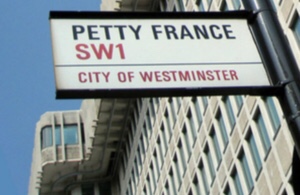
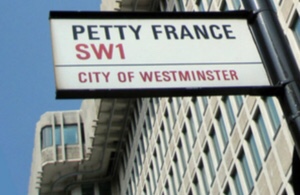
Street of Shame: HMCTS are currently based in the old Home Office building in St. Jamesโ€™, London.

The Phoenix Partnership (TPP) are a company noted for the provision of dodgy software to the NHS. Errors in systems provided by TPP resulted in the biggest data loss in NHS history. In that incident in 2017 / 2018 hundreds of thousands of people had their medical history sold to US companies, despite having signed to confirm they did not wish their data to be shared, breaching every conceivable data protection principal.

A claim was started by myself into this significant data breach as my own data was amongst that shared against my express written wishes that it should not.

Hereโ€™s where the fun begins.

Because the standards of service at Leeds Combined Court are uniformly awful a claimant has to struggle against both the ineptness of the courtโ€™s handling of a claim as much as they have to fight to prove their case. Like many other areas of modern Britain the State by a combination of ineptness and avoidance makes everyday tasks significantly more complex and difficult than they need to be.

The results of an investigation into the errors made by the court by HMCTS Customer Investigations speak for themselves. An extract from the letter is below but to summarise (and include detail HMCTS failed to, youโ€™ll not be surprised to learn), the errors made in the claim include – but are not limited to:

1. Fourteen months to action a Directions Questionnaire put in by the Defendant TPP. This failure by court staff to manage the claim in the most simple and basic way effectively brought the claim to a grinding halt.

2. Despite emails from myself chasing the progress of the claim within those fourteen months no action was taken by the court. In effect emails chasing progress of the claim and requesting updates on what was happening were simply ignored.

3. The court should have referred the matter of the Directions Questionnaire to a judge within a matter of a few weeks of it being received. They failed to do this. No other system in their offices alerted staff to the fact that an ongoing claim was stuck in stasis and no-one seemed to both to check on its progress.

4. Consequently this delay breached one of the Overriding Objectives in the Civil Procedure Rules to deal with cases justly and swiftly.

5. Naturally this generated a complaint from myself.

The first stage response of this was mendacious, evasive and effectively sought to deny any errors had been made. The excuses offered by the court were barefaced and failed to fit the facts such that a child could have picked holes in their logic.

6. I appealed and requested a second stage complaint response from the Court Manager at Leeds Combined Court, the reliably slippery Joanne Town.

7. And reliably slippery is what she proved to be. Or maybe she was embarrassed to have to answer for the significant error made by staff. No communication came back from her as a second stage complaint response. This was chased several times over the course of some months. See the footnote at the bottom of this blog entry.

By this failure to respond HMCTS sought to kill the complaint and I presume they believed I would walk away and forget the thing.

8. But I didnโ€™t. Consequently the matter was referred to The Parliamentary and Health Service Ombudsman (PHSO) as a complaint along with several other matters that HMCTS refused to address through their own complaints process. These other matters are presently ongoing.

9. When PHSO requested a response and data from HMCTS on this matter and the several others before the Ombudsman HMCTS decided to settle this matter immediately via a cash offer to myself. Likely they didnโ€™t want PHSO poking around to discover some of the things that go wrong in court offices. Or maybe they simply knew that the game was up as the errors made were too great to ignore.

10. This cash offer and admittance of fault came from HMCTSโ€™ Customer Investigations head Richard Redgrave. Normally Redgrave and his team deploy complex tautology to evade response, avoid admitting fault and avoid paying compensation.
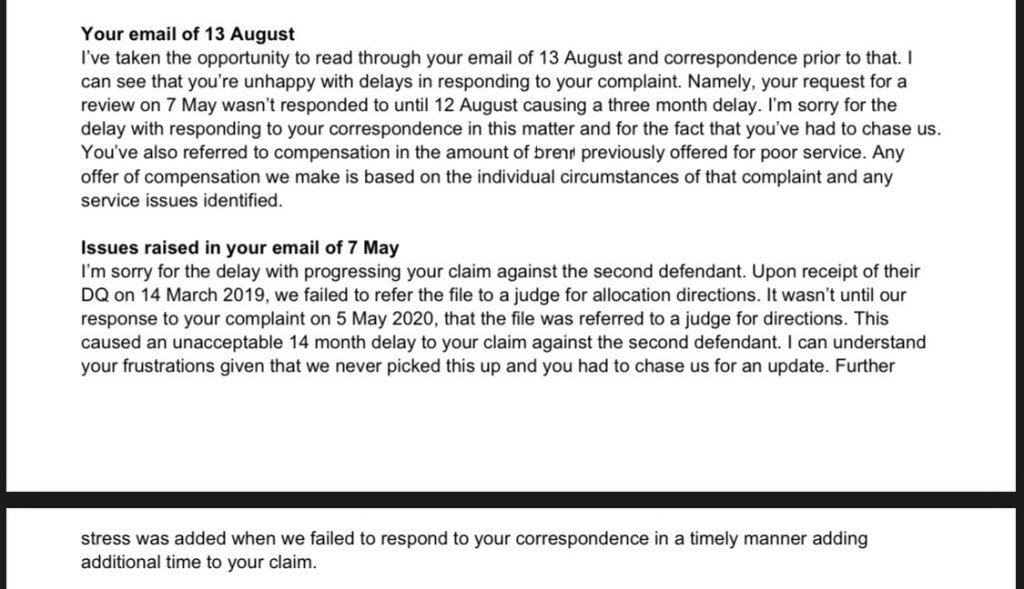
An extract from the letter admitting fault. Edited to remove the compensation amounts paid in the past.

The interesting thing to note is that this all represents not an unusual pattern of mishandling of a civil claim by HMCTS. These are everyday errors in a court system in which case files are in exceptionally poor shape and staff morale is at rock bottom.

Nor is this way of handling a complaint unusual or out of the ordinary. My experience of dealing with HMCTS staff has proven to me that the deny – ignore – avoid tactics are the standard response to complaints. Consequently the service standards never improve as they are unable to accept any wrongdoing has occurred.

The usual friendly customer service from HMCTS!

Footnote: in July 2019 HMCTS issued some new guidelines for its staff.

HMCTS decided it was, โ€˜the human voice of justiceโ€™. Based on three commitments, HMCTS said it will listen to you, explain everything clearly and guide you. โ€˜Itโ€™s a useful approach we are starting to apply every time we communicate โ€“ whether itโ€™s when we speak, write or connect with the people who use our courts and tribunals, or the people we work with.โ€™

Another Fine Mess… from Leeds Combined Court

A superb example of how the civil courts in the UK operate.

Laurel & Hardy-ish levels of incompetence from staff at Leeds Combined Court.

A hearing was set for last week and the appropriate Notice of Hearing was sent out for that case.

However what the merry pranksters at civil section failed to point out was that there were two other pending civil cases to be heard by the same High Court Judge at the same hearing on the same day.

No Notice of Hearing document was sent out in relation to these other two cases. Equally no Order in relation to them was made ahead of the hearing. In short no notification of these two other claims being in play that day at all.

Therefore there could be no case preparation for these other two claims as I was blithely unaware that these were due to go ahead in the same hearing as a claim that I was notified about.

This is pretty much par for the course with HMCTS these days: an organisation in which the right hand doesnโ€™t know what the left hand is doing.

The consequence of this overall for court users is delay, confusion and ultimately injustice.

The consequence for your poor bloody correspondent is of course more time, effort and expense spent correcting the errors made by court staff.


Twist ending to the tale: an application in respect of this matter was sent to the court just a few moments ago with an inquiry as to what the fee would be to file this. The answer was returned almost immediately.

However a complaint about the poor standard of service in the failure to notify me of two cases to be heard hasnโ€™t been answered at all.

Conclusion: HMCTS is more interested in taking your money to correct service level errors theyโ€™ve made than they are in responding to legitimate and justified complaints.

A Cautionary Tale of Judges and Twitter. Part One.

HHJ Sarah Greenan (left)

Judge Sarah Greenan (or HHJ Sarah Greenan) sits as a judge in the Family Court at Leeds Combined Court and also as a Crown Court Judge in Manchester. Her old chambers are Zenith in Leeds.

For most of her time sat on the bench she appears both bored and irritated by the mechanics of the job she has to do.

Specific rules exist in relation to judges and their ability to express an opinion in a public forum as well as their use of social media. These are enshrined in the Judicial Conduct Rules.

In February 2019 Judge Greenan posted a tweet to her since deleted Twitter account @Sarah_Zenith which expressed satisfaction that a High Court Judge has upheld an appeal in relation to a judgement she made and also that the Court of Appeal upheld her in a different case.

You may of course be wondering at this point why this judge has so many of her cases sent to appeal. This isnโ€™t for me to comment but doubtless you can draw your own conclusions. Her pastoral supervisor is Judge Mark Gosnell, the senior civil judge for Leeds and Bradford, who also sits at Leeds.

However the sending of such a tweet amounted to a breach of regulations governing judicial conduct.

In cases such as this (or for example if a judge is abusive or aggressive in a hearing) there is a body to which complaints can be made. This is the reliably ineffective Judicial Conduct and Investigations Office based at The Royal Courts of Justice in London. Despite its name this is an office which actively seeks to avoid any examination into judicial misconduct and will seek to disapply – that is to say reject – complaints for a number of spurious reasons. Britainโ€™s public life is beset with watchdogs which have no bite: it enables a โ€œbusiness as usualโ€ approach to the corruption and incompetence which characterise public life in the UK.

But to everyoneโ€™s surprise this matter was taken up by JCIO. Which was one of a handful of complaints they did choose to investigate in 2019 and not โ€œcuff offโ€ as is standard procedure. Perhaps because this is a relatively low-level offence for which the evidence of misconduct was clear and unarguable. Or perhaps JCIO had a quota of complaints to process in 2019 to make it look as if the office was actually doing their job and this was seen as a trouble-free investigation. The matter was examined by the reliably obstreperous Isabelle Odowa at JCIO.

In short not even JCIO could not find a way to dismiss the complaint!

The basis of the complaint was that a lack of impartiality was shown in the opinions expressed, that personal opinions were shown and that the relevant codes of conduct for judges making public comments were breached.

As per standard procedure the complaint was referred to a Nominated Judge and then onwards to The Lord Chief Justice and Lord Chancellor. Each made a finding against HHJ Sarah Greenan with the ultimate conclusion being that the complaint was upheld.

The sanction imposed was informal advice in accordance with Para. 15 (2) & (3) of the Judicial Discipline (Prescribed Procedures) Regulations 2014.

This โ€œcosy chatโ€ approach of providing informal advice doesnโ€™t seem like much of a sanction. And it isnโ€™t. Because as this and several other cases referred to JCIO and upheld by The Lord Chancellor show โ€œlight touchโ€ regulation is very much favoured particularly when it comes to misconduct from judges.

However it can be noted that judges as far south as Central London County Court were aware of and discussing this case after The Lord Chancellorโ€™s decision and as such it may have sharpened up the behaviour of some of the judiciary on social media. Or not in the case of such as HHJ Recorder Ben Nolan QC… whose case I shall go into in a separate blog post one day.

This whole matter has made it clear to Judicial Office however that HHJ Greenan isnโ€™t someone who can be relied upon not to make inadvisable comments in public forums. The judiciary tends not to appreciate members who are too verbose in this was & her actions may cost her a promotion or a minor title on retirement somewhere down the line.

Design a site like this with WordPress.com
Get started