
The Post-Truth Society

We have now become a society in which many people are lacking in the ability to use basic critical faculties regarding information they receive. Because of this they are more prepared to align their thinking with narrow, sectional interests.

These people can then be persuaded to perform activities which go against their own best interests and those of our wider society.

How has this happened and what purpose does the spread of disinformation and outright lies serve, particularly those in relation to COVID-19?

Funded by the sinister and obeyed by the stupid. An example of a type of sticker seen lots recently in our urban areas.

Disinformation comes like a wolf in sheepโ€™s clothing. It often seeks to persuade from a standpoint of โ€œus against themโ€, as the above image shows. The two stickers above start by putting their arguments by claiming they are on the side of the people against the Government. This is palpably not true. In a situation in which there is a lethal pandemic the interests of the people are to protect themselves and those around them from the spread of the virus. Neither of these stickers promote this. They are actively against it and so to do as the first sticker suggests puts yourself and others at direct risk of harm. The second seeks to re-inforce the first by suggesting that the Government information on the pandemic is incorrect without stating what part is wrong. Itโ€™s there to build an atmosphere of mistrust to reinforce the message of the first sticker. And film director Ken Loach would also like his royalties for the misuse of the image.

Much of the anti-mask, โ€œvirus is a conspiracy theoryโ€ set have a series of narrow sectional interests that coincide with letting the virus rip through society. Thus they are not interested in your or my personal freedom. Claims that they are marching against the โ€œnew world orderโ€, microchip implantation via vaccination and half a dozen other fabricated falsehoods are hooks to pull in the gullible into acting against their own best interests and starting up a culture war. If they were campaigning for freedom then there are plenty of existing worthy campaigns they could join to increase the freedom of action in society. Those run by groups such as Liberty spring to mind.

Being vaccinated is a pro-social act which actually does increase freedom. For a start the freedom not to be infected with a potentially lethal virus. Vaccination may not help you but it may stop others around you being infected. It is the apex of how society should reasonably operate: a partnership in which you take care of my interests and I take care of yours. Likewise wearing a mask in public places reduces the spread of COVID-19. This is also a pro-social act that helps everyone in society by stopping / slowing the rate of infection until the forthcoming vaccinations are widely taken up.


At present there are sufficient dark forces looking to destabilise society.

These amount to the usual ragbag of far left and far right groups, alongside our old chums the obstreperous and the contrarians who automatically are against whatever you might happens to be in favour of or any reasonably held consensus. These are operating alongside foreign powers who seek to destabilise western societies for their own ends. I suspect the stickers such as that seen in the image above are paid for and posted by such persons or else home-grown eugenics enthusiasts who have an honest (though morally repugnant) belief in survival of the fittest. None of these people have yours or my best interests at heart and they seek to persuade people to act against their own interests via a variety of underhanded means.

There was a time when such as vaccines etc. were understood to be a positive force: they enabled hundreds of millions of people to live without the fear of communicable and life-changing diseases such polio.

However thirty years of (1) a dumbed down eduction system (2) a media – especially newspapers – that prioritise showbiz news over critical analysis and readership engagement with the real world (3) social media allowing a slow-drip feed of misinformation and outright lies (4) Prior exposure by investigative journalists of genuine abuses of power which lend weight to the idea that there are further, hidden abuses of power happening beyond what we presently know about. I would add also (5) that the inept and incompetent handling of the pandemic by the UK Goverment has been sufficiently poor as to assist and promote misinformation about the virus and Government intentions. It is quite believable that COVID-19 is being allowed to spread through poor areas just like it was through nursing homes.

All these things have led to a position in which conspiracy theories such as those abounding around COVID-19 have fertile soil. They allow the sectional interest groups I have mentioned above to have a stronger foothold whereas many years ago they would have been confined to the crank fringes. If – as in happier times – the only means of getting your crackpot theories out into the world amounts to hand-printed leaflets and a sandwich board your theories wonโ€™t go far enough to harm others.

Harmful, unscientific and morally reprehensible ideas around COVID-19 are being freely disseminated. These are wrapped up in conspiracy theories in which the Government, Big Science and (in the USA at least) the โ€œdeep stateโ€ are said to be acting from sinister motives. These ideas promote a narrative in which persons acting against medical and scientific advice are seen to be expressing their individual freedoms in defiance of the state. This is simply wrong.

A conspiracy theory is a comforting thing: it offers a catch-all explanation for one or more of the wrongs of the world. Belief in such a conspiracy theory ennobles the believer with a sense of access to some secret knowledge or insight into how the world works; which does account for how difficult it is to prise people away from such theories once they start to head down one or more of the bizarre cul-de-sacs that conspiracy theories represent. Itโ€™s difficult to wean someone off a conspiracy theory as it requires the afflicted person admitting they were wrong and have had the wool pulled over their eyes.

People are prepared to believe all sorts of odd conspiracy theories but fail to see actual and genuine efforts to deprive them of their rights, money and liberty. The current UK scandal over sourcing of PPE equipment via lucrative contracts by the UK Government to Tory party donors and friends is a real-life conspiracy which has been ongoing since March 2020. Protests in the streets against this scandal: zero.

Conclusion: at least in part many people are being drawn to crackpot theories spun to create chaos and destabilise society via a variety of means. In worrying times people cling onto extreme views which seem to present a catch-all explanation for problems. That these ideas gain ground when people are unable to critically assess the sources of information they are presented with and the reasons they are being persuaded to act in a specific way.

Desperate Times – Desperate Measures

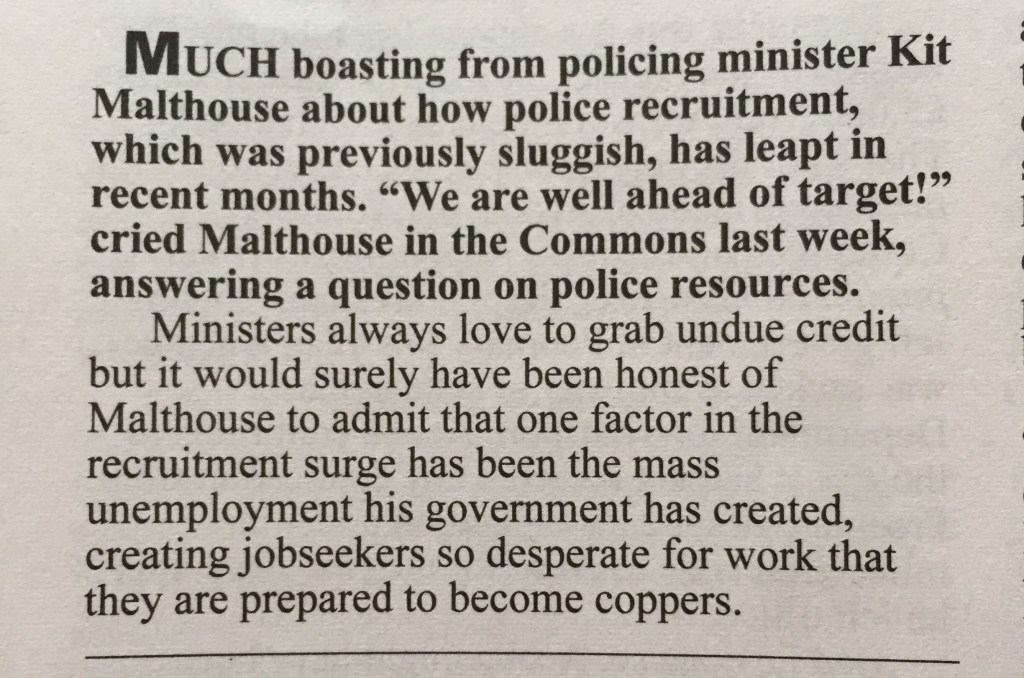
Many ticklesome articles in the new Private Eye magazine (no. 1535, 20th November 2020) including this choice one on police recruitment.

Private Eye comments on police recruitment.

As always thereโ€™s many a truth spoken in jest.

At present the workload of the average Plod would incline anyone with the ability to obtain employment elsewhere to do so. Truly a policemanโ€™s lot is not a happy one.

Nor are matters likely to improve with the new recruits when theyโ€™ve finally got some wool on their backs.

The lesson The Ministry of Justice learned to their cost was that sacking every experienced prison officer within range meant that the newer and less experienced were unable to handle the job with subtlety and skill. This caused a further recruitment problem as newly recruited staff also began to leave in droves once they realised the true horrors of the job theyโ€™d be facing daily.

So it will be with the new police recruits.

Possibly also unwise to have a large surge of untested youngsters in uniform, pumped up with testosterone and a newly-found sense of self-importance, kitted out with weaponry and the power of arrest let loose on the public.

One can only hope that new recruits will be paired with more experienced officers. But PC George Dixon is long since retired and these days six months or more in the frontline on the force and youโ€™re considered a veteran. Stay for a year and doubtless South Yorkshire Police – the force that loves to hand out awards to underperforming officers – will have a decanter set and tin plaque to pass over to you.

An additional problem. Recent reports in the local press show South Yorkshire Police and West Yorkshire Police finding themselves and their transport under severe attack on entering some estates in Leeds and Sheffield. Police cars and vans were recently destroyed as they have also been outside of Goldthorpe Police Station in South Yorkshire.

Here we can see how spirited local residents have offered their opinion on police service standards.

Can it be long before armoured โ€œsnatch squadsโ€ operating in a similar fashion to those grabbing terrorist suspects in post-invasion Baghdad are sent in to spirit suspects away from troubled estates?

So if you do see such officers on the streets soon be sure to look out for their armoured snatch too.

โ€œCuffingโ€ or โ€œShonkingโ€ at South Yorkshire Police.

In modern police parlance โ€œcuffing offโ€ a job means to look for a way to avoid dealing with a complaint about a crime made by a member of the public. Shonking means the same thing. South Yorkshire Police is very much focused on internal award ceremonies for its staff and members of the public calling to report criminal offences gets in the way of this. Most inconvenient.

So hereโ€™s the story. I had an offence to report on the basis of information that came my way. Having researched the offence and charging guidelines for the same as well as collated sufficient documents to show who was responsible and how I completed the South Yorkshire Police online form. This is their preferred way of contacting you. And so I waited for contact back. And waited. And waited.

Eventually a series of phone calls were made on one afternoon to South Yorkshire Police via 101. The poor handling of the initial report from the webform data and subsequent poor handling of all subsequent contacts are described below.

Basically the webform was ignored. Phone calls to check on the progress of the report of a crime were also consistently mishandled.


From the 1980โ€™s to the present day SYP is mired in scandal.

The basic issues are as follows:

1. A complaint of a crime was made. This was done via the online form for such. That the response from the online form took longer than the 72 hours the website states for any action to be taken in respect of the referral of a crime.

2. That the online form had still not been processed some 7 days later.

This amount to the first effort to โ€œshonkโ€ the job.

3. That from comments made by Professional Standards Dept. at SYP in a later email to me it would appear that this online referral has been โ€œlostโ€.

4. Following the lack of response to the webform a series of phone calls were made by me on the Tuesday and Wednesday to SYP to establish what was happening in relation to the online referral.

5. That these calls were either cut off when transferred to the appropriate department or else rang out for an exceptionally long period. The time it took to get through to someone was the time of my journey that day from West Yorkshire to Bridlington on the East Yorkshire coast. Some one hour and fifteen minutes.

6. That on eventually speaking to an officer he stated that he had no copy of the online form in front of him but proceeded to dismiss the referral of a crime being committed on the basis that this incident was not a crime and therefore not something that police would deal with.

This is incorrect. I quoted CPS guidance and sentencing guidelines that clearly show the activity reported was a criminal offence.

Most police officers have a very poor working knowledge of the law and are often the worst people to decide if an offence falls into their jurisdiction or not. Or if an offence has been committed in law. Without sight of evidence etc. the officer was additionally on very shaky ground.

7. That the same officer rang me back several minutes later. He had performed a search on my name after our initial conversation and my refuting his comments that the matter complained of was not an offence in law.

8. That his call back to me amounted to harassment and intimidation. His manner during this second call was offensive, uncivil and harassing. Having tried to โ€œcuff / shonk the job offโ€ only to be confronted by a member of the public who knew the law put his fragile and delicate nose out of joint.

Most police officers have exceptionally fragile egos and cannot bear not to have the last word on something. As sites such as the exceptional. ://crimebodge.com show (especially I would recommend their YouTube channel) this can often lead to violence and assault from the officer if a member of the public stands their ground.

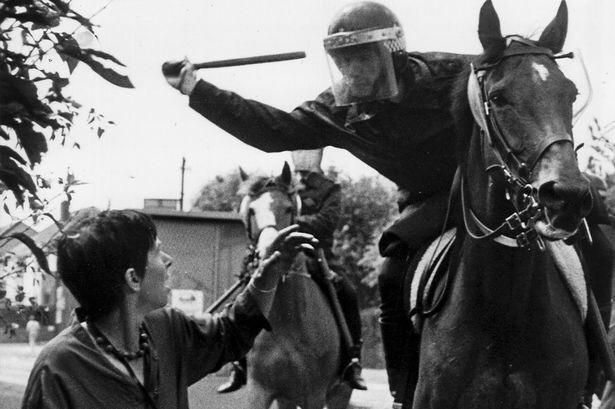
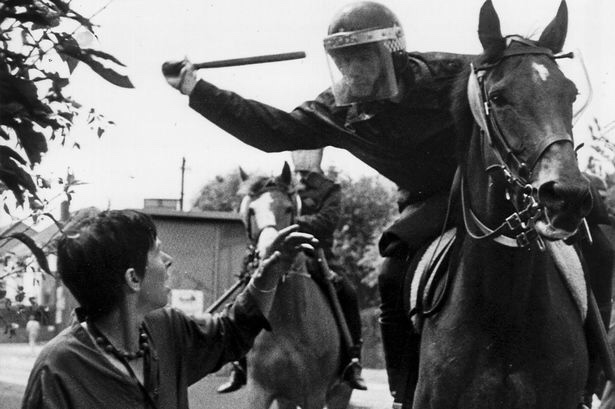
9. That the officer concerned did this solely for the purpose of causing harassment, vexation and distress. On the second call he refused to give his name or service number when asked which is usually indicative of an officer misconducting himself. South Yorkshire Police have plenty of form for this. Ask the miners who were at The Battle of Orgreave: SYP removed their epaulets displaying service numbers so they couldnโ€™t be subject of individual complaints.

South Yorkshire Police are internationally famous for violence and criminal negligence.

That overall the standard of conduct in relation to this matter was sufficient to cause loss of professional reputation, such as it is, for the force. Overall the behaviour described above gave the impression of South Yorkshire Police as being inept, incompetent and evasive.

Later that day is I rang again. This time to make a formal complaint. The College of Policing Code of Ethics has a series of guidelines which had each been breached in the policeโ€™s handling of this matter. Not least of these are those related to courtesy and respect. https://www.college.police.uk/What-we-do/Ethics/Documents/Code_of_Ethics.pdf

I was told I would be called back in a few days. However again there was no response.

This matter relates to the following issues in the College of Policing Code of Ethics:

1. Authority, respect and courtesy.

2. Duties and responsibilities.

3. Conduct.

I emailed Professional Standards Department at South Yorkshire Police a few weeks later. The response was initially in terms of my complaint call of a few weeks earlier and stated:

Unfortunately, we are unsure as to who the officer was who spoke with you…

This suggests that the admin systems at South Yorkshire Police are not robust enough or else that theyโ€™ve already tried to evade examination of the complaint in the same way as they avoided examination of the original report of a crime. The comment is also vague: do they mean the misconducting officer I spoke to at around around lunchtime or the one spoken to to enter the complaint at 18:30 on the same day?

But it gets worse:

In relation to the online complaint form this does not a appear to have been received by us.

So an additional copy was attached to the response. Neither the original web form reporting a criminal offence nor the complaint form sent by email were received by the force. How many others have been similarly missed by them?

By this point some three weeks had elapsed since this complaint form was sent in to Professional Standards Department and their sobriquet was looking further and further misapplied. The South Yorkshire Police webform auto-generates a copy of the complaint for the public so it is unlikely that a copy was not sent to PSD. The comments they made about not receiving a copy are likely bunkum.

They stated:

If you would like to reply to this email with your initial complaint, we will pass it for assessment and ask our assessors to look into it asap.

So this created a further issue to the complaint: that failure to record the initial complaint call made around 18.30hrs in the evening to SYP via 101 amounts to a further breach of duty. A copy of this call will have been recorded on the Airwave system, which records all incoming and outgoing calls from police stations.

The failure to properly action the issues raised by phone in the evening call amounts to an effort to evade dealing with the complaint from an early stage. The โ€œlossโ€ of the follow up complaint form to PSD is a further effort in this direction.

Matters have now been before Professional Standards Department at South Yorkshire Police for two months without visible progress.

The whole fiasco makes SYP look doubly incompetent in their behaviour in failing to action the original webform, then โ€œcuffing offโ€ the job on the phone.

Then they fail to record and action the complaint made from 18:30hrs on the same day and further claim a follow up communication on the complaint was โ€œlostโ€.

Heaven help people who actually live in South Yorkshire when it comes to reporting crime or making a complaint to SYP. Because the forceโ€™s systems are clearly set up to avoid having to deal with either.


Another Fine Mess… from Leeds Combined Court

A superb example of how the civil courts in the UK operate.

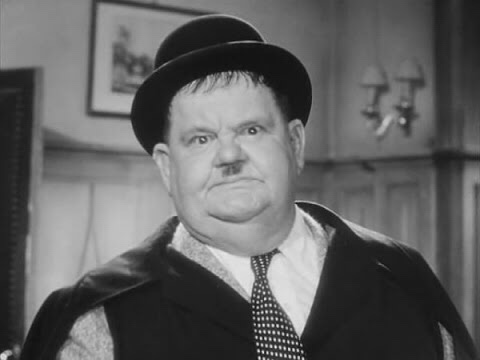
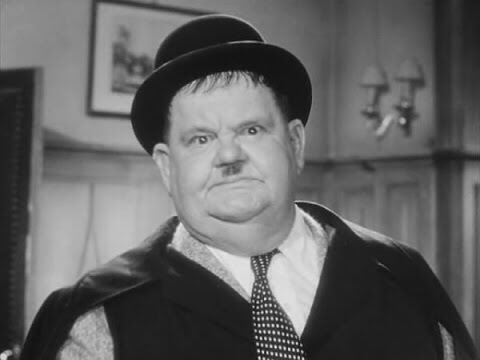
Laurel & Hardy-ish levels of incompetence from staff at Leeds Combined Court.

A hearing was set for last week and the appropriate Notice of Hearing was sent out for that case.

However what the merry pranksters at civil section failed to point out was that there were two other pending civil cases to be heard by the same High Court Judge at the same hearing on the same day.

No Notice of Hearing document was sent out in relation to these other two cases. Equally no Order in relation to them was made ahead of the hearing. In short no notification of these two other claims being in play that day at all.

Therefore there could be no case preparation for these other two claims as I was blithely unaware that these were due to go ahead in the same hearing as a claim that I was notified about.

This is pretty much par for the course with HMCTS these days: an organisation in which the right hand doesnโ€™t know what the left hand is doing.

The consequence of this overall for court users is delay, confusion and ultimately injustice.

The consequence for your poor bloody correspondent is of course more time, effort and expense spent correcting the errors made by court staff.


Twist ending to the tale: an application in respect of this matter was sent to the court just a few moments ago with an inquiry as to what the fee would be to file this. The answer was returned almost immediately.

However a complaint about the poor standard of service in the failure to notify me of two cases to be heard hasnโ€™t been answered at all.

Conclusion: HMCTS is more interested in taking your money to correct service level errors theyโ€™ve made than they are in responding to legitimate and justified complaints.

HMCTSโ€™ Golden Rule: โ€œOnce you have their money you never give it backโ€.

Two blog entries on two separate days about how HMCTS deals with services users money.

Tomorrow is the more complex blog entry which deals with some of the underhand ways civil courts like to part you from your cash. Stay tuned!

Today is a simpler tale of how awkward they are when you try to get it back.


An artists impression of the inside of the Fees Office at The Royal Courts of Justice.

In April this year a fee was paid to Queenโ€™s Bench Division at The Royal Courts of Justice.

Due to the pandemic QBD was largely out of action for some time, or at least the office to deal with the application was.

By July it was clear that the grounds and reasons for making the application had passed. The time which had gone without any staff present to man the appropriate office at QBD rendered the application pointless.

So the fees were requested to be returned.

โ€œNo problem!โ€, say QBD.

And the appropriate notification was supposed to have been sent to Fees Office. Lead time on return was reckoned to be six weeks maximum.

Four months later Iโ€™m still waiting.

Not that the fee paid was large or exorbitant. Which makes the continued retention of it even more baffling.

But what really boils my blood is that of several emails sent to both QBD and Fees Office at RCJ can you guess how many have received a response?

Go on! Have a wild guess!

Thatโ€™s right. None. Over a period of some four months now Fees Office & QBD has failed totally to respond to several emails chasing this matter.

This is of course very HMCTS.

Nor have emails to The Court Manager at QBD about the lack of response received a reply. This is even more HMCTS!


Just today an email response to a separate matter has been issued by HMCTS. That took a blindingly quick two months without any explanation of why so much time had elapsed.

In separate proceedings last week the DJ complained that the case file was in very poor condition. A prior hearing in the same matter had to be abandoned on the basis that the file had been lost.

All of the above and the general woeful experiences to be had with HMCTS suggest the organisation – visibly tottering for some time – is now actually on the verge of collapsing or has actually done so. Staff largely unable to cope pre-COVID-19 appear now to be hopelessly overwhelmed by the day to day administration of cases.

Customer Relations at HMCTS dealing with another complaint with customary sensitivity and respect.

Reign of Terror: The Long Shadow of the Yorkshire Ripper

The recent death of Peter Sutcliffe (a man dubbed in the media as The Yorkshire Ripper) presents a practical public-relations problem for West Yorkshire Police. It again raises the spectre of how Sutcliffe was able to kill so many people for such a sustained period. The answers make uncomfortable truths for that force.

Sutcliffe in 1974

West Yorkshire Policeโ€™s failure to catch Sutcliffe in what was one of the UKโ€™s biggest manhunts plays a significant part in their present international reputation as a force beset by incompetence and corruption. It is a reputation with considerable justification.

Sutcliffe was not blessed with high intelligence enabling him to evade capture. Nor was he the popular fiction version of a serial killer: a creature of almost animal cunning and divine luck. Granted he was aided considerably in his activities by the relative infancy of forensics in the late 70โ€™s. But this does not tell the whole story.

For the most part the reason Sutcliffe was able to carry on killing was down to long-identified administrative and operational failures on the part of the police. He is known to have been interviewed several times by officers in the course of their investigations but each time was discounted for further investigation. Other operational errors are known to have included an excess of paperwork generated in the course of the investigation. Detectives were hindered rather than helped by the weight of data generated and the primitive storage of such.


I would argue another failing contributed to the deaths of thirteen women. This is that police officers both at the time and now have a particular mindset which pre-disposes them towards both a closed minded approach to investigations and a form of โ€œtunnel visionโ€. This comprises some of the issues Iโ€™ll discuss below.


Personal characteristics

To start with itโ€™s popularly said that a Yorkshireman is a particular sort of stout character. Gruff, uncommunicative and 100% convinced heโ€™s right in the face of all opposing evidence. Bluff and stiff-necked. The Harry Enfield comedy version of a Yorkshireman isnโ€™t far from the mark. You know as well as I do the popular stereotype. For some reason beyond my capacity to fathom West Yorkshire Police provides a home to people very much of this mindset: there is a poisonous organisational culture which incubates some undesirable personality characteristics.

โ€œAhโ€™ll say what ah bloody well like!โ€

Consider the absolute certainty with which the senior officer in the Sutcliffe investigation, George Oldfield, was sure the killer was the voice on the Weirside Jack hoax tape is a tragic example of this unwillingness to admit to error once a set path has been taken. In the police both of the 70โ€™s and today face-saving is also a strong motivating force. Especially so when consistent underperformance or failure are likely to result in downgrade to civilian worker status.

A former Australian Director of Public Prosecutions Nicholas Cowdry produced a book called โ€œGetting Justice Wrongโ€ in which he argued that tunnel-vision on the part of officers (…he must have done something even if we canโ€™t get him on what weโ€™ve arrested him for!) plays a significant part in police failures. Tie this into the inability to admit to errors being make and youโ€™ve an already toxic mix.

The โ€œrightโ€ sort of victim

Sutcliffeโ€™s first few murders were women largely at the margins of society. It is only with his killing of Jane Macdonald, a shop worker, in 1977 that the investigation increased in speed and urgency. This was partly in response to media pressure. But police then and now categorise crimes reported to them in an internal value system based partly on the perceived โ€œworthโ€ of the victim in society (socio-economic status etc). Sutcliffe attacked a young woman outside of Bradford in 1974 who sustained horrific injuries but police handling of the complaint and their investigations were at best suboptimal. The same occurred later when he attacked a lady who was a member of the BAME community in Leeds. Her complaints were โ€œcuffed offโ€ (to use the current parlance of West Yorkshire Police) rather than investigated. it is likely because of her background and low educational attainment that she was not considered a significant enough figure for her complaint to be deemed โ€œworthโ€ investigation.

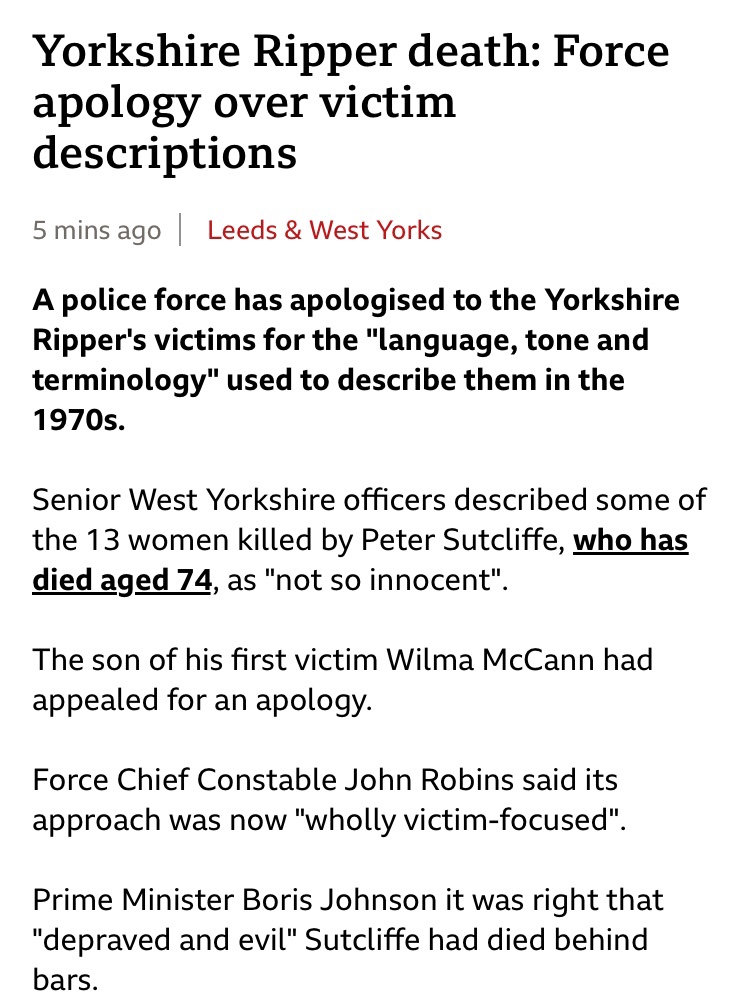
Presented without comment. BBC News report on the day Sutcliffeโ€™s death was announced.

The โ€œrightโ€ sort of crime

Easy to solve crime is preferred. Especially if itโ€™s hitting targets or addressing an issue of public concern. More complex investigations are likely to be shunned on the basis of the time, expenditure and difficulty of prosecuting successfully. Then and now police have one eye on the crime statistics and are more likely to address issues of public concern based on recent media exposure of such crimes. Thereโ€™s a reason The Serious Fraud Office are so notoriously unsuccessful despite The City of London being rampant with financial corruption. In the matter of the Sutcliffe investigation it is arguably only when he began to operate outside of the red light areas from 1978 onwards that the police ramped up efforts due to increased public concern. This public concern increased again from 1980 onwards.

Conclusions

Ultimately Sutcliffe was caught by sheer luck and the most basic of police work.

He was picked up by uniformed constables from South Yorkshire Police in a situation in which he was likely preparing to kill again. Having disposed of his weapons behind a toilet cistern under the pretext of needing to urinate it is the quick-thinking of a South Yorkshire PC which led to the discovery of the weapons and the eventual confession of Sutcliffe that he was the killer.

The hugely expensive and lengthy investigation by West Yorkshire Police had been an excruciating waste of time and money. Arguably by tying itself in knots by a combination of weak administration and blinkered mindset the investigation had allowed Sutcliffe to carry on killing.

Serial killers are thankfully exceptionally rare and unusual. The advances in forensic technology and other policing methods in the forty nine years since he was caught render another Yorkshire Ripper type of killer thankfully even less likely.

However a weak spot remains in the mindset and attitude of police officers as I have discussed. Then and now significant barriers exist in investigations due to habits itโ€™s almost impossible for police officers to break. This is partly fostered by an inherited organisational culture and thus will remain with us for some time yet.

A Cautionary Tale of Judges and Twitter. Part Two

Recorder Ben Nolan QC, a part-time, fee-paid judge on the North East Circuit posted an inadvisable tweet in the late evening of 18th June, 2020:

The relevant Twitter account has now been deleted.

Like the account of HHJ Sarah Greenan, a Family Court judge sitting at Leeds and who has been subject of a prior blog post regarding judicial misuse of Twitter.

Ben Nolan QC is assumed to have sufficient seniority as a judge to be aware of the judicial conduct rules and how these relate to the expression of opinions on social media and elsewhere.

However letโ€™s count the issues with the tweet above, shall we?

  • Inappropriate uses of expletives
  • Political opinions expressed regarding the Government
  • Poor diction – an issue which has been said to appear in Ben Nolanโ€™s judgments
  • โ€œfetid Primark storeโ€ expresses social prejudice against the people youโ€™d likely find in Primark if not the store itself.

A complaint was made to the reliably ineffective Judicial Conduct and Investigations Office which supposedly enforces judicial conduct guidelines. The complaint was made in the terms mentioned above. JCIO can usually be relied upon to evade proper action on complaints about judges via a series of โ€œtrapdoorsโ€ built into the regulations which allow such cuffing off of legitimate complaints.

However – again unusually for JCIO – the issue made it as far as Nominated Judge (NI) stage. In this matter the NI being The Right Honourable Lady Justice Carr. In a complaint outcome letter dated 21st August, 2020 the JCIO stated that the Nominated Judge (NJ) concluded that:

โ€œI do not consider that the posting of the tweet amounted to judicial misconduct. The tweet was not sent from a judicial account. The details of the account did not identify its holder as a judge. Nor did the contents of the tweet identify in any way that the author was a judge. In short, the tweet contained a private expression of opinion, albeit in offensive language, on the part of the Judge in circumstances that did not implicate him as a judicial office holder. In these circumstances, it did not risk bringing the judiciary into disreputeโ€

The NJ also considered that:

โ€œthe tweet did not reflect any social prejudice on the part of the Judge. Rather it reflected what the Judge had seen in the newspapers and on televisionโ€.

You might of course wonder about the common sense of a judge who bases his opinions on things he has seen on television or read in a newspaper!

Recorder Ben Nolan QC

The Nominated Judge went on to say:

โ€œAccordingly, the complaint has been dismissed under Rule 41 (b) of the Judicial Conduct (Judicial and other office holders) Rules 2014.โ€

Regardless of the NIโ€™s findings the rules regarding judicial conduct apply if the judge is identified / self-identified as such or not. Otherwise there is little point having the rules! As such the findings of Lady Justice Carr are at best unsustainable.


The findings of the Nominated Judge have been appealed on these grounds:

The outcome letter states:

The tweet was not sent from a judicial account. The details of the account did not identify its holder as a judge.

However the March 2020 Guide to Judicial Conduct states:

Judges should be aware; however, that participation in public debate on any topic may entail the risk of undermining public perception in the impartiality of the judiciary whether or not a judgeโ€™s comments would lead to recusal from a particular case. This risk arises in part because the judge will not have control over the terms of the debate or the interpretation given to his or her comments.

The risk of expressing views that will give rise to issues of bias or pre-judgment in future cases before the judge is a particular factor to be considered. This risk will seldom arise from what a judge has said in other cases, but will arise if a judge has taken part publicly in a political or controversial discussion.For these reasons, judges must always be circumspect before accepting any invitation, or taking any step, to engage in public debate. Consultation with their relevant leadership before doing so will almost always be desirable.Where a judge decides to participate in public debate, he or she should be careful to ensure that the occasion does not create a public perception of partiality towards a particular organisation (including a set of chambers or firm of solicitors), group or cause or to a lack of even handedness. Care should also be taken therefore, about the place at which and the occasion on which a judge speaks. Participation in public protests and demonstrations may well involve substantial risks of this kind and, further, be inconsistent with the dignity of judicial office.


This is stated in the context of post on social media or to newspapers etc.

There is no requirement in the Conduct Regulations that a judge is able to state anything he or she wishes provided he is not identified as a judge. Which of course makes a nonsense of the Nominated Judgeโ€™s application of the rules. In fact it rather shows that the NI has misapplied the rules to avoid making a judgment against Recorder Ben Nolan QC.

In fact the rules apply to judiciary regardless of if they are commenting from a personal perspective, or as a judicial office holder. Different rules of course apply to such as The Secret Barrister who is believed to be a member of counsel but is not identified directly as such.

There is no mention made in the Conduct regulations that the judge is able to publicise his own views regardless of if he mentions his judicial office or not. The rules apply equally to someone identifying themselves as a judge or not.

The response of The Rt. Hon. Lady Justice Carr hinges on the basis that the judge was not identified on his Twitter account as a judge. This is the basis for her dismissal of the complaint. This is not relevant to the complaint and in this matter has been seized upon as grounds to dismiss the complaint erroneously and contrary to the relevant rules.

One might wonder about the reliability of the investigation given the deeply odd findings made.

Anyone working on the North East Circuit (presumably the majority of Ben Nolanโ€™s Twitter followers) are able to identify the Twitter account holder as a judge and the majority of the persons following the account will also have been aware that he was a fee paid judge from either media or professional connections. That the account holder was a member of the judiciary is something clear and obvious from the account itself.

Recorder Ben Nolan QC described as โ€œa heavyweight in criminal practiceโ€.

The basis on which the complaint has been dismissed is therefore spurious and erroneous.

In respect of the comments regarding Primark clothing stores the findings of the Nominated Judge stretched credulity even further. For good or ill that store seems to be one ripe for mockery as a place where people without much money tend to shop. The NI claimed:

โ€œthe tweet did not reflect any social prejudice on the part of the Judge. Rather it reflected what the Judge had seen in the newspapers and on televisionโ€.


This is problematic in a number of areas. Firstly why would Ben Nolan QC comment on something that he has picked up from second-hand experience? Is also his comment not reflective of social prejudice on the part of the source material in newspapers papers or on television in which he has seen such comments? Regardless of if a prejudice has been obtained from TV or newspapers the expressing of the same ideation by a person โ€“ particularly a person intelligent enough to recognise them as being prejudice โ€“ is effectively them expressing the same prejudice.

I would say that the tweet regarding Primark does express social prejudice on the part of a judge and that this is an exceptionally concerning matter.

The complaint outcome has been appealed. The outcome of the appeal is awaited.

It has been intimated in a separate civil case that Ben Nolan will shortly no longer be undertaking judicial work.

A Cautionary Tale of Judges and Twitter. Part One.

HHJ Sarah Greenan (left)

Judge Sarah Greenan (or HHJ Sarah Greenan) sits as a judge in the Family Court at Leeds Combined Court and also as a Crown Court Judge in Manchester. Her old chambers are Zenith in Leeds.

For most of her time sat on the bench she appears both bored and irritated by the mechanics of the job she has to do.

Specific rules exist in relation to judges and their ability to express an opinion in a public forum as well as their use of social media. These are enshrined in the Judicial Conduct Rules.

In February 2019 Judge Greenan posted a tweet to her since deleted Twitter account @Sarah_Zenith which expressed satisfaction that a High Court Judge has upheld an appeal in relation to a judgement she made and also that the Court of Appeal upheld her in a different case.

You may of course be wondering at this point why this judge has so many of her cases sent to appeal. This isnโ€™t for me to comment but doubtless you can draw your own conclusions. Her pastoral supervisor is Judge Mark Gosnell, the senior civil judge for Leeds and Bradford, who also sits at Leeds.

However the sending of such a tweet amounted to a breach of regulations governing judicial conduct.

In cases such as this (or for example if a judge is abusive or aggressive in a hearing) there is a body to which complaints can be made. This is the reliably ineffective Judicial Conduct and Investigations Office based at The Royal Courts of Justice in London. Despite its name this is an office which actively seeks to avoid any examination into judicial misconduct and will seek to disapply – that is to say reject – complaints for a number of spurious reasons. Britainโ€™s public life is beset with watchdogs which have no bite: it enables a โ€œbusiness as usualโ€ approach to the corruption and incompetence which characterise public life in the UK.

But to everyoneโ€™s surprise this matter was taken up by JCIO. Which was one of a handful of complaints they did choose to investigate in 2019 and not โ€œcuff offโ€ as is standard procedure. Perhaps because this is a relatively low-level offence for which the evidence of misconduct was clear and unarguable. Or perhaps JCIO had a quota of complaints to process in 2019 to make it look as if the office was actually doing their job and this was seen as a trouble-free investigation. The matter was examined by the reliably obstreperous Isabelle Odowa at JCIO.

In short not even JCIO could not find a way to dismiss the complaint!

The basis of the complaint was that a lack of impartiality was shown in the opinions expressed, that personal opinions were shown and that the relevant codes of conduct for judges making public comments were breached.

As per standard procedure the complaint was referred to a Nominated Judge and then onwards to The Lord Chief Justice and Lord Chancellor. Each made a finding against HHJ Sarah Greenan with the ultimate conclusion being that the complaint was upheld.

The sanction imposed was informal advice in accordance with Para. 15 (2) & (3) of the Judicial Discipline (Prescribed Procedures) Regulations 2014.

This โ€œcosy chatโ€ approach of providing informal advice doesnโ€™t seem like much of a sanction. And it isnโ€™t. Because as this and several other cases referred to JCIO and upheld by The Lord Chancellor show โ€œlight touchโ€ regulation is very much favoured particularly when it comes to misconduct from judges.

However it can be noted that judges as far south as Central London County Court were aware of and discussing this case after The Lord Chancellorโ€™s decision and as such it may have sharpened up the behaviour of some of the judiciary on social media. Or not in the case of such as HHJ Recorder Ben Nolan QC… whose case I shall go into in a separate blog post one day.

This whole matter has made it clear to Judicial Office however that HHJ Greenan isnโ€™t someone who can be relied upon not to make inadvisable comments in public forums. The judiciary tends not to appreciate members who are too verbose in this was & her actions may cost her a promotion or a minor title on retirement somewhere down the line.

Covid Secure Civil Courts?

Severe concerns exist regarding the safety of those being compelled to attend HMCTS civil courts

The official line from HMCTS is clear. That courts in the UK are COVID-19 secure.

The facts tell a different story altogether.

Outbreaks at half a dozen courts in the North East and North West circuits such as Leeds and Liverpool in the last few weeks show that HMCTSโ€™ position is at best ill-informed and hopelessly optimistic. There have been further instances of the virus spreading at other courts across the UK. The PCS union has expressed severe concerns to its members regarding the safety of their workplaces, as has The Bar Council.

PCS members are encouraged to walk out of an unsafe working environment. Given the level of workplace bullying known to go on at civil courts such as York County Court itโ€™s highly unlikely any member of court staff would do this.

Civil court users are not so lucky.

I have a hearing in case at Doncaster next week. The Defendant in the claim has already expressed surprise that the hearing is still set to go ahead despite a second national lockdown.

I have also expressed my own surprise to court staff who simply directed me to a webpage with the usual platitudes and informed that the hearing was still set for next week. The attitude towards safety concerns raised was dismissive and lethargic. This is simply not good enough in a pandemic.

None of the valid concerns I have expressed in communication with the court have received a response.

The simple fact is that a public building cannot be made COVID-19 secure any more than HMCTS can claim to have ensured a building is totally free of dust, oxygen or carbon atoms. Thus everyone attending a hearing at any court will be exposed to a potential risk of a severe illness, as will any of their family members when the attendee returns home.

If HMCTS were an organisation which is able to get the basics of running the civil system right then there would be more confidence in the claim that courts are COVID-19 secure. But the hopelessly inept, slapdash approach that characterises HMCTS pre-pandemic does not inspire confidence.

When people are being compelled to attend civil hearings in circumstances where there have been severe outbreaks in court buildings and staff appear dismissive of safety concerns one has to consider what the priorities of HMCTS are. Public health isnโ€™t one of them.

Design a site like this with WordPress.com
Get started