How Establishment Judges Protect The System

Occasionally, High Court judges get in the news for all the wrong reasons. As the text below shows I am unfortunately burdened with having to deal with a judge called Nicholas Lavender. He is known as The Honourable Nicholas Lavender. Unfortunately, I get stuck with his evil twin The Dishonourable Nicholas Lavender. Heโ€™s recently been in the news for two key issues. The first of these is his incorrect sentencing of a MP caught committing sexual misconduct, more on this below. The more recent of these two stories concerns his membership of the Garrick club, an all male organisation, which appears to contain a suspicious number of high-level judiciary. More can be seen on this here: https://www.theguardian.com/society/2024/mar/18/garrick-club-bastion-male-elitism

Judge Nicholas Lavender

In 2016, I was subject to a wrongful conviction. The conviction was wrongful because evidence which showed factual innocence was withheld from the court and further evidence which would have undermined the prosecution in respect of the complainant was also withheld. Such information has subsequently been located, such as the complainant publicly being named as serial complainant and compensation seeker. This has resulted in her being the subject of articles in the national press showing her patterns of behaviour for the purpose of obtaining compensation.

It was known at an early stage that the prosecution was wrongful, evidence was being withheld and the whole matter conducted by officers who we have subsequently discovered had committed prior misconduct including data manipulation and computer misuse offences. Humberside Police is still known to be in possession of a significant amount of data showing factual innocence. Efforts have been made to obtain this data via civil proceedings and judicial review.

The British court system seeks at all stages to maintain wrongful convictions by a number of underhanded methods. One of these is that efforts to obtain evidence which is known to exist showing factual innocence will be blocked via a number of methods. One of these is simply hiding the evidence and failing to show this to a defence team. This is illegal and contrary to The Criminal Procedure Investigation Act. This happened in my case. However another means of hiding evidence known to exist is for a judge to effectively act as a โ€œgatekeeperโ€ placing restrictions and denying access to evidence which will show the police, CPS and the court itself have missed conducted themselves in order to obtain and maintain wrongful conviction. This enables any police and legal professionals involved in a deliberate miscarriage of justice to avoid blame for misconduct in public office. 

In my own matter the judge Nicholas Lavender known as The Honourable, Mr Justice Lavender (pictured) acts as gatekeeper to block applications made to obtain data showing factual innocence which would open the way to overturn of the wrongful conviction. 
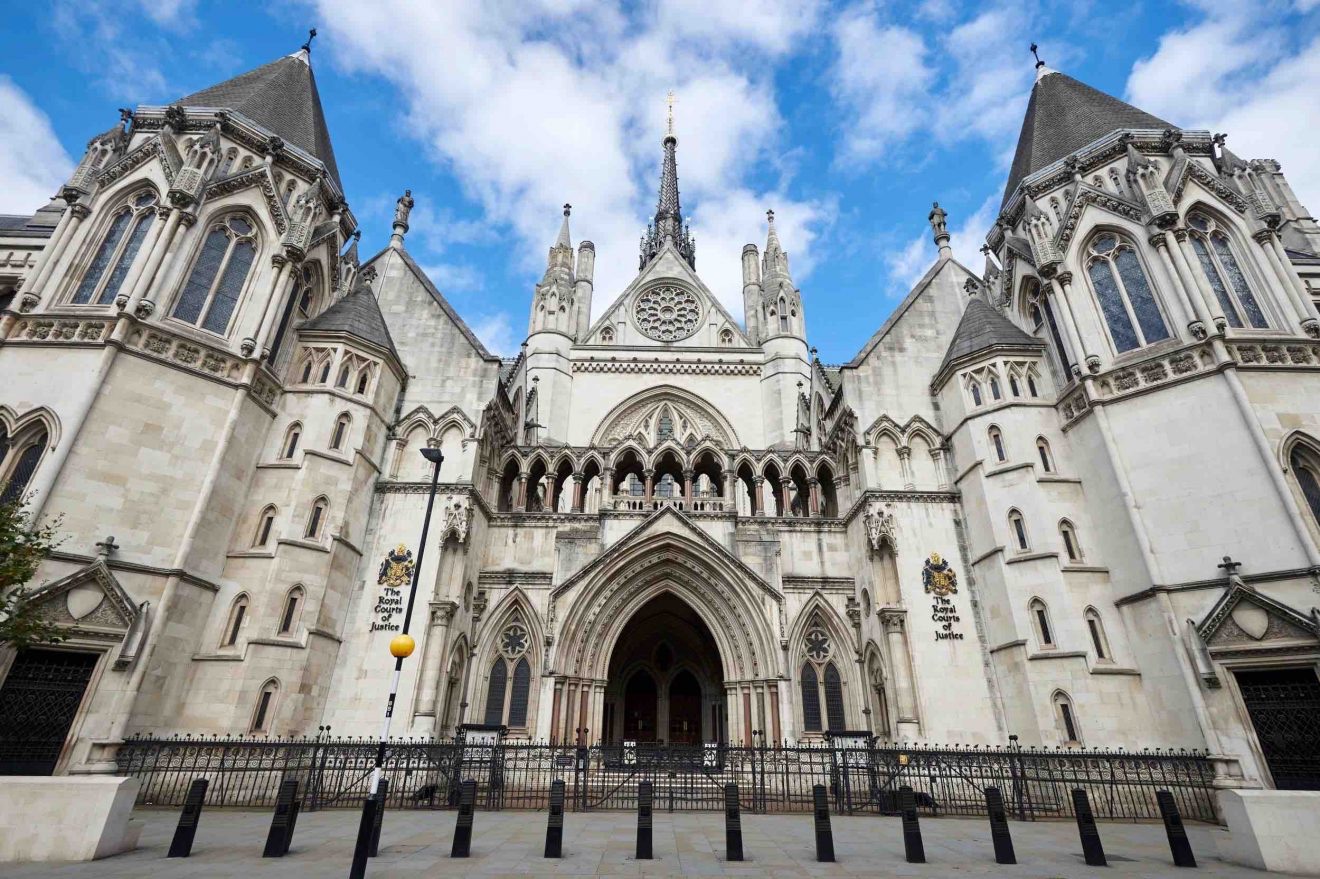
The High Court


As such, Nicholas Lavender knows full well that he is acting to maintain an injustice and doing so oppressively by the continual application of a series of civil restraint orders which act to limit and restrict my ability to use the civil court system to obtain information that would enable the matter to be returned to the Court of Appeal.
This has now become a personal matter for him: in the orders that he makes in relation to myself he insures that the wording he is as disparaging and borderline offensive as possible. In return I am happy to publicise his abuse of office in order to protect persons within the criminal justice system who have committed misconduct in public office. 

 

Image: The Guardian. Disquiet has been expressed over the number of senior judges who are members of The Garrick Club.

It is of course quite logical that one judge would seek to protect his colleagues within the criminal justice system via abuse of his position. This maintains the professional reputation of the criminal justice system and also the idea that mistakes do not happen. It is more important for sitting judges, and HMCTS, to preserve the professional reputation of the criminal justice system that it is for them to look into and find where injustices have happened, and correct them. 

Below is the text of a statement given to Mr Justice Lavender at The High Court in May 2023. This was in relation to his stated aim of renewing a civil restraint order against me for another three years. In any encounter I have had with Lavender. His aim is always to restrict and curtail my ability to be able to obtain redress in relation to wrongful conviction & and any other civil proceedings. 

At this hearing were Francesca Oโ€™Neil from The Ministry of Justice and Lynn Temp from the Government Legal Dept. it is telling that these two people from these organisations were invited by the court to this hearing. Because these are two people from two organisations who have the most to lose from a wrongful conviction obtained by manipulated evidence being exposed publicly. They both argued that the civil restraint order should be maintained. This is because the maintenance of such enables them to avoid civil action for failure to produce data showing factual innocence made under relevant data access legislation. 

Any application made in civil proceedings is immediately referred to Lavender, who then strikes the claim out for a variety of inapplicable and tenuous reasons and always with an order which just skims the boundaries of being personally abusive towards myself. 

My statement began with some preliminary discussions. I then went on to say to Lavender:

—————


“What this suggests [I referred to other judges who approve applications made in civil and other proceedings] is that it is only you who has a problem with applications that I make, restricting such applications in order to cause unfair disadvantage. 

It also suggests that the restrictions put in place by a CRO are not immutable. That, depending upon circumstances, it is perfectly possible to make an application in any set of proceedings. The wording of the CRO should not have allowed any such applications to have been made. Whereas if I were to make a new claim, this would be immediately put before you, and you would seek any reason possible to strike it out despite the validity of the claim and the clarity of the particulars of claim.


It is my misfortune that any claim I make is immediately passed to you. When other judges are involved the CRO is not treated as an issue when it comes to making applications. 


You seek irrelevant grounds for striking such a claim out. I will discuss the reasons for this shortly, but the reasons are no different to how they were when we were last at this juncture in 2021.


I see that the standard invite has been sent out for todayโ€™s hearing and the usual ghouls [named above] are clearly in attendance. These are the two organisations which have a most to lose from my being able to make applications at court. Both organisations were intimately involved in a severe and prolonged miscarriage of justice. Relevant data has been obtained showing that this is a wrongful conviction on the basis of evidence showing factual innocence being withheld in order to obtain wrongful conviction. Evidence was withheld contrary to the order of the trial judge in the case. Despite efforts on my part to obtain this since directly from the organisations concerned. 

This is how you when I first crossed paths because I made an application for judicial review into both CPS and Humberside police for withholding information contrary to the Criminal Procedure & Investigation Act. The matter of the appeal into wrongful conviction is now before a London-based barrister and solicitor. 

Your actions in striking out the judicial review applications, one against each organisation, meant that the information showing factual innocence could not be obtained via reasonable means through the civil courts process.


You knew this full well when you made the CRO – and the purpose of extending the CRO in June 2021 – and today (because I am confident that you will decide for, however tenuous a set of reasons that you intend to extend this for a further two years) is to prevent applications being made which will produce further evidence showing factual innocence.โ€จโ€จ

Rather hilariously North Yorkshire police have also decided to pitch in. Since there has been no contact with that organisation between 2019 and today it makes me question why they would bother. And it seems that this is in relation to the fear that at some point in the future that proceedings might commence against North Yorkshire police. This is not a reasonable justification for maintenance of the CRO. 

At some point in the future they may be a form of misconduct against me from any organisation. Itโ€™s hard to countenance the idea that a public funded organisation would seek to restrict a personโ€™s ability to be able to make legitimate claims by extension of a CRO which would prevent action against any organisation or individual who commits a tort against them purely out of fear that that individual might at some point launch in action against North Yorkshire Police This is either something that Iโ€™m missing the point on or entirely or itโ€™s spectacularly, selfish and the argument is bad on its face being made to protect an organisation but causing significant disadvantage to an individual. 


As I mentioned the existence of a CRO prevents legitimate and reasonable claims being brought on the back of torts committed against me. As far as I’m aware it is unreasonable in the extreme for such an organisation to request that the CRO is extended on the basis that they may be future claims against that organisation, including for torts they have not yet committed. 


There is an obvious interest in this matter from organisations, such a CPS and Humberside Police. They have committed clear misconduct putting their professional reputation and the careers of serving personnel at risk. 


At the last such hearing to decide whether this CRO should continue I spent a considerable amount of my time outlining all of the instances in which you have acted unfairly, unreasonably, or otherwise to abuse your position in order to assist organisations, such as Humberside Police and CPS in maintaining the wrongful conviction. I do not intend again to go over each of these instances in which a judgement has been made which is illogical and contrary to the evidence produced. 

Suffice to say that in all of the instances of claims I have made that have been outlined in documentation for this hearing that there has been a deliberate ignoring of key pertinent facts in the judgment made striking the claim out. 

It is of course much easier to strike a claim out if you ignore a key aspect of the particulars of claim and key evidence that supports them. You even have a set  template on which you will issue such judgements. This template is worded identically on each occasion. Particularly choice phrase that appears within these judgements is โ€œMr XXXXXX wastes public money and has done so for years.โ€œโ€จโ€จ

What isnโ€™t a waste of public money is your salary. Because you are prepared to act to protect the reputation and interests of bodies within the criminal justice system that have clearly missed conducted themselves. And the evidence that they have misconducted themselves clearly exists and is presently with a London-based solicitor and counsel. 

These organisations have themselves attempted via every means possible to conceal the evidence of professional misconduct for the purpose of reputation management. Your primary concern in imposing and renewing a CRO is therefore to maintain the reputation of the convicting court, police and CPS.

In the last hearing of this nature in June 2021 I pointed out salient facts. Firstly, that evidence proving both these organisations acted to cause a deliberate miscarriage of justice and obtain a wrongful conviction has been secured. I also stated that rather than you taking the reasonable line of requesting to see the withheld evidence showing factual innocence and then making an order [to CPS and Humberside Police] to supply the missing data you instead decided to support the misconduct carried out by the state and its agents by again extending the restraint order. This is despite the fact that it was pointed out to you clearly that there has been a significant miscarriage of justice and sufficient evidence exists of this for solicitor and barrister to have received several hikes in their legal aid funding.


However the professional and public reputation of the CJS comes first regardless of how obvious the miscarriage of justice is.  Hence, the reason some very high-profile miscarriage of justice cases spend years languishing in prison, despite the fact that it is known where the evidence of factual innocence is and who is holding it. 


Maybe your role is not to assist in finding of fact but rather to support the reputation of a system in which you work while you have a little fun yourself along the way. I refer to the case of your sentencing of Labour Party Peer Lord Ahmed. Having myself been on the receiving end of your florid pronouncements, made without any form of justification about me in your judgements, I can imagine the joy you got in being able to pronounce in the Lord Ahmed case. A matter in which you spent so long proclaiming about actions that Lord Ahmed has carried out that you forgot the basic issues involved in sentencing, leading to a successful appeal and a reduction in his sentence.


โ€ฆI doubt that Iโ€™m the only person who you have acted to complicate their appeal into wrongful conviction by the application of a CRO.

You are fully aware on the basis of evidence put before you in the two judicial review applications in 2018, that there has been a significant miscarriage of justice, but rather than make relevant orders and allow applications that would have enabled the production of the relevant information you chose instead to apply a CRO, restricting my ability to obtain evidence for the purpose of appeal.


You now seek to extend the civil restraint order for a second time. Iโ€™m reasonably sure that such would be on unprecedented act.


Certainly, it would be unprecedented restriction upon my ability to be able to correct torts and take reasonable action to protect my own interests via the civil court system.


In the last such hearing in June 2021, I spoke at length about several civil claims that had been shut down by you contrary to established procedure, reasonableness or fairness. The entire text of a very lengthy series of submissions made at the last hearing was made available online shortly afterwards. And on my blog this forms the most accessed page. 


I do not intend to repeat the contents of the submissions made in June 2021. The text of those submissions are of course freely available online. However, in this instance I will focus on one particular case which acts as a microcosm of your handling of any claim brought by myself or now it would seem also my family members. 


Claim number XXX was dismissed again unreasonably and without proper grounds on the basis that it was believed that I was behind a claim made by my mother in respect of XXXXXXXXX Council. Why was this unreasonable? The answer to this is very simple. Because at any point you couldโ€™ve ordered that my mother appeared by video link or took an oath in her home witnessed by the family solicitor to say that she was the person behind the claim, directing it and instigator of it. Instead you took actions to limit her ability to be able to make a reasonable claim in respect of XXXXXXX Council mistreatment of her for an entirely unfair and inappropriate reason. It was within your capability to be able to confirm that my mother was the person behind the claim at all stages. But you did not seek this information, and instead sought to strike the claim of a third-party out. Not only the claims I bring but also those brought by my relatives and immediate family are now also liable to dismissal on the basis that they will be scooped up and put in front of you by court staff.


This is an abuse of power. It is an absence of duty of care and a clear breach of the principles established in The Equal Treatment Bench Book. You prevented my mother from being able to take action in relation to an actual harm caused to her by XXXXXXXXX Council.


On this basis it is foolish for me to assume that there will be any fairness or reasonable treatment within this hearing. There has been malpractice and discriminatory behaviour known from you towards me since 2018. The point of this hearing is simply to re-establish the civil restraint order for another two years. 


The rejections of legitimate meritorious claims made of the course of the last two years, which do not in any way represent an excessive number of claims but which were rejected with wording from you that I have described in this statement, was done on purpose to enable the hearing today to further extend the civil restraint order. In other words the purpose of the of this hearing is simply to rubberstamp what has been in the your mind for around two years: that myself, as claimant should be further disadvantaged, limited and exposed to professional misconduct by other persons and organisations, without ability for legal recourse to correct torts against me. This is all to protect CPS, Humberside Police and Hull Crown Court from the effects of their own professional misconduct and negligence.


Anything I say within these proceedings, any comments I make and any legal arguments, however evidenced and persuasive will be ignored. This is because in every encounter with you over the last two years you have presented an unrealistic picture of the merits of claims that I have brought purely for the purpose of dismissing such claims. As such all the involvement that Iโ€™ve had with you over the last two years has, from your perspective, been for the purpose of establishing a case for the hearing today, in which youโ€™re able to again justify the reimposition of the CRO for another two years.


Again, this is not fair or reasonable approach to take. But your interests lie in protection of criminal justice system from exposure of its misconduct, particularly public exposure leading to loss of confidence in such bodies as work within the CJS. As such again all of your actions over the last two years have been to enable you to rubberstamp another two-year stretch of a CRO today. As the appeal into my wrongful conviction moves forward I hope youโ€™re prepared to be on the wrong side of history.


I also hope youโ€™re prepared to be in a position in which your actions in seeking to maintain the wrongful conviction & protect those responsible for it and limit and restrict my ability to make applications in civil court cases in respect of it should be exposed publicly at a point where the wrongful conviction is overturned.”


———————————————-

Final word.

Looking at the membership of the Garrick club, which Nicholas Lavender is a member of it is clear and logical that Lavender would seek to protect the establishment that he Is a significant part of. The more high-profile members of the club can be seen here: https://www.theguardian.com/society/gallery/2024/mar/19/garrick-club-notable-members-in-pictures
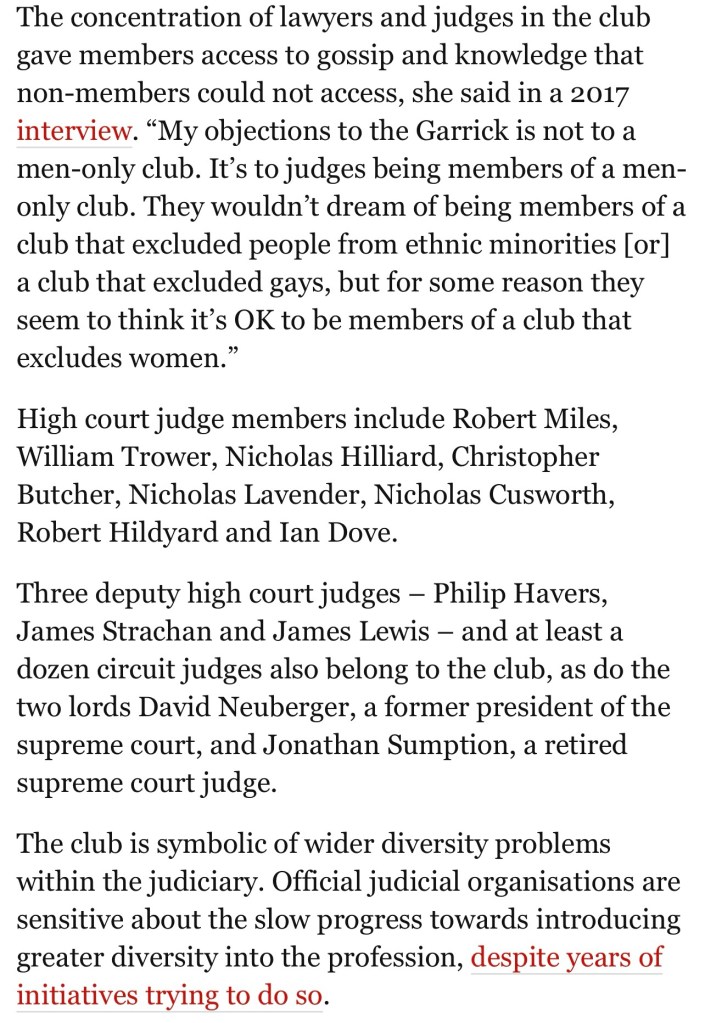
Extract from The Guardian article on High Court judges who are members of The Garrick Club. 19.3.24


Lavender uses his position as a High Court judge to protect elements of the criminal and civil justice system, which have missed conducted themselves causing disadvantage to the public and potential loss of professional reputation to the courts. As such, Lavender is prepared to misuse his position in order to protect his colleagues and the system in which they work.

This is the low standard of British justice in the early 21st-century.

What is the cost of a human life in modern Britain?ย 

If an employee is killed in their place of work The Health and Safety Executive will generally fine the negligent firm around ยฃ8,000.  

This is one measure of the value of human life. It is the cost of a life lost through casual disregard for safety.  

But how much does it cost for the state to actively destroy the life of a human being, leading to their illness and death? โ€จ 

I would be willing to bet the overall cost of this is significantly more than about ยฃ8,000. Currently Wakefield Council are refusing to reveal the cost of legal proceedings against an elderly lady, the concerns caused to her by the actions of the Council and their agents resulting in weakening of her immune system, illness and premature death.

Regardless the cost would be equivalent to the hourly rate of a solicitor employed by Weightmans of Liverpool and the additional cost of time for employees of Wakefield Council, at around six months of chargeable time for each.


What am I about to detail to you in this blog entry links into a previous blog entry seen at https://legalbabble.law.blog/2022/09/03/elder-abuse-social-worker-coverup-in-evidence-to-the-high-Court/ 

Because of events detailed in that previous entry I was effectively gagged from being able to discuss any of the things that happened in this matter while they were actually happening. The Courtโ€™s imposition of an order effectively restricting my ability to discuss any aspect of a malicious pursuit of a seriously ill elderly woman while the matter was still active. As a result of this gagging a significant instance of structural violence practised by the state against one of its more vulnerable citizens was allowed to continue. In silence.

The definition of structural violence can be seen here:

https://en.wikipedia.org/wiki/Structural_violence

There is of course an interest on the part of a Court, which sought to largely misdirect itself and neglect any form of protective role for a vulnerable person, in preventing the wider public becoming aware of the more significant abuses of Mrs. X. The Court effectively turned a blind eye to these abuses carried out by the legal firm Weightmans acting on behalf of Wakefield District Council, even when made aware of them in an application in proceedings.

All these forms of abuses of Mrs. X detailed in this blog entry could only be carried out in a situation in which the issues I raise cannot be discussed in the media or online. It is highly likely that the gagging order on the prior blog entry was imposed upon myself as the judge in the matter was fully aware that he intended to largely ignore his duty or responsibility under the Equal Treatment Bench Book or the duty to Mrs. X as a party in a claim who possessed what HMCTS define as โ€œprotected characteristicsโ€.

This blog entry details what happened within the case brought by Wakefield Council against Mrs. X, the effect on her health of that case which led directly to her early death and calls to account the persons responsible. It also considers the extent to which Wakefield Council Social Services failed to take into account the degree of distress and anxiety that their own actions caused towards an elderly person, and how the malice and negligence of the Council, The High Court and of the solicitors firm Weightmans ended up causing illness and premature death for an already ill elderly lady.

This is Mrs. X.

Although she had Parkinsonโ€™s she maintained a healthy lifestyle and had an active, social life. At eighty seven she lived life to the fullest despite advancing years. An application was made by her in early 2022 to obtain Continuous Healthcare Funding from the NHS. This funding enables a person who is growing progressively worse over time to have relevant care and nursing fees paid for by the NHS. In the course of an assessment in person, Social Worker Joanne Cave of Wakefield Council Social Services was invited by the NHS to attend.

Now itโ€™s important to recall that there had been numerous previous errors by Wakefield Council in the care of Mrs. X, including failure to record correct information, refusal of access to Council services, and harassment by a previous social worker, Chantelle Hawkins when informed by Mrs. X and her family that social care from the Council was not needed.

Wakefield Council are highly invested in the idea of inserting themselves as much as possible into the lives of elderly persons on the basis that they will attempt to find out the extent of the persons assets and income so they can levy against these assets the the event the elderly person needs nursing care. Categorically at no point was any social care provided by the Council: and there was no need for such.

Therefore Mrs. X. would never have agreed willingly to a Social Worker from Wakefield Council attending the Continuous Healthcare Funding appointment because in the past the Council had proven themselves to be inept, negligent and reluctant in correcting obvious errors that they made to the detriment of Mrs. X. Iโ€™ll give you one brief example of this: in order to deny Mrs. X access to any Council run services in the period late 2021 to May 2022 a report was written which ignored any medical conditions that Mrs. X had. The content of this report ran completely contrary to previous social care reports which mentioned her medical conditions clearly and in full. True enough the Council, then used the existence of this report to claim that Mrs X was not ill enough to require access to certain services provided by Wakefield Council. I have every expectation that this is a regular tactic used by local authorities to deny access to services for the elderly and the ill.

Nevertheless, Social Worker Joanne Cave attended the Continuous Healthcare Funding meeting alongside a representative from the NHS, despite not being invited into Mrs. Xโ€™s home. And for a number of weeks afterwards consistently rang Mrs. X to pester her to take Council social care services. It was clearly stated that these were not needed as sufficient care was already in place alongside care paid for privately. However the calls continued.

The aim of attempting to push social care provided by the Council is very simple. The Council will not provide social care without having conducted a financial assessment on an elderly person first. This financial assessment enables them to see the extent of the persons income, assets, and suchlike. Again, the purpose of involvement of the Council is always the same – they want to discover the extent of a persons wealth so that they can levy against that in the event the person needs nursing care, and take their assets in order to pay for that care.

Wakefield Council headquarters

It is not difficult to harass an elderly lady who is already ill and upset her to the point where she becomes more ill, as Social Worker Cave knew full well. The constant pestering from Joanne Cave induced a urinary tract infection in Mrs. X, which produced nocturnal incontinence lasting until her death some eight months later. Thus the unwarranted intervention of the social worker caused needless misery and unhappiness for Mrs X.

A complaint was made to Wakefield Council Social Care Complaints, but no response was given by the Council. They stonewalled the complaint in order to avoid investigating or admitting a breach of duty of care which had made Mrs. Xโ€™s medical conditions and quality of life worse.

Social Worker Joanne Cave was not so reticent, and immediately on learning of the UTI infection caused to Mrs. X by her actions (being told by the Coucilโ€™s Social Care Complaints office), rang Mrs. Xโ€™s GP and attempted to obtain confidential medical information from the GP without the permission of Mrs. X and in full knowledge of the fact that such incitement to reveal confidential medical data would have been inducing the GP practice to breach data protection regulations & GDPR.

Cave did this in full knowledge that that she had no right of access to any that information. These are the actions of a social worker who seeks to misconduct herself to obtain some form of protection from the results of her own professional misconduct.

You can read all about this in the blog entry I referred to above.

A copy of these call recordings were supplied to me in full by the GP practice together with the emails Social Worker Joanne Cave had sent to the practice.

Something more important to the Social Worker than caring properly for people under her charge is maintaining her professional reputation, especially in a situation where she has now committed potentially damaging professional misconduct, leading to further illness on the part of someone under her care.

Joanne Cave mustโ€™ve known that she had acted illegally in attempting to obtain medical data, as well as having breached her duty of care and professional standards in inducing a UTI in Mrs. X by her pestering.

Failing to obtain confidential medical data via the underhanded methods used meant that Joanne Cave had to go another route. Despite the content of a report written by her when the NHS funding assessment was undertaken speaking in glowing terms about the care provided for Mrs. X she decided that the easiest way to obtain this medical information was by creating a High Court claim falsely stating that Mrs. X was not being properly looked after by her family and that by creating a hue and cry over this matter she would be able to obtain the medical data, and possibly pressure Mrs. X to obtain a care package, producing income & financial data for the Council. This being the original plan of her continual pestering of Mrs. X.

Consequently proceedings were launched at the High Court in which Mrs. X was made a defendant with the aim of the case being that she would be forced to justify her own care arrangements, her mental capacity, and domestic situation & to produce proof that all of these were satisfactory. Presumably the same people who had induced in her a lasting UTI, falsified care records (legally amounting to a criminal offence in law), and we are now inducing further needless stress on Mrs. X would be the ones to determine if the existing care arrangements were โ€œsatisfactoryโ€ or not.

I repeat for the avoidance of any doubt that the report produced by Cave herself in May 2022. Spoke well of the care marrangements for Mrs. X

At no point did Wakefield Council carry out an assessment to determine if its malicious claim was causing Mrs. X undue anxiety and distress. They will of course have known from the fact that Caveโ€™s actions induced a UTI in her in May 2022 that a High Court action would have created even more stress and anxiety for Mrs. X.

On this basis it is strongly considered that the case was in part brought precisely to cause distress and anxiety to Mrs. X possibly because a complaint had been launched regarding Joanne Caveโ€™s behaviour and there existed the need for her to throw attention away from herself in relation to that by creating a hue and cry over Mrs. Xโ€™s care arrangements.

Ahead of the action being launched, Joanne Caveโ€™s immediate superior Meuhun Nessa called Mrs. X and her family to gloat about the impending claim. The purpose of such a call was simply to cause anxiety and distress ahead of the actual proceedings.

Enter now the Liverpool law firm Weightmans.

Jamin Lennard
Morris Hill

This is Jamin Lennard and his collegue Morris Hill of the firm. Both are jointly and severally responsible for what happened to Mrs. X by allowing themselves to be used by Wakefield Council to carry out a claim that they will have known had no merit, and was being pursued purely for malicious purposes.

This is a firm that particularly likes to hoover up contracts from local authorities and particularly will seek to protect such organisations from the consequences of their own misconduct, in so doing acting malignantly in the interests of their client. And so this proved to be.

In order to deflect attention away from Social Worker, Joanne Cave inducing a UTI in Mrs. X by her actions, the firm proceeded to issue a meritless claim based on wholly misleading statements, and which the firm would have known would produce no reasonable outcome for any party. The fact that up until a complaint had been made regarding Joanne Caveโ€™s behaviour that no questions had been raised regarding the quality of the care provided to Mrs. X is clear. It is also equally clear that the claim made by Wakefield Council had no merit and was brought for an improper collateral purpose.


The case was assigned to High Court judge Mr. Justice Poole, or Nigel Poole as he was previously known, of Kings Chambers Leeds.

Nigel Poole, otherwise Mr. Justice Poole

The defendantโ€™s family on her behalf made a number of applications in the case, only one of which the judge decided to hear – in April 2023. It was safe for the Court, and for Wakefield Council that this one application should be heard because by that point Mrs. X was dead with the actions of all the organisations concerned in this claim having a significant of a contribution to her death.

All of the prior applications made on behalf of Mrs. X would have – if the Court had bothered to hear them – acted to protect her from the excesses of Weightmans and thrown sharp light on the actions of the Council in bringing this claim, and the accuracy of statements made within the claim by their sole witness, Social Worker, Joanne Cave.

By contrast the claimant, Wakefield Council, made a number of applications which were immediately actioned by the judge.

The defendant this case was at no point legally represented. And instead, had to rely on her family to enable her take part in the normal administration of a Court process on her behalf. This in itself creates an injustice as there is little equality of arms between the parties.

At hearings Wakefield Council was represented by Tom Semple of Park Lane Plowden, Leeds. You may well consider that this manโ€™s mendacious character is amply expressed in his facial features.

Tom Semple of Park Lane Plowden, Leeds.

Applications to obtain legal representation for Mrs. X went unheard by the judge.

Except of course for the sole application which was heard, but only after her death. This is a deliberate strategy on the part of the Court to cause significant disadvantage for a defendant in person.

Equally an application that the validity and merit of the claimantโ€™s case should be examined in full to head off their allegations and dismiss them at an early point in the history of the claim was equally ignored. The balance of equality of arms which is normally a part of any Court case did not apply in this matter.

Rather that Mr. Justice Poole made every effort to cause significant disadvantage for the defendant and give undue advantage for the claimant. This can be seen most obviously in the fact that the claimant was completely unable to produce any evidence to support their claims to the Court and that their case ran significantly contrary to comments made in the social care report written by Joanne Cave just weeks before the claim was launched. Wakefield Council had made significant allegations regarding the quality of care of an elderly person but that these allegations were at no point tested by the Court before orders were made & decisions reached.

This represents an abdication of responsibility on the part of the judge: the integrity and accuracy of the claims made by Wakefield Council were assumed to be accurate, despite the considerable wealth of information in documents produced by Mrs. Xโ€™s family for the Court to show there were no issues with her care and that the Council had often acted maliciously or negligently towards Mrs. X.

Interestingly enough, neither Council, nor Weightmanโ€™s reverted to any other care professional apart from Social Worker Joanne Cave to provide evidence in relation to Mrs. Xโ€™s care: because if they had done, so the quality of the care provided for Mrs. X would have been evident from numerous interactions with other care professionals such as doctors, District Nurses and suchlike.

The Council principally sought two things from the case.

Firstly, they sought access to Mrs. X in her home alone and against her wishes. This frightened her, given the degree of malfeasance and misconduct practised by the Council towards Mrs. X for around 18 months prior. They wished to be able to enter her home and interview her regarding care related issues when she had clearly stated that she did not wish or require Council social care.

They also – outrageously – wanted access to her medical records.

Having failed to obtain access to medical records by devious methods described above with Mrs. Xโ€™s GP, social worker Joanne Cave was clearly mindful of trying again to do this. Her interest in obtaining these medical records were related to Cave inducing a UTI in Mrs. X by constant telephone pestering of her; in actual fact, the aim of such pestering was to obtain financial data.

Mrs. X objected to both the aims of the case against her and especially the attempt by the Council, no persons of whom are medically trained or able to act to intervene in her care, to obtain medical records. Mrs. X objected to any person unconcerned with her medical care having access to her medical records. Such records are confidential for a reason.

In an October 2022, hearing, carried out remotely via Microsoft Teams, Mrs. X demonstrated clear mental capacity and stated clearly what I have laid out above. Mrs. X clearly stated that she was happy with her care arrangements and she did not wish interference from the Council or anyone. She particularly objected to the idea that the claimant, Wakefield Council should obtain copies of her medical records.

Mr. Justice Poole generally deals with Family Court cases, often those in which he passes orders leading to the deaths of very ill children. Therefore he likely had no qualms whatsoever to pass an order, allowing an instructed expert, Professor Alistair Burns, of Manchester University to be allowed access to the home of Mrs. X against her wishes.

Prof. Alistair Burns

However, for the second time, the Council failed to obtain copies of Mrs. Xโ€™s medical data, when it was agreed that this should only be seen by the instructed expert except for in circumstances, where these medical records were quoted directly in any report written by the instructed expert..

From the point of October 2022 onwards, the new solicitor from Weightmans, Jamin Lennard in charge of the claim would email Mrs. X virtually every day. In fact, it’s fair to say that he harassed her and that this was likely done for the purpose of causing her anxiety and distress.

These were often pointless emails that Mrs. X could do nothing about. However, from a point of view of the firm, these emails represented a nice little earner because each one would increase the amount of chargeable time that the firm could bill their client, Wakefield Council for.

Even at the point where the firm was informed that such emails were making Mrs. X ill they simply continued the bombardment. Mrs. X was unable to make the first date for meeting with the instructed expert because the frequency and content of the emails from Wakefield Councilโ€™s instructed solicitor were making her ill.

The instructed expert, Prof. Alistair Burns, was also informed that this matter and the conduct of the case by Weightmans was making Mrs. X ill. He was asked directly if he really wanted to align himself with a firm instructing him professionally who were acting in such a way as to cause anxiety, distress, and ill health for a defendant in the claim.

Relevant applications were made to the Court to try to protect Mrs. X from the conduct of the case by Weightmans inducing medical deterioration, including one last-ditch application in December 2022. Needless to say these applications were not actioned by the Court.

The judge and HMCTS must themselves bear some considerable responsibility for Mrs. Xโ€˜s medical decline from November 2022 onwards and her subsequent death in February 2023 because even when made aware in the December 2022 application that the claim was making her ill, through worry causing deterioration of her immune system, they decided to do nothing about it.

It is clear that the Court was well aware from the offset that Mrs. X was a vulnerable defendant in a claim and that previous contact with the Council harassing her for a financial assessment which would reveal to them extent of her assets resulted in medical deterioration in the form of a UTI.

A application requesting the appointment of a solicitor to have defended Mrs. X would have protected her from the excesses of Weightmans. The application to do just this was ignored by the Court which then gave the firm free reign to act oppressively and harass Mrs. X. It is highly likely that this oppressive conduct and harassment of Mrs. X was the purpose of the Councilโ€™s actions in bringing the case alongside their interest in furtively, obtaining a copy of her medical records.

The daily bombardment of emails from Jamin Lennard began to cause deterioration in the health of Mrs. X. The worries regarding her being forced to allow someone into her home against her wishes, and who also had free access to her confidential medical records distressed her day and night.

As stated this caused her immune system to be compromised over time. The fact that she demonstrated clear capacity in the October 2022 hearing and stated that she was happy with her care arrangements, home situation and was being looked after satisfactorily were ignored completely by the Court at that hearing. This also caused her considerable distress. But the Court and instructing solicitors failed to obtain any independent third-party evidence to show that Mrs. X was being well cared for under her current arrangements. The effect of all of this worry on her already poor health, began to cause deteriorations both in her physical health, continence and mental capacity.

The daily bombardment of emails from the firm Weightmans in pursuit of claim they must have had reasonable knowledge was brought maliciously continued from November 2002 and into December 2002. These frequency of the emails from the firm map exactly on to further progressive deterioration caused to Mrs. Xโ€™s health and it is clear that they caused her immune system to be compromised through concerns and anxiety induced by the firm in pursuit of a case which had no merit.

Mrs. Xโ€™s own GP attended at her home in November 2022, and identified that the proceedings were causing her significant distress and anxiety. This written report was made available to the instructed expert, Professor Alistair Burns, and also to the Court. Neither took any action as a result of it.

It is clear that the malicious allegations made by Wakefield Council in order to protect their employee, social worker Joanne Cave, were taking a significant toll on Mrs. Xโ€™s health and day to day mental well-being and physical health.

Therefore, I will directly name, Morris Hill and Jasmine Leonard of Weightmans Solicitors Liverpool, Joanne Cave of Wakefield Council, and Mr Justice Poole as each bearing moral and legal responsibility for acting in a way that caused a significant decline in Mrs. Xโ€™s health leading directly to her death.

That in each of these instances, the actions of these parties run contrary to clear regulations regarding reasonable behaviour from professionals in such circumstances. That the injustice was allowed to continue contrary to all evidence (produced by the family of Mrs. X for the Court) that the claim brought by Wakefield Council had no substance, and indeed the injustice became worse the longer the case progressed, and the more ill Mrs. X became as a result of it.

The duty of care present in professionals was ignored in favour of pursuit of a claim which the claimant and their representatives knew consisted of a tissue of lies, but which was pursued in order to protect the Council and the Social Worker via deliberate distraction from their own negligent behaviour towards Mrs. X in May 2022.

In the case of both solicitors for the legal firm, Weightmans, the opportunity to increase their own profits in the claim by almost daily emails to Mrs. X was too good an opportunity to resist.

Mr Justice Poole ignored clear mental capacity and clear expression of the wishes of Mrs. X at the hearing in October 2022, failed to action numerous applications which wouldโ€™ve protected her within the claim from the abuse she was subjected to and instead allowed the firm instructed by the Council to continually harass and cause anxiety to Mrs. X, resulting in her compromised immune system, medical decline and subsequent death. This ran wholly contrary to his responsibilities under The Equal Treatment Bench Book, and the Courtโ€™s own requirement to regard Mrs. X as having protected characteristics.

The death of Mrs. X was not a pleasant one. Increasing confusion, disorientation and pneumonic lung infection where all the results of the stress and anxiety caused to Mrs. X by the case and the failure of the Court to observe her status in law as a person with protected characteristics.

Anxiety over the case caused her immune system to be progressively, compromised over November and December 2023, leading to her picking up opportunistic infections. Mrs. X was admitted in late December 2022 to a local hospital where she remained until discharge to a hospice in January 2023 with her death around a week later.

Even at the point of her admission to the hospice Wakefield Council could not leave Mrs. X alone and kept checking on her location by calls to the hospice and hospital.

Prior to this fruitless and meritless claim being started by the Council. Mrs. Xโ€˜s health was generally very good, and there was no reason for her to take a sudden medical deterioration excepting for the fact that the anxiety and concerns caused to her by this malicious claim and the aggressive pursuit of it resulted in a significant medical deterioration. This is evidenced in a report from her GP, contemporary to this decline, and data from other NHS services, contemporary with November and December 2022. It is also seen in the way aggressive daily emails from Weightmans map onto the period of her decline.

Indeed a report from the Council themselves around a month before the launch of the claim confirmed that Mrs. Xโ€˜s care was more than adequate. These proceedings are then directly linked with her terminal decline caused by compromised immune system as a result of anxiety and worry induced in this claim. The actions of the parties named above, professional negligence and failure to consider evidence clearly put before them in pursuit of their own interests within this matter resulted in a needless death. None of the organisations or persons involved in this matter who had a duty of care in law acted to protect Mrs X.

The aggressive means by which the Council were allowed to launch a claim which had no merit, without assessment of if they had a solid basis of claim. Their instruction of a firm which pursued this matter aggressively and for the purpose of harassing the claimant on behalf of their client. Then the failure of the Court, and in particular Mr Justice Poole, to observe their duty of care towards a person with protected characteristics resulted in misery, illness, and premature death.

In any civilised society, this amounts to an obscene abuse of power by all those concerned. This blog entry holds each of them to account for their actions which amount to abuse of position and the legal system for the purpose of controlling and manipulating a vulnerable person.


Elder Abuse? Social Worker Coverup in Evidence to The High Court


This article, as seen below, was originally printed on this blog in August 2022.

Following an application made in September 2022 by the legal firm Weightmans of Liverpool at The High Court the blog was temporarily removed.

It is clear why the firm wished to remove the contents of this post. This is because they intended to commit significant malpractice towards Mrs. X, the subject of legal action brought by the firm on behalf of Wakefield Council as can be seen in a new blog entry which can be found at:

https://legalbabble.law.blog/2023/06/27/what-is-the-cost-of-a-human-life-in-modern-britain/

That entry details matters in more depth. The data seen here shows the position as of mid-2022 before the more significant misconduct carried out against Mrs. X took place.
The level of professional misconduct by the firm alongside the negligent handling of the case by the Court, who were well aware Mrs. X had protected characteristics and suchlike, led directly to the death of Mrs. X in February 2022. I have, therefore re-published this blog post, and it should be read in conjunction with the more recent post, the link to which can be seen above.


The position of Social Worker provides unique opportunities to the holder of such a post.

People who have a manipulative desire to insert themselves into the lives of others for malignant intent have a golden set of opportunities in such as social work.

When such a person is found out there is invariably an attempt to cover up their tracks. Often assisted by the Local Authority that employs them.

Just such an incident is the subject of this blog post.

In this post you will learn of the efforts of a social worker from Wakefield District Council to harass an elderly person within their region and the subsequent medical effects of the harassment on the elderly person. For the purpose of this we shall call her Mrs. X.

Youโ€™ll also see how the social worker then attempted to lie regarding communications with the elderly persons general practitioner.

Most damningly the social workerโ€™s lies appear in a statement to the High Court made in order to try to cover up her actions and distance herself from being the cause of Mrs Xโ€™s subsequent deterioration.

Joanne Cave is a social worker for Wakefield District Council.

There have been a series of errors, omissions and malpractices from Wakefield District Council Social Services over a period of time lasting more than a year. Mrs X, the pensioner concerned, has had to suffer a series of significant errors in documentation created by the council, and the creation of reports by social services which failed to properly mention Mrs Xโ€™s medical conditions in order in part to deny her access to council services.

The Council has also sought to withhold documents requested as part of subject access requests and mishandled applications for such as discretionary disregard. In short Mrs X has been subject to appalling service by Wakefield District Council who refuse to accept responsibility for such.

An NHS assessment of Mrs. X in May 2022 at which social worker Joanne Cave was also present was the turning point for this.

This assessment showed that the prior reports written by social services at Wakefield District Council which failed to mention Mrs Xโ€™s medical conditions were clearly factually incorrect and that the medical conditions suffered by Mrs X are severe and have a significant effect on her quality of life.

Mrs X commenced series of legal proceedings regarding the council over such matters as their failure to correctly record data on her. Social worker Joanne Cave rang Mrs X to ask her questions about such legal proceedings and did so in such a way as to place Mrs X under undue stress and anxiety.

You may well wonder why a Social Worker was ringing to question someone under their care about legal issues and the claim they were bringing when Wakefield District Council has its own legal representation employed to do such things.

Social worker Joanne Cave and her immediate superior Mehmun Nessa were aware that these calls were placing Mrs X under undue stress and causing anxiety. This is clear from the content of a separate statement to The High Court not included here.

This does not stop them calling Mrs X on three separate occasions however to ask about legal proceedings Mrs X brought.


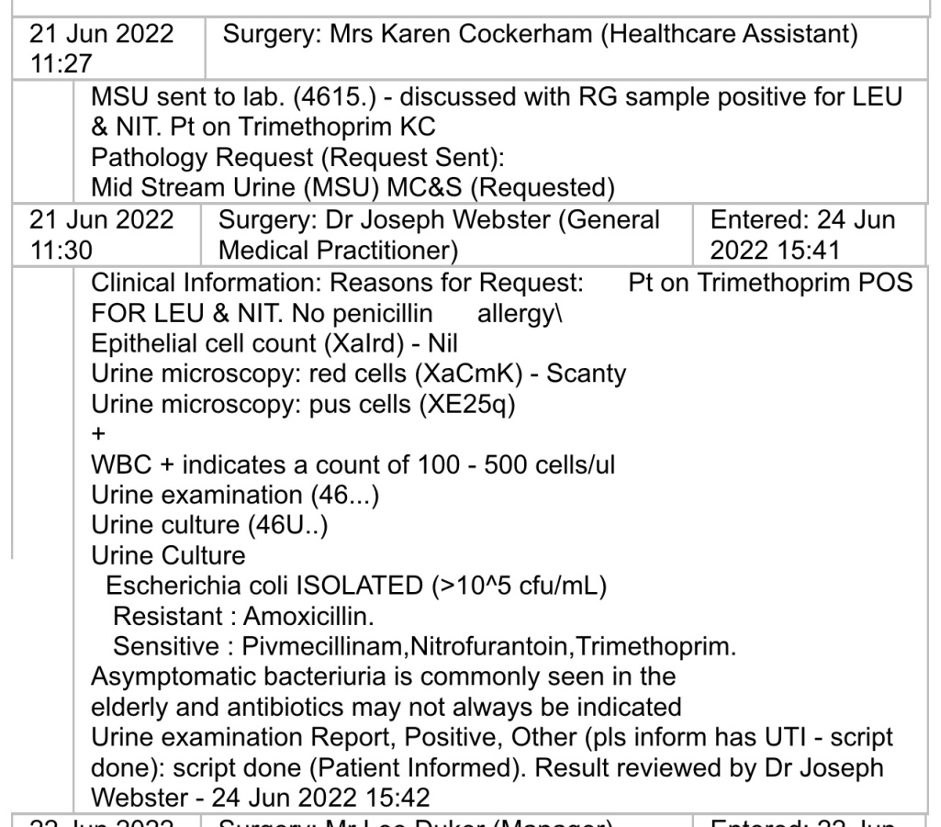
Medical report showing UTI contracted in the immediate aftermath of the call.

Because of a frail health suffered by Mrs X the stress she was placed under by the initial phone call from Joanne Cave induced in her a urinary tract infection which has since led directly to a permanent nocturnal incontinence. This can be seen in the above medical report. The UTI was contracted immediately following the phone call as a result of worry and anxiety caused by it.

Above is an extract from the GPโ€™s medical report showing this UTI. As stated during this call Cave attempted to question Mrs X about legal proceedings, putting her to great distress and anxiety.

As a result of this a complaint was made to Social Care Complaints at Wakefield District Council. The council acted immediately on this complaint By deciding to ignore it and refusing to take any action.

However Joanne Cave herself was made aware of the terms of the complaint by Social Care Complaints and attempted to contact Mrs Xโ€™s GP to determine the extent of the urinary tract infection caused by her oppressive and distressing phone call.

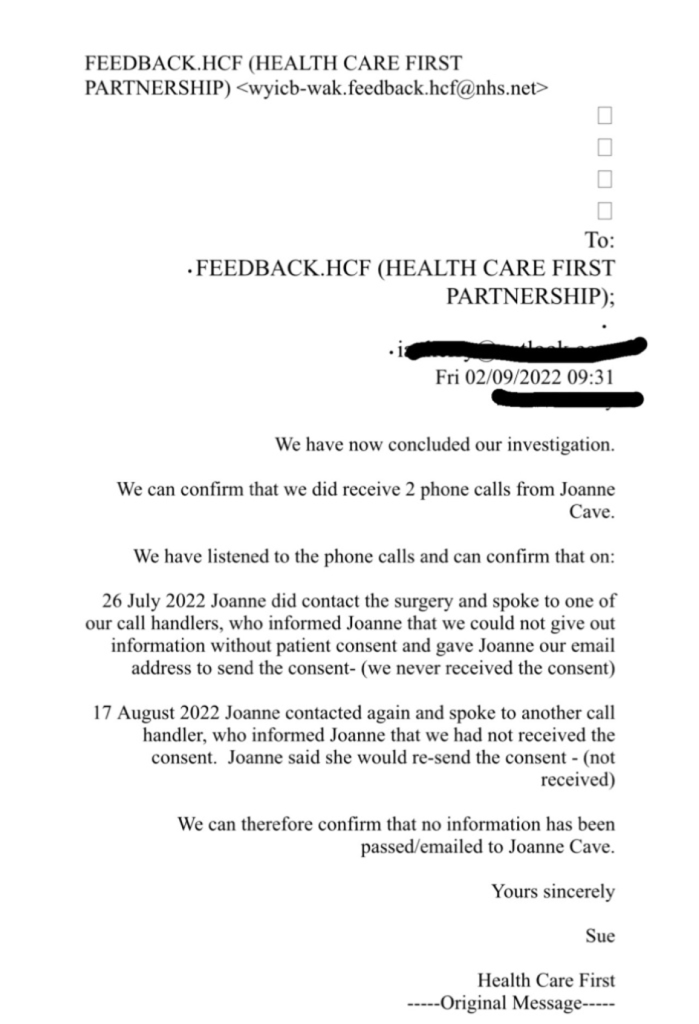
Email from the GP practice confirms no data was passed to Joanne Cave.

It is clear from the data above that social worker Joanne Cave attempted to obtain information on the medical situation regarding the UTI from Mrs Xโ€™s GP.

However this was not obtained as Cave failed to obtain or to supply copies of any form of authority and indeed no authority to access her medical records was given by Mrs X.


What are the significant errors in Caveโ€™s statements to the court?

 Cave tactically lies in her statement and claims the contact with the surgery for help came 31.5.22.

The medical record show the matter was actioned by a GP on 24.5.22. This is to minimise her involvement in the UTI contracted by Mrs X. There is no other reason Cave would have miss-reported the date of the call for help by Mrs X to the GP.

 Cave purposefully states that Mrs X was seen in the surgery. This is clearly incorrect.

 Cave claims she emails the surgery twice.

This is not the account given by the surgery. They do not state an email was received. Instead they explicitly state no email was not received. Cave claims they were emailed twice. No copy of any consent was received by the surgery. This is clear.

 Cave seems to claim asking the surgery to contact Mrs X on her behalf.

The surgery did not make contact with Mrs X or relatives in respect of any matter related to Caveโ€™s call to them.

 The dates of calls etc. given in the surgery email and Caveโ€™s statement are also inconsistent.


The content of the GP email seen above are clear on this. Joanne Cave appears to have acted to mislead The High Court.

The issues are now clear. Joanne Cave sought to mislead the Court in respect of information passed over from Mrs Xโ€™s GP.

There are numerous claims across each of Caveโ€™s two statements to The High Court regarding dates of calls with the GP and data passed over. Invariably these claims seek to put the date of the UTI contracted outside of the timeframe around the call made by Cave to Mrs X.

But regardless of the distress and medical effects caused by the first call a second call from Joanne Caveโ€™s supervisor Mehmun Nessa was made in July 2022 and then a further call from Cave herself in August. A statement provided in proceedings by Cave makes is clear Wakefield Social Services are aware of the distress this places on Mrs X.

In statements to the High Court Cave have sought to mislead regarding information passed over by the GP surgery. That the surgery is clear that no information was passed over and no forms of authority were returned.

Joanne Caveโ€™s assertions in her statements regarding data passed over by Mrs Xโ€™s GP are therefore total fabrications.

Recordings made by the GP surgery confirmed this, and the surgery itself confirms that no data was passed over to social worker Joanne Cave.

Itโ€™s clear then that Joanne Cave has misled the court in her statements. This amounts to perjury, misconduct in public office and an attempt by Cave to absolve herself of any responsibility for inducing in Mrs X a urinary tract infection in May 2022.

That anyone should lie in a statement in court is a serious matter. Any person doing so has committed perjury and is liable to find themselves in contempt of court for such behaviour. Generally we would expect that anyone acting as a social worker, who has regular and frequent contact with the vulnerable, the confused and the easily harmed should hold themselves to higher standards.

In this matter Joanne Cave rang Mrs X in May 2022 to attempt to obtain information which was related to legal proceedings. This is clearly not her job as a social worker but Mrs X was more likely to โ€œlet her guard downโ€ with such a person than if a solicitor called. In order to be able to discuss these mattes with Mrs X Cave began the conversation on a separate matter, discussing any care that Mrs X may want and her medical needs. Joanne Cave then began to broach the subject of civil legal issues causing Mrs X distress and anxiety. This a direct cause of a UTI and subsequent lasting nocturnal incontinence.

Mrs X is currently therefore worse off medically and in terms of her health and well-being as a result of contact with Wakefield Social Services.

In happier days a Social Worker would not lie to a court in order to try to cover up the fact of their own misconduct toward a client.

These are not happy days. These are days in which people who work for large organisations will lie, conceal, dissemble and manipulate in order to cover up facts around their own professional misconduct and incompetence.

Joanne Cave, Social Worker for Wakefield District Council has been thoroughly and completely caught out on this matter.

Will we have to wait too long to see the effect of any internal investigation into the provision of knowingly incorrect data in court proceedings by Wakefield District Council? An internal investigation as been requested but those familiar with this Councilโ€™s propensity for dissembling, hand-wringing and wrangling would be wise not to hold their breath.


Schoolboy Error by Senior Judge Helps Sex Offender

I have previously spoken on this blog about judicial office holder Mr. Justice Lavender and his limitations as a judge.

This can be found at: https://legalbabble.law.blog/2021/06/11/dirty-tricks-in-the-high-court/

Nicholas Lavender, sometimes called The Honourable Mr. Justice Lavender.

These include a tendency to support the state, and other judges, wherever possible even in the face of overwhelming data that the evidence against a member of the establishment or public body might be correct.

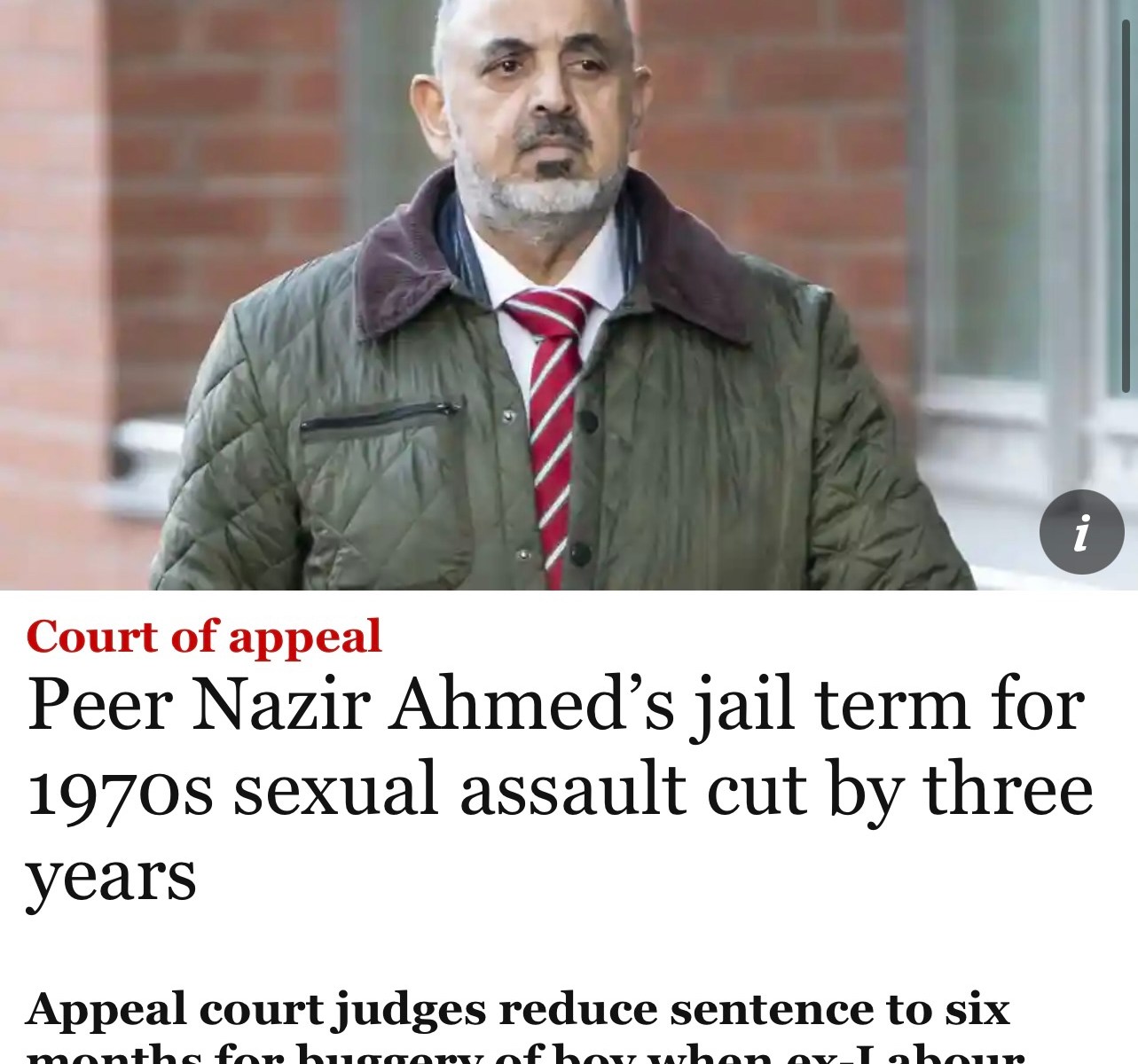
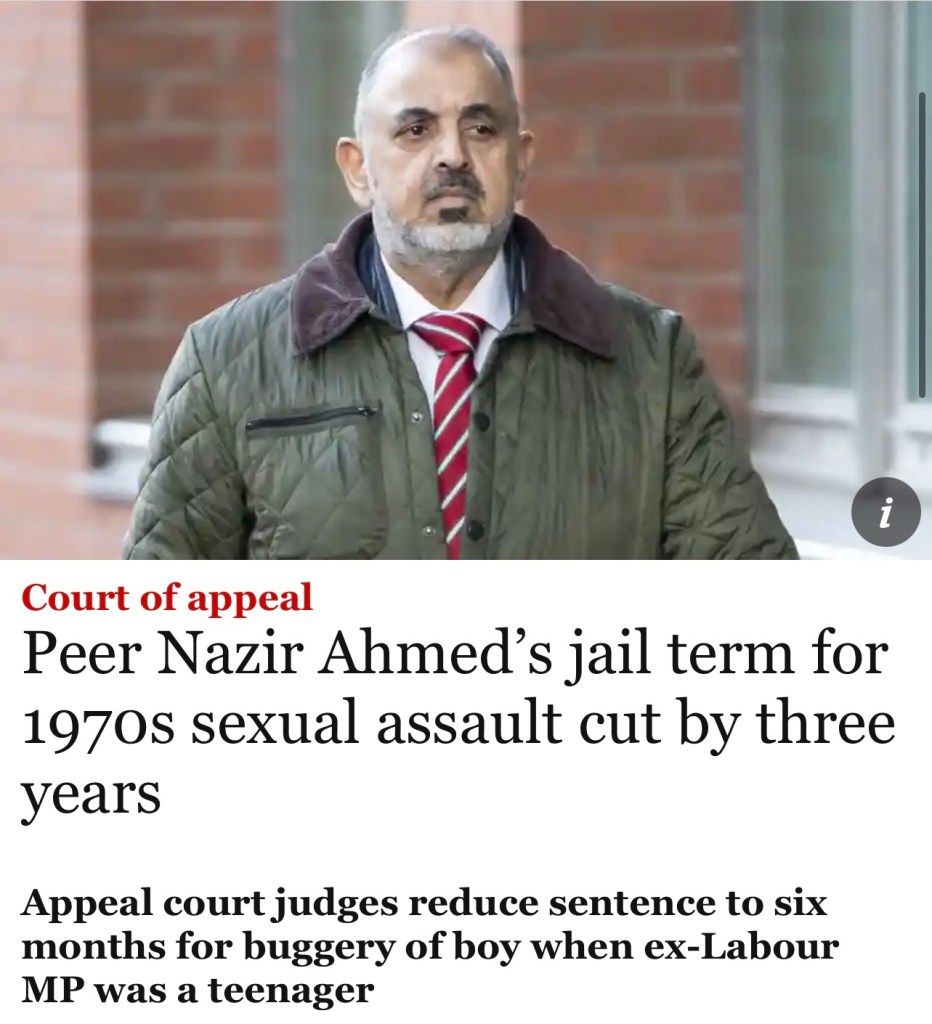
Now, Mr Justice Lavender has been publicly humiliated by judges at The Court of Appeal over his sentencing of former Labour politician Nazir Ahmed.

Hereโ€™s how they seemed to have happened, according to an article in the Guardian newspaper. https://www.theguardian.com/law/2023/mar/17/peer-nazir-ahmeds-jail-term-for-1970s-sexual-assault-cut-by-three-years

The simple fact is that the correction made by the Appeal Court judges is over matter that Mr Justice Lavender would have been well aware of at the point of sentencing.

However, it would seem that Nicholas Lavender was more interested in pontificating during sentencing and giving his opinions regarding Ahmedโ€™s offending than he was paying attention to the correct sentencing guidelines and requirements on his position as judge as set out in law.

It mustโ€™ve irked Nicholas Lavender that he had to sentence effectively a member of the establishment when Lavender spends so much of his judicial career supporting the establishment and covering up the effects of their misdeeds.

However, itโ€™s disturbing to know that the little frisson of joy Lavender had when sentencing blinded him to the requirements to properly sentence the offender for the offence committed.

Given that this is a schoolboy error can it be inconceivable that there will be additional future appeals made in cases sentenced by Lavender, who may have become overexcited in other cases and overlooked clear issues that would reduce the sentence?

Watch this space!

Evading Scrutiny – West Yorkshire Combined Authorityโ€™s problem with the truth

You will be advantaged by learning four things from this blog entry:

  1. The means by which police force’s skew complaint investigations in their own favour. 
  2. How local Mayor’s office’s deliberately mishandle appeals regarding how police have handlined a complaint. 
  3. How the Mayor’s office then themselves avoid accountability for their behaviour. 
  4. The degree of contempt with which all of the above hold the public.

The issue concerns a mishandled complaint to West Yorkshire Police, then subject to an appeal to West Yorkshire Combined Authority Policing and Crime office. The appeal to WYCA was actioned so poorly as to amount to an unacceptable breach of standards and so a complaint was made about this. That office’s Jane Owen then arguably commits misconduct in public office with a misleading response designed to avoid any accountability for West Yorkshire Combined Authority.

Prior to reading this blog entry you may wish to look at the other post regarding how West Yorkshire Combined Authority deflects complaints made about itself and minimises complaints made about West Yorkshire Police. This can be found at:

Well it appears that little has been learned from that prior matter and appeals to the Combined Authority that West Yorkshire Police have mishandled a complaint made are still subject to evasion and avoidance by the office of Deputy Mayor Alison Lowe, who has ultimate responsibility for the mishandling of the appeal.

Alison Lowe, Deputy Mayor and the person responsible for policing issues at West Yorkshire Combined Authority.

Here’s how this happened in this specific instance… 

A complaint was made to West Yorkshire Police Professional Standards Department (PSD). The result of this was the usual lazy evidence-free shonking off of the complaint. The matter was referred to the Deputy Mayor’s Office at West Yorkshire Combined Authority who deliberately or accidentally failed to spot where PSD skewed their complaint investigation. 

There are a number of investigative criteria for the Deputy Mayor’s office to follow.

These are:

[Whether due regard was given to relevant guidance]

In this matter reference was made in the PSD or Deputy Mayor’s responses to College of Policing guidelines and how these were supposed to have been followed. The Deputy Mayor’s Office failed to locate the College of Policing Guidance to compare the outline of how police should have behaved in the incident subject to the complaint with objective standards.

The response of PSD was not set out in a format that showed a correct formal investigation had taken place. This was ignored by the investigator for the Deputy Mayor, Karen Gray. 


The next line of investigation missed by Karen Gray was:

[Whether reasonable lines of enquiries were undertaken to be able to provide a reasonable and proportionate outcome] [Where any aspects of your complaint were not addressed, or any lines of enquiry were not pursued, whether there were sound reasons given for this]

Neither the Mayor’s Office nor West Yorkshire Police made any enquiries with third party witnesses to establish what happened. 

In similar prior incidents it is known that and attempt has been made to contact witnesses by PSD, but not in this matter.

Again this shows that the standards outlined above in regards to the following of reasonable lines of inquiry have not been undertaken by PSD. The Deputy Mayor’s Office failed to consider this matter. 


[Whether enough information was given to the complainant to address the complaint and support the outcome]

PSD failed to respond to a request for information in their complaint response. Again the Deputy Mayor’s Office fail to spot this. Here a potentially significant breach of established protocol at the incident complained of has not been addressed by PSD & the matter has been ignored in the appeal to the Combined Authority.


[Where any aspects of your complaint were not addressed, or any lines of enquiry were not pursued, whether there were sound reasons given for this] 

The initial response of PSD failed to reply to the issues raised in the original complaint. This was again not addressed or spotted by Karen Gray in her appeal investigation. And the format for a formal, structured complaint response from PSD was not used.


[Whether reasonable lines of enquiries were undertaken to be able to provide a reasonable and proportionate outcome] 

The Deputy Mayor’s office failed to consider that the actions of the officers complained of forms a pattern of behaviour from West Yorkshire Police. 

In short then the appeal investigation by West Yorkshire Combined Authority’s Karen Gray was the usual mix of evasion of issues that she would have to find against police. Combined with a total failure so spot the ways in which police had skewed their own investigation to favour themselves.


A complaint was made about the exceptionally poor service provided in the appeal investigation by Karen Gray. 

This was responded to by Jane Owen, Casework Officer at West Yorkshire Combined Authority Policing and Crime office.

The response was:

Having carefully considered all your complaint points, I have concluded that this is not about the service this office has provided but rather is about how West Yorkshire Police handled your complaints CO-1490-22, CO-3251-20 and CO-2771-21 and is also about the outcome of the review of CO-1490-22 which was provided to you by Karen Grey on 20 October 2022. 

This is clearly outright mendacity. The complaint was clearly directed at Karen Gray’s seeming inability to be able to conduct a proper investigation and avoidance of consideration of key issues within the single complaint raised of poor service in this matter.

It is also an outrageous attempt to deflect any investigation into the very poor service standards at West Yorkshire Combined Authority Policing and Crime office. This is the kind of response provided when an organisation knows full well that their behaviour would not stand up to any form of scrutiny. 

Jane Owen goes on to state: 

As you are aware, the statutory guidance does not make provision for review outcomes to be challenged through the complaints process and consequently, if you wish to challenge the outcome of Karenโ€™s review of CO-1490-22, you should consider seeking independent legal advice. 

This is also clear misdirection and also untrue. The link seen above details the complaint investigation into a prior mishandled appeal to WYCA carried but by Jane Owen’s colleague Julie Reid.

There is an offence in law of misconduct in public office. Attorney General’s Reference No 3 of 2003[2004] EWCA Crim 868. 

The offence is committed when: 

  • a public officer acting as such; 
  • wilfully neglects to perform his duty and/or wilfully misconducts himself; 
  • to such a degree as to amount to an abuse of the public’s trust in the office holder; 
  • without reasonable excuse or justification. 

Let’s pause a moment and consider the overall picture.

The police failed to investigate a complaint made correctly and in line with their own prior procedures for so doing. When this was referred to West Yorkshire Combined Authority Policing and Crime office as an appeal to their Karen Gray, Gray lets police off the hook by failing to investigate several issues that show police failed to act correctly and in line with The Police Reform Act 2022. When these are pointed out in a complaint her colleague Jane Owen intervenes and outrageously claims that the issues raised as complaints about West Yorkshire Combined Authority Policing and Crime office are not in fact about that office as a means of deflecting any investigation into the suboptimal nature of their appeal investigation.

If you can think of a more blatant effort to conceal a public body’s failings performed in such contemptible way then please let me know. The actions of both Karen Gray in failing to conduct an appeal investigation correctly (not for the first time, it must be said) and those of Jane Owen in attempting to conceal or deny the failure of Gray by refusing to action a complaint amount to misconduct in public office.


You can see a video below of the hot air West Yorkshire Combined Authority spouts about their Police and Crime Plan. None of this concerns efforts to hold Plod to account for misdemeanours.

Outside of the Met West Yorkshire Police is regarded as the most corrupt and incompetent force in the UK.

Turning a Blind Eye. How West Yorkshire Combined Authority Helps Local Police to Evade Accountability.

In this blog post you will learn how local authority organisations tasked with holding the police to account will fail to do so. Because even when there is significant evidence of misconduct on the part of the force, including attempts to suppress a reasonable investigation, the supervisory organisation will ignore this and prefer instead their own tick box review of police misconduct which fails to address or examine the policeโ€™s deliberate mishandling of a complaint.

The issues raised concern West Yorkshire Police and West Yorkshire Combined Authority.

One of the issues we continue to return to in this blog is the inability of supervisory organisations to be able to hold other organisations lower down the food chain to account.

This occurs for a number of reasons. In this matter it is both historically the case that locally based organisations tasked with holding West Yorkshire Police to account are incapable of doing so, but also when such organisations commit an error in their own review of an investigation they ignore the error in any subsequent correspondence. At all stages the emphasis is maintenance of public confidence in the police complaint system, which results in a failure to properly examine and investigate complaints raised with proper rigour.

This matter concerns West Yorkshire Combined Authority and their inability to be able to hold West Yorkshire Police to account when the policeโ€™s Professional Standards Department Standards Dept. fail to properly investigate a complain. Indeed even when they appear to have deliberately scuppered a complaint investigation WYCA do nothing. The authorityโ€™s website states that one of their functions is โ€œholding the Chief Constable to accountโ€ categorically this is not true. When an instance of abuse of power or process occurs WYCA look the other way.

Alison Lowe OBE is the West Yorkshire Deputy Mayor for Policing and Crime (DMPC). She is pictured below. The supervision of the local force is her responsibility and ultimately that of West Yorkshire Mayor Tracy Brabin.

Alison Lowe is currently the person next in line responsible for supervision of police after the local mayor.

But first letโ€™s travel back into the mists of time. 

Prior to West Yorkshire Combined Authority taking over supervision of police complaints in relation to West Yorkshire Police there existed a Police and Crime Commissioner. This was Mark Burns-Williamson.

During his time as police and crime Commissioner for West Yorkshire he proved not only significantly gaffe prone but also incapable of holding West Yorkshire Police to account.

The reason for this inability to hold the force to account is widely known. Burns-Williamson was involved in a messy love triangle in which he wrote an unfortunately worded letter to his rival. This matter was suppressed by West Yorkshire Police DI Simon Bottomley and since then until the end of his tenure in post in 2021 Burns-Williamson would avoid using PCC powers to hold the force to account. He was literally caught by the nuts by West Yorkshire Police who because of their suppression of the complaint about the letter had a significant hold over him. This prevented the Police and Crime Commissioner from fully exercising their reasonable duties in holding Police to account.

The Burns-Williamson inaction figure is available in bearded and clean-shaven variants. Optional dodgy contents of his office safe play set also available!

Burns-Williams time as commissioner was characterised by a series of notorious exposures of misconduct in public office on the part of the organisation he was tasked with supervising. West Yorkshire Police have an international reputation for incompetence and dishonesty practiced even on those in their own ranks and the period of a Police and Crime Commissioner supposedly supervising them was characterised by a new intensity of incompetence, corruption and smearing from all levels of the force.  

Now let us move forward to the present. 

The College of Policing publishes a Code of Ethics, which is routinely ignored and in fact the subject of of humour amongst many police forces. It also provides a series of guides of behaviour and conduct that it deems reasonable for officers to be able to show in the course of their duties. This covers a number of different aspects of policing and is in effect a Code of Conduct broadly similar to The Highway Code in that it provides a structure of behaviour that would give the public confidence they are being policed correctly. The more an officer adheres to what the College of Policing guidelines are in a situation the less likely it is that they will go off on their own tangent and open themselves and their Chief Constable to a charge of misconducting themselves.  

One of these guidelines covers how officers should conduct themselves when undertaking visits to the home of a member of the public. The code is clear in how officers should behave when on home visits.

This isnโ€™t photoshopped.
A lot of modern Plods really are this out of condition!

In an October 2020 visit to a member of the publicโ€™s home two officers of West Yorkshire Police attended. One of them breached the guidance in a clear and obvious way. So clearly in fact that the breach was obvious to all, including the colleague they attended with. This was subject to a complaint to West Yorkshire Police made shortly afterwards.

Complaints to West Yorkshire Police are examined and considered โ€“ although more often than not dismissed on spurious grounds โ€“ by their Professional Standards Department. The logic of allowing police to investigate themselves is perhaps better left to others to explain.

In this matter they did three things to dishonestly skew the complaint in their favour. The three facts below represent a salutary warning to anyone who makes a complaint regarding the police that they will seek to loose evidence not in their favour and misdirect the investigation.

One

A complaint of the breach of the Code was made shortly after the visit. The officers in attendance wore body worn video, which could have proved the substance of the complaint to be factually accurate. But the body worn video was allowed to be destroyed before being viewed by Professional Standards Department at West Yorkshire Police. No attempt to retain the material for viewing was made. Thus the first piece of clear evidence that misconduct occurred on the home visit was lost. Likely deliberately.

Two

Significantly also a witness present at the home address during the visit was not questioned or approached in any way by police investigating the complaint. Again as with the loss of the body worn video footage this likely occurred to skew the process of the complaint investigation in favour of West Yorkshire Police exonerating the officer whose conduct had been highlighted. In the same way police failed to interview the other officer not subject to the complaint of a breach of the Code. Again this is deliberate action to skew the complaint investigation in the policeโ€™s favour.

Three

Then in the most devious manipulation of the complaint process West Yorkshire Police misdirected the complaint by investigating the officer who had not committed the breach of The College of Policing guidance rather than the one who clearly did. This together with the destruction of body worn video footage – which would have proven the complaint was factually sound – and the refusal to approach a witness to the facts are suggestive of an organisation which has attempted to suppress an investigation which would have found against one of their officers.

This is not however a new thing for West Yorkshire Police. Their Professional Standards Department standards department has dozens of different ways of minimising, trivialising, diffusing and reducing a complaint to the point where, however reasonable and valid it may be, the matter will not be investigated or assessed with rigour due to it. The point of this is of course the maintaining of professional reputation.

What price police reputation and integrity? Well at the moment about the same as this old badge goes for on eBay.

The 2021 independent report into the murder of journalist Daniel Morgan and the failure to solve the crime by the Metropolitan Police defined institutional corruption as:

“Concealing or denying failings, for the sake of the organisation’s public image, is dishonesty on the part of the organisation for reputational benefit and constitutes a form of institutional corruption.”

In circumstances large or small the police are prepared to manipulate cynically the complaints system in order to get officers off the hook. And in such situations the need for reasonably effective and careful supervision of police Professional Standards Departments is clear.

However staff at West Yorkshire combined authority specifically the Deputy Mayorโ€™s office, who are tasked with supervision of police complaints where the complainant seeks review, seem to be suffering an unfortunate hangover from the days of Mark Burns-Williamson.

Police failed to find in favour of the complainant. The mishandling of the complaint worked rather well for them. So the matter was referred to the Deputy Mayorโ€™s office at West Yorkshire Combined Authority. This is the next stage in the procedure of the complaints process. 

The matter was initially assessed and investigated by Karen Grey of West Yorkshire Combined Authority. 

And important fact to remember in relation to any complaint that you may refer to such as a Police and Crime Commissioner, a local authority, or The Independent Office of Police Complaints is that the matter that was originally under investigation by the policeโ€™s Professional Standards Department will not be investigated again.  

This means that police can misdirect any complaint made about their behaviour at the initial stages of that complaint and that the later appeals stages will not look for or attempt to correct those errors. The complaints system is being tactically gamed therefore to maintain the policeโ€™s professional reputation. Local authority organisations and IOPC are assisting in this.

The body tasked with review of the Police findings in respect of a complaint will conduct a tick box exercise which is essentially to review if the police have fulfilled their own tick-box exercise within their earlier complaint investigation. There will be no investigation into egregious breaches of procedure or abuse of process.

In keeping with this the investigation of the wrong person was missed by Karen Gray. The destruction of body worn video footage barely warranted a mention and the failure to interview a witness or the other officer present likewise. In short the means by which West Yorkshire Police had skewed the investigation, by dishonest means and to evade finding against one of their own officers for a breach of the College of Policing Code, were ignored by the review process.

This does not in anyway represent effective oversight of the policeโ€™s own handling of complaints. The same personnel who were present when the organisation was the Police and Crime Commissioner up until 2021 have moved to the new Combined Authority / Mayorโ€™s office. Given that the reasons PCC Mark Burns-Williamson was incapable of holding police to account are well-known Iโ€™m forced to ponder what the WYCAโ€™s excuse for the same lamentable lack of diligence is?

The suboptimal nature of the Combined Authorityโ€™s review of the police handling of a complaint, the critical facts of West Yorkshire Policeโ€™s own purposeful mishandling of the complaint in order to draw conclusions that police had handled the complaint in line with their obligations

A further review by Julie Reid, Head of Policing and Crime at West Yorkshire Combined Authority, failed to acknowledge that Karen Grey had made any errors in the handling of the complaint. So in effect then while the original complaint was subject to malfeasance from police, the complaint to WYCA about Grayโ€™s mishandling of the original matter was also covered-up.

The ultimate price of this is paid by the public of course. While police are able to cover up misdeeds with impunity and the review organisation also fails to admit it has failed to spot key errors in its own investigation the standard of policing will never improve

A Culture of Concealment: National Probation Service and Complaint Mishandling

National probation service has a history of apathy, obfuscation of truth, lack of accountability and an unwillingness to learn from its failings.

One of the easiest ways to see this is in the way complaints about NPS services are handled. This is a three stage process.

The initial stage is communication with a personโ€™s probation officer, who will attempt to settle the issue informally. The next step is what is known as a stage one escalation. This is where a formal response is received and the matter investigated by a local office. In this case this is Yorkshire and The Humber Regional Hub which can be found based at West Offices, Station Rise, York.

If issues are still unresolved following this matter moves to a stage two escalation. At this stage, the complaint is examined by a panel made up of people who work for National Probation Service and the results reported back to the complainant.

This procedure for dealing with complaints is outlined in a document in public circulation. This is Probation Service Instruction (PI) 51/2014.

Here is a link to that document:

https://www.gov.uk/government/publications/handling-complaints-pi-512014


I mentioned earlier that NPS has a tendency towards unaccountability, and willingness to learn from its failings.

One of the of the most pernicious aspects of this organisation is the degree to which it will attempt to protect probation officers, and their supervisory staff from the effect of their own misconduct.

Pauline Forbes Williams works for National Probation Service based in York. Her job title is Head of Complaints Team for NPS Yorkshire and the Humber.  

She is effectively the first line of defence for NPS when a stage one complaint is raised. The purpose of her intervention very often is seen in early-stage attempts to get a complaint dismissed without any form of examination and more often on questionable grounds.

It would appear from evidence obtained that the means of her doing this include misrepresenting Probation Service Instructions on handling complaints. For example, she may say that a complaint is time barred from being examined when in fact, no such time bar exists. She may say that a complaint is has already been dealt with in other matter when in fact this is not the case.

All of these are ways and means by which NPS – often with knowing and deliberate dishonesty – seeks to evade proper examination of complaints brought to it.

As a consequence lessons regarding poor service are never learned and the service fails to improve.

It appears NPS donโ€™t like complaints much and this relates back to the matter of lack of accountability and willingness to learn from failings. It may also be the case that NPS is aware that the service provided is in many ways wholly inadequate to the point being on the verge of collapse.

Consequently, there is a massive incentive on the part of NPS to minimise, trivialise, diffuse and fragment any complaints put to it and to do so via any means at its disposal. Even if it means the methods for discontinuance of a complaint are contrary to the duty of care and PI 54/2014 instructions for handling complaints.

Or contrary to the truth, as in this matter.

This brings us back to Paulette Forbes-Williams.

A complainant who we will call Mr X for the purpose of this article made a complaint which was dealt with at stage two. The complainant requested details of the appeal panel, and who sat upon it.

This is not an unreasonable request for information!

The fact that the information was not provided by NPS at the conclusion of the second stage of the complaint response suggests that they were seeking to hide details of who was sat upon the appeal panel, possibly, because there was some conflict of interest or prior knowledge of Mr X by one of the persons sat on the panel that may have prejudiced their opinion and the way they approached the complaint.

The response of Paulette Forbes-Williams is seen below.

So in short the reasons Mr X was not provided with a copy of the names of the appeal panel – according to Forbes-Williams – was because Mr X posed a medium risk to staff.

This is clearly wrong because Mr X obtained a copy of information from National Probation Service around a month prior to the letter seen above from Paulette Forbes-Williams.

Two extracts from this are seen below.

These clearly state that Mr X was not in fact a risk to NPS personnel as stated by Forbes-Williams. That he was classified in fact as a low-risk offender. That the risk presented to probation staff was low and a risk presented to the public was low.

Therefore, in her grounds for refusal to provide the information requested, Forbes-Williams wholly misrepresented the situation in order to deny access to the information.

Itโ€™s reasonable to imagine that prior to issuing this complaint response Paulette Forbes-Williams would have checked the records of Mr X and the level of risk he supposing presented before making such broad comments as appear in the letter.

Or maybe not!

When the facts were put to Forbes-Williams from NPSโ€™ own documents this response was received:

As stated there are clear grounds for why NPS might have sought to withhold information on the composition of the appeal panel from Mr X and it would appear on past form based on evidence seen that Forbes-Williams will utilise any means to avoid either progressing a complaint or providing information.

In any case, it is beholden upon someone whose job title is Head of Complaints to be able to provide the correct information in complaint responses and data access requests and not to act in bad faith to unfairly disadvantage Mr X in the pursuit of information he has requested.

Some hope of that here!

Given Paulette Forbes-Williams, history of malfeasance, misfeasance, and purposeful misconduct in public office in relation to complaint handling I favour, the explanation that the data was knowingly & deliberately withheld forming a breach of Section 77 of The Freedom of Information Act as well as misconduct in public office on the part of Forbes-Williams. S.77 of FOI makes it a criminal offence for a person to do anything with the intention of preventing the disclosure of information pursuant to an FOI request. You can read more about this Act here:

https://www.legislation.gov.uk/ukpga/2000/36/section/77

All quite predictable so far. Youโ€™ll recall the opening lines of this article discussed apathy, obfuscation of truth & lack of accountability.

Hereโ€™s where these factors come into play in relation to this matter.

Lynda Marginson CBE. Presume that stands for Canโ€™t be Bothered Explaining!

Paulette Forbes-Williamsโ€™ supervisor for the purpose of such matters as this is Lynda Marginson CBE. She is the Regional Director for the Probation Service in Yorkshire and the Humber. You can find her on Twitter @lyndamarginson where she relentlessly bangs the drum that all is good in the world of NPS.

The matter of Forbes-Williams misconduct in relation to this and other matters was put to Lynda Marginson. The response as seen below.

Bland assurances that a proper investigation was carried out fall somewhat short of the Probation Service Instructions for how a complaint should be actioned. You will recall that PI 54/2014 for dealing with complaints specify a three stage process. Mr X wrote back to state:

โ€ฆand expressed concerns regarding the rigor of the investigation into Forbes-Williams for what clearly amounts to misconduct to try to retain data. A stage one complaint is supposed to provide some explanation of the means by which a matter has been investigated. In this case it looks likely that with a senior member of NPS being caught out the proper procedure and process has been skipped.

What Marginson has sought to do is to stop the matter proceeding on to being a stage two complaint response by herself deciding that there is no further aspect of this complaint that needs to be examined. You can see for yourself, the paucity of a response given by Marginson and the lack of rigor by which the matter was investigated.

It is clear that the process by which investigations are conducted into complaints about NPS is designed to block any reasonable investigation into a complaint made by such as Mr X by any means possible. Paulette Forbes-Williams being the first stage gatekeeper in that.

However when she is found out for misconduct donโ€™t count on the likes of Lynda Marginson offering appropriate oversight: organisations such as NPS need people like Forbes-Williams to limit, restrict and deny legitimate and reasonable complaints by all means possible. This means someone like Forbes-Williams โ€“ because they are prepared to bend the rules to protect NPS โ€“ must themselves be protected by their immediate superiors when they do so.


Systemic Failures at ICO Exposed

The purpose of ICO – the Information Commissionerโ€™s Office – is to stated on their website to be toโ€ฆ

โ€ฆuphold information rights in the public interest, promoting openness by public bodies and data privacy for individuals.

However when ICO themselves are subject to a data access request they are prepared to break the law regarding such.

Given that ICO is charged with upholding the law in relation to data access requests this evasiveness ensures that they have lost the moral authority to be able to enforce data access legislation when things go wrong.

More damming though is that a recent investigation revealed ICOโ€™s means of investigating disclosure breaches is so weak and inept as to render it futile to raise issues before them.

Put simply hereโ€™s what happenedโ€ฆ

I made a data access request to Wakefield Council. The Council only provided four pages to begin with, then produced more but significantly failed to include the first 53 pages of data from the request, so ICO were informed after the Council had been given ample chance to correct matters.


The original matter put to ICO as a formal complaint was:


The final response is seen attached. Not only has the data requested not been provided but also the Council has directed me to the wrong agency to seek the answers / disclosure wanted. This is clear in the attached PDF. In fact the majority of the questions I am directed to seek answers to elsewhere comprise of information from Wakefield Council that only they have access to. The response of the Council is therefore misdirection as well as a breach of the relevant Act in failing to provide the data requested on 12.4.21.

Therefore I refer this matter to you for assessment on if the Council has fulfilled its obligations in respect of provision of data. The attached Word file contains all correspondence from April 2021 onwards.

Wakefield Council is the preferred workplace of people too inept to survive in a commercial environment.

ICO responded after some months and their Case Officer Rachel Webster stated:

In my view I have fully considered the data protection issues you have raised and in light of the Councilโ€™s response I do not believe there are any outstanding data protection issues that we would want to pursue further with the Council at this time. As I have explained in correspondence to you our role is not to necessarily resolve every aspect of an individualโ€™s complaint to their satisfaction.

My reply to this was sent shortly after, on 30.3.22 and stated:  

There are 54 pages outstanding that have not been produced from a data access request. This is something I have been clear about across this process and the disclosures remain outstanding.  

What proof have the Council shown to ICO that the relevant data has been produced? 

Further that ICO tried to shuffle off responsibility for adjudicating on the data access failure by the Council. Outrageously Webster suggested:

I understanding you are currently taking legal action against the Council and it may be that these issues are resolved as part of that process.

Now hereโ€™s where things get funky.

In my email of 30.3.22 I requested:

It is for ICO to resolve the issues put before it: the Council has failed to produce data as the result of many requests to do so and was in breach of the law in repeated failures to disclose. ICOโ€™s responsibility is to chase such matters and ensure compliance outside of any other process.

And of course I stated:

What proof have the Council shown to ICO that the relevant data has been produced?  

And ICOโ€™s response to this on 7.4.22 was:

We take information provided by organisations in response to data protection complaints in good faith. As a decision by our office is only a view or an opinion rather than a final determination we do not have to request evidence/proof from organisations concerned. In this case the Council believe they have fully complied with your request however it is clear from your correspondence that you disagree that this is the case and the information is outstanding. We have raised your concerns with the Council and we’re satisfied with the Council’s response and that at this time there is no further action for us to take in relation to your case.

Thatโ€™s right. You read that correctly.

ICO does not seek out or require proof from organisations that they have complied with their responsibilities. Indeed in a situation such as this where a member of the public asserts that they have not then ICO will accept the comments of the organisation that they have over and above any evidence that the public has provided.


ICO then attempted to fob me off with some data in response to a request I made. The data was not that which I requested.

I in fact requested all communication between Wakefield Council and ICO. My response to ICO was sent 9.4.22 and stated:

Further that the data supplied does not support comments made in your emails to me about information supplied by the Council to ICO.

ICO claim that the Councilโ€™s attempt at a get-out-of-gaol-free card in this matter was to state that they had a particular defence in law as to why the data had not been provided. The data produced by ICO between them and the Council did not contain this claim from the local authority. So where did it come from? A further data access request was made to ICO for proof that the Council had stated to ICO what ICO claimed the Council had stated.

Simple enough you would have thought. Especially in the light of ICOโ€™s failure to produce the relevant data in copies of correspondence with the Council.

ICO failed to produce this data. I wrote back to state:

Given ICO’s stated position as regulator for data access / information rights issues this is simply not good enough. At a minimum I would expect fulfilment of the data access request made and chased 7.4.22. That such disclosure from ICO should show that ICO has interacted with the Council on the matter of IC-134978-B9K1 and that the Council has responded appropriately back to the matters raised in this complaint.  

ICO shot back with:

Thank you for your email below. I note your comments and can provide the following response. I can reassure you I have considered all the information provided by you and the Council in relation to this case.

This amounts to two failures to provide data requested. In the second instance ICO purposefully fail to address the renewed request for specific data from their office.

Given that the data I provided showed that the Council had clearly withheld disclosure for no legitimate reason it seems odd that ICO should prefer the Councilโ€™s response, especially in a situation in which they appear to have provided ICO with no supporting data.

Itโ€™s a relief to anyone who brings a data access complaint to ICO to learn that, as stated in theur response to me of 30.3.22:

โ€ฆour role is not to necessarily resolve every aspect of an individualโ€™s complaint to their satisfaction. Rather we consider data protection complaints that are brought to us partly in order to identify issues with an organisations information rights policies/procedures.

Which in practical terms means that ICO will ignore issues in complaints brought by the public which it finds irksome to deal with. This may mean that if enquiries with a misconducting organisation are going to be long and drawn-out that ICO will ignore complex aspects of the complaint made. Historically even in matters where there is a significant breach of the law by an organisation ICO also fails to act punitively and instead builds up a file of data on the organisationโ€™s failings.

A case review was requested and completed 22.4.22 by Lead Case Officer Alison Fletcher.

Again this failed to address the issue of the data requested from Wakefield Council to ICO which supported the comments made by ICO, as had all the prior responses from Rachel Webster. A further response from Alison Fletcher also failed to address the issue of the data not being supplied

Does ICO have a specific reason for withholding the data requested? Likely this is a matter of professional reputation. That a full disclosure of the data I requested would show that ICO failed to investigate this matter to a reasonable standard and perhaps that the Council did not provide them with the data ICO claimed they did. This has to be the case since I provided sufficient evidence to show Wakefield Council had breached its responsibility in law to provide all the data I originally requested from them. The sign of a weak investigation is in the reply provided by ICO which stated:

We take information provided by organisations in response to data protection complaints in good faith. As a decision by our office is only a view or an opinion rather than a final determination we do not have to request evidence/proof from organisations concerned

As I mentioned the practical effect of this is that if an organisation claims not to have breached the law then ICO simply accept what the organisation have said without evidence and contrary to any evidence provided by the public, however strong.

This is indicative of ICO being an organisation that is unfit for purpose. You might of course argue that they are functioning perfectly: that one part of the State has acted to deflect and cover the illegality of another.

However it is ICOโ€™s careful avoidance of producing data requested showing what the Council stated to them which suggests most strongly that they are unable to properly police the wild west of data legislation.

Just to recap in relation to the seriousness of the malfeasance from ICO. When data was produced showing correspondence from the Council to ICO nothing supporting the comments claimed to have been made by the Council had been sent to ICO, who then went on to be unable to produce the info from the Council supporting what they say the Council had said.

When the body charged with taking others to task for failure to observe information rights law believes itself to be exempt from such laws โ€“ and likely making up excuses for organisationโ€™s failures – can there be any doubt that ICO cannot remain much longer in its present form?

Service standards from The Information Commissionerโ€™s Office are frankly not very good!

An Easter Miracle!

Only around one in ten complaints made to the police of poor conduct, breach of the College of Policing Code of Ethics etc. are found in favour of the person whoโ€™s complained.

This is because poor, ineffectual and incompetent investigations into complaints are par for the course from police forces. The more misconduct thatโ€™s happening in a force the greater the urgency to suppress public admittance of this by mishandling complaints.

The mantra is โ€œWe investigated ourselves and found nothing wrongโ€. Every police force does this.

As a police force West Yorkshire Police has more to hide than most. Theyโ€™ve an international reputation for corruption and incompetence but also an obsession with maintaining a public image. Consequently obtaining agreement from them about their low standards of policing requires more of an effort than with most other forces.

In this instance however they were banged to rights.

A transcript of a online live chat with an officer left them with no wriggle room. This is proof of why all your interactions with the police should always be recordedโ€ฆ because the first instinct of most police officers when caught out is to lie.

The report made concerned a crime committed in the breach of s.92 of The Care Act 2014 (as amended). Wakefield Council had knowingly as a care provider created false information on a person receiving care in their area. This is a criminal offence under the Act.

Iโ€™ll write more on this in a blog entry one day soon.

Note also the length of the replies given. When police are trying to hide something in a complaint response they avoid discussing the subject, fail to speak to relevant people and avoid issues theyโ€™d find uncomfortable to discuss. Here, as I said, a transcript of the chat means they canโ€™t avoid making a finding against themselves.

It should be noted that police have still failed to investigate this offence reported. So despite an unusual degree of honesty seen below itโ€™s still a case of โ€œbad cop – no donut for youโ€.

I present the Professional Standards Department response in full with a few small redactions.


From: Allen, Gemma <gemma.allen@westyorkshire.police.uk>
Sent: 14 April 2022 07:32
To: XXXXXX
@XXXXXX <XXXXXXXXXX>
Subject: Your complaint to West Yorkshire Police [OFFICIAL]

Classification: OFFICIAL

Dear Mr. XXXXX,

I refer to the complaint that you made to West Yorkshire Police. I am sorry that you have felt dissatisfied with the service offered by West Yorkshire Police on this occasion and, where we can, seek to learn from feedback offered by members of the public.

I can confirm that this matter has been recorded in accordance with the Police Reform Act 2002 under Complaint reference CO-2675-21. Please quote this reference number in any future correspondence regarding your complaint arising from the same matter.

It has been established that your complaint raised the following concerns / allegations. In response, I have made reasonable and proportionate enquiries into this matter and can offer you the following explanation of the enquiries conducted, what facts have been established, the outcome and any proposed action to be taken:  

Complaint 1: Delivery of duties and services

Employee concerned:  Staff member 730037 Maroof

Details of allegation:

You state that the call taker has incorrectly referred you to the council to make a complaint whom you state have committed a criminal offence under The Care Act.

The operator has asked you to provide evidence that the councilโ€™s acts were purposeful and fraudulent however you believe that this should be the role of the police and is not your responsibility.  

Enquiries conducted: 

The details of the Police chat transcript have been reviewed. 

The call taker, staff member 730037 Maroof has been requested to provide a response.

The Department of Health guidance for providers regarding The False or Misleading Information Offence has been reviewed.

I have consulted with The Police National Legal Database (PNLD). 

A request for review has been made to The Force Crime Registrar. 

Facts established: 

The Police chat transcript shows that you have made an allegation to West Yorkshire Police that Wakefield Council have produced a social care document which includes the purported current health situation of a family member which is out of date. You state that your family members health has deteriorated over the past year and yet old records have been used to produce the report. You report that you believe this was an intentional act by a social worker as it was likely to avoid the provision of social care for the patient who would otherwise be identified as having clear social care needs. The chat transcript shows that the call taker, 730037 Maroof sought advice and directed you to make a formal complaint against the council in the first instance. You state to the call taker that the โ€œArticle 16 right to restrict the processing of the data has been applied.โ€

The call taker, 730037 Maroof has responded to your complaint to state that he felt that referring you to the Councils complaints process was an appropriate response at the time. The call taker has expressed his apologies if his assessment of the information was incorrect. 

It has been confirmed that The Care Act 2014 has put in place a new criminal offence applicable to care providers who supply, publish or otherwise make available certain types of information that is false or misleading, where that information is required to comply with a statutory or other legal obligation. The offence is contained at Section 92 of the Care Act 2014. FOMI is a criminal offence and the investigating body for that offence will be the police, conducted in line with the โ€œThe Director’s Guidance On Chargingโ€. The police can pursue all reasonable lines of enquiry. FOMI is a strict liability offence that applies to providers of care services as corporate bodies or partnerships. This means that a prosecutor has to prove that the information was, as a matter of fact, false or misleading, but does not have to prove that there was intent to provide false or misleading information on the part of the corporate body or partnership.

The Police National Legal Database (PNLD) outlines that Section 92 of the Care Act 2004 creates an offence so that providers of health services and adult social care in England, which supply, publish or otherwise make available information that is false or misleading, could be subject to criminal sanctions. The offence applies to a care provider as a corporate body.

92(1) A care provider of a specified description commits an offence if –

(a) it supplies, publishes or otherwise makes available information of a specified description,
(b) the supply, publication or making available by other means of information of that description is required under an enactment or other legal obligation, and
(c) the information is false or misleading in a material respect.

However, it is stated in law that it is a defence for a care provider to show that it took all reasonable steps and exercised all due diligence to prevent the provision of false or misleading information as mentioned in subsection 1. This means that if the Council have already taken reasonable steps to rectify the matter then the offence has not been committed. By taking steps to restrict the data by invoking Article 18 of the General Data Protection Regulation (GDPR) which provides an individualโ€™s right to restrict the processing of the data, they have fulfilled this responsibility. Article 16 of GDPR then covers the rectification of the data.

Detective Chief Inspector (DCI) Fraser from the Force Crime Registrar has reviewed the matter and confirmed that your report is a state based crime therefore the Police only have to record the offence when the relevant โ€œpoints to proveโ€ are made out. Unlike victim based crimes the Police do not have to record these offences at the point they are reported.

Finding: The service level was not acceptable under the circumstances

Rationale: 

The information you have provided on the chat record shows that the matter has been reported to the council and that they have already taken reasonable steps and exercised due diligence in restricting the data. The matter does not require recording or further investigation at this time. 

My enquiries show that Call taker Maroof has attempted to ask reasonable questions during your chat report when he has asked you if you have evidence to prove that it was done purposely and fraudulently. The call taker appears unfamiliar with Police Procedures around reporting of potential state based offences however he is not a Police Officer and could not reasonably be expected to know that the offence of FOMI does not require criminal intent on the part of the perpetrator. The call taker has attempted to seek advice whilst you remained on the chat facility and it appears he has been given information which has led him to make a recommendation that you should firstly report the matter to the council. His assessment would have been reasonable and proportionate under the circumstances if you had not already provided information to suggest that you had already reported the matter to the council. It appears that the matter was not fully understood and that you required further clarification before the chat was ended. It would have been more helpful to your understanding for the call taker to refer you for an appointment with a Police Officer so that the outcome could be fully understood and explained in more detail.

In conclusion, it is considered that learning has been identified in respect of this complaint.

Outcome/Action: Learning from Reflection

Details: An opportunity for learning has been identified which has been provided to the call taker through his direct supervisor.

Complaint 2: Individual behaviours

Employee concerned:  Staff member 730037 Maroof

Details of allegation: You state that the call taker terminated the chat abruptly with no explanation

Enquiries conducted: 

Call taker Maroof has been requested to provide a response. 

The chat transcript has been reviewed. 

Facts established: 

Call taker Maroof has responded to state that due to time passed he cannot fully remember his reasons for ending the chat at the time. After review of the transcript he states that he may have felt that he had advised you what to do and so believed the chat could be closed. It may have been that you had gone offline after receiving his response so he assumed it was completed. He added that he canโ€™t say for sure given the time that has passed but either way he does not think that he gave โ€œno explanationโ€ as he clearly provided advice on what you should do.

The chat transcript shows that the chat was ended 20 seconds after the call takers last response to you.

Finding: The service level was not acceptable under the circumstances

Rationale: 

The outcome of this complaint should be read in conjunction with the information provided in Complaint 1. Although the call taker has remained respectful throughout the chat, it does appear that you had not been provided with a sufficient explanation of the outcome or the opportunity to understand the advice provided. This is believed to be because the call taker did not fully understand the police procedures around state based crime reporting.  

In conclusion, it is considered that learning has been identified in respect of this complaint.

Outcome/Action: Learning from Reflection

Details: An opportunity for learning has been identified which has been provided to the call taker through his direct supervisor

It is considered that reasonable and proportionate enquiries have been made into this matter. The issues you raise in your complaint do not justify criminal or disciplinary proceedings against any officer concerned and therefore the matter has not been considered by the Crown Prosecution Service. 

You have the right to a review of the above decision. Should you wish to request this, please contact the below review body by the 13th May 2022. Please quote the relevant complaint reference number (above) if you request a review. 

Due to the wording of your initial complaint, the review body is: 

West Yorkshire Mayorโ€™s Office for Policing and Crime. Should you wish to request a review, please contact:https://www.westyorks-ca.gov.uk/policing-and-crime/complaints-and-conduct.

Please accept my apology on behalf of West Yorkshire Police for any confusion, inconvenience or distress that this incident has caused, and I thank you for bringing this matter to our attention. I hope the above action taken re-assures you that your complaint has been taken seriously and demonstrates West Yorkshire Policeโ€™s commitment to continuous improvement.

I hope that any future contact you may have with West Yorkshire Police will not be adversely affected by this experience.

Yours sincerely,

PC 1449 Allen

Service Review Team

22566

Professional Standards Directorate

*   Email: Gemma.allen@westyorkshire.police.uk

+ Address: West Yorkshire Police, Professional Standards Directorate, Headquarters, WF1 3QP


Design a site like this with WordPress.com
Get started