My mother is a geriatric and has a series of medical issues. Therefore I need to organise her appointments etc. for her.
Without any political axe to grind here’s what’s happened over one day in my involvement with either the NHS itself or organisations it subcontracts to.
Expensive, incompetently managed and the cause of endless inconvenience.
One.
Continence nurse arrives 20mins late. Actually about four months late we requested a referral in May but the GP surgery failed to pass the referral on.
Consequently we’ve struggled on since May managing the condition on our own with occasional non-effective chase-ups of the practice.
Two.
Letter arrives from subcontracted provider. They want to do an ophthalmologist appointment by telephone. How they’ll be able to spot anything wrong with her eyes by hearing her voice is a mystery.
The letter also insufficiently explains the reason for the appointment and why it’s been requested. Half an hour on hold waiting to speak to the provider to establish need and purpose of appointment.
Three.
Her medication is delivered from the pharmacy.
This is after calling yesterday and being told they don’t accept repeat prescription orders on a Sunday. Guess what? That’s right. Not all medication has been delivered.
Call to pharmacy. Surgery has stopped the repeats on a vital tablet she takes three times a day.
Call to surgery. 40th in queue. They can’t understand why the tablet has been taken off repeat prescription but should be able to get her some more. By Wednesday.
Four.
She’s due a hospital out patient appointment tomorrow but this has been cancelled around 3.30 today. Have to then also cancel patient transport booked one week ago, which was a 45min call on its own.
Ring the hospital as the message was left with my mother who didn’t get all the details needed.
First few times it rings for a while then cuts off. This is standard for the hospital we deal with. Then get through to the wrong person who transfers me back to switchboard.
Finally get transferred to the right department. They clearly don’t like speaking to the public as there’s a voice message encouraging you to email them on an address no pensioner would be able to take down in time or likely spell correctly. Therefore still none the wiser about why the appointment has been cancelled or what happens next. No call back received.
Time taken overall: 3hrs
Cock-up’s occurred: Arguably 3-4
Patience: Exhausted
It’s the poor or non-existent communication that I find most irritating. That the patient’s representative or carer is left to chase up everything as nothing is explained in advance nor are the reasons for things happening. The experience of the NHS is therefore that you suffer the error first, then need to chase it up long before you gain the benefit of any service provided.
A request was made in August 2020 for data from a subdivision of The Ministry of Justice. The response (issued outside the time limits for such in law) stated:
This is actually a two-headed matter. A complaint of poor service thrown in with a data access request for the data which proves the grounds of the complaint are correct and that multiple errors occurred. Needless to say the subdivision ignored the complaint and requested I make the data access request to London, as seen above.
You will see how this letter refers me to Data Access office as being the correct source of the data required. So Data Access were contacted in late September 2020 and the data again requested from them.
Some five months later and several chase-ups by email and Data Access deny they are the source of the data. The data is apparently best obtained from the office I originally wrote to.
There is little that can be said for this game of piggy-in-the-middle except to say that I will not play it.
The source of the apparent information that they cannot fulfil this data access request are unnamed “senior managers” whose details I have requested. Odd how it’s always some unnamed person as the source of an instruction that sends the public on a wild goose chase.
The disclosure team for MoJ are ultimately responsible for the production of data access requests made to sub departments within MoJ. The requests made in mid-2020 are indeed data access requests. They seek specific data and this is clear from the requests themselves. It is the job of Disclosure Team to work with the sub department of MoJ I first communicated with to obtain the data from them and then relay it to me.
It looks very much like both offices are attempting to evade the production of data via a game of piggy-in-the-middle and delay. Unsurprisingly the subsidiary office originally contacted has failed to respond to the initial complaint linked to this data request.
This request has been before Data Access office since September 2020 and has only just received the response of “go back to the start”. Taking this delay in response alone as a single issue would render the handling of the request wholly unacceptable and a breach of the relevant law.
By seeking to frustrate the request in this way The Ministry of Justice has earned itself a referral to The Information Commissioner’s Office.
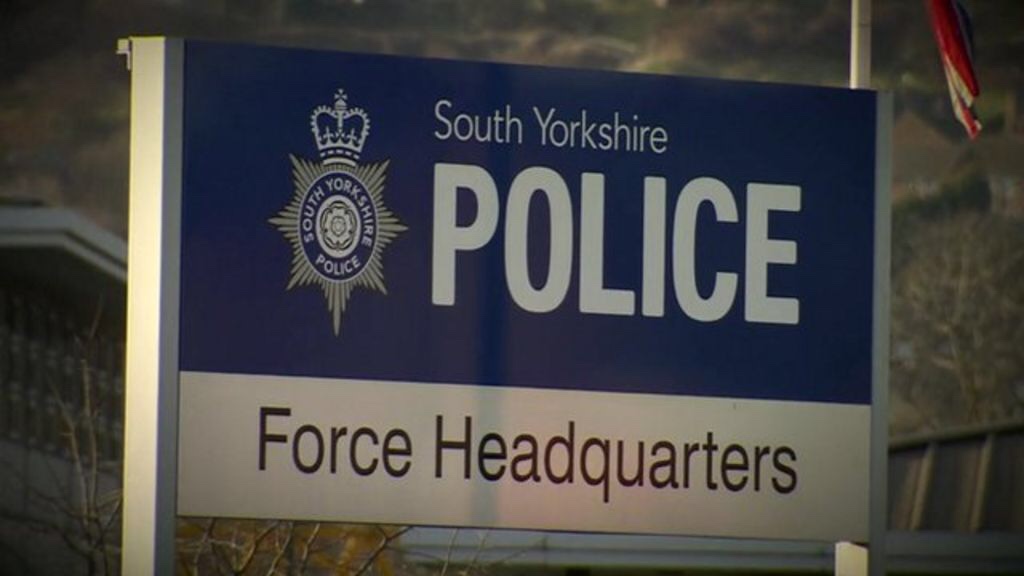
In modern police parlance “cuffing off” a job means to look for a way to avoid dealing with a complaint about a crime made by a member of the public. Shonking means the same thing. South Yorkshire Police is very much focused on internal award ceremonies for its staff and members of the public calling to report criminal offences gets in the way of this. Most inconvenient.
So here’s the story. I had an offence to report on the basis of information that came my way. Having researched the offence and charging guidelines for the same as well as collated sufficient documents to show who was responsible and how I completed the South Yorkshire Police online form. This is their preferred way of contacting you. And so I waited for contact back. And waited. And waited.
Eventually a series of phone calls were made on one afternoon to South Yorkshire Police via 101. The poor handling of the initial report from the webform data and subsequent poor handling of all subsequent contacts are described below.
Basically the webform was ignored. Phone calls to check on the progress of the report of a crime were also consistently mishandled.
From the 1980’s to the present day SYP is mired in scandal.
The basic issues are as follows:
1. A complaint of a crime was made. This was done via the online form for such. That the response from the online form took longer than the 72 hours the website states for any action to be taken in respect of the referral of a crime.
2. That the online form had still not been processed some 7 days later.
This amount to the first effort to “shonk” the job.
3. That from comments made by Professional Standards Dept. at SYP in a later email to me it would appear that this online referral has been “lost”.
4. Following the lack of response to the webform a series of phone calls were made by me on the Tuesday and Wednesday to SYP to establish what was happening in relation to the online referral.
5. That these calls were either cut off when transferred to the appropriate department or else rang out for an exceptionally long period. The time it took to get through to someone was the time of my journey that day from West Yorkshire to Bridlington on the East Yorkshire coast. Some one hour and fifteen minutes.
6. That on eventually speaking to an officer he stated that he had no copy of the online form in front of him but proceeded to dismiss the referral of a crime being committed on the basis that this incident was not a crime and therefore not something that police would deal with.
This is incorrect. I quoted CPS guidance and sentencing guidelines that clearly show the activity reported was a criminal offence.
Most police officers have a very poor working knowledge of the law and are often the worst people to decide if an offence falls into their jurisdiction or not. Or if an offence has been committed in law. Without sight of evidence etc. the officer was additionally on very shaky ground.
7. That the same officer rang me back several minutes later. He had performed a search on my name after our initial conversation and my refuting his comments that the matter complained of was not an offence in law.
8. That his call back to me amounted to harassment and intimidation. His manner during this second call was offensive, uncivil and harassing. Having tried to “cuff / shonk the job off” only to be confronted by a member of the public who knew the law put his fragile and delicate nose out of joint.
Most police officers have exceptionally fragile egos and cannot bear not to have the last word on something. As sites such as the exceptional. ://crimebodge.com show (especially I would recommend their YouTube channel) this can often lead to violence and assault from the officer if a member of the public stands their ground.
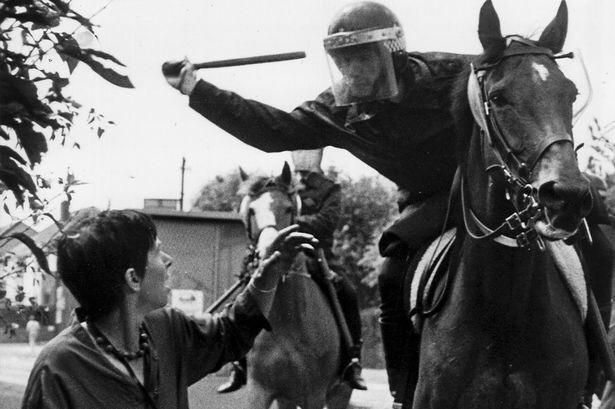
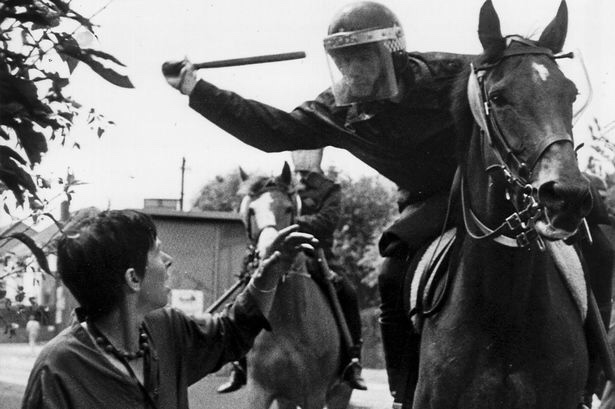
9. That the officer concerned did this solely for the purpose of causing harassment, vexation and distress. On the second call he refused to give his name or service number when asked which is usually indicative of an officer misconducting himself. South Yorkshire Police have plenty of form for this. Ask the miners who were at The Battle of Orgreave: SYP removed their epaulets displaying service numbers so they couldn’t be subject of individual complaints.
South Yorkshire Police are internationally famous for violence and criminal negligence.
That overall the standard of conduct in relation to this matter was sufficient to cause loss of professional reputation, such as it is, for the force. Overall the behaviour described above gave the impression of South Yorkshire Police as being inept, incompetent and evasive.
Later that day is I rang again. This time to make a formal complaint. The College of Policing Code of Ethics has a series of guidelines which had each been breached in the police’s handling of this matter. Not least of these are those related to courtesy and respect. https://www.college.police.uk/What-we-do/Ethics/Documents/Code_of_Ethics.pdf
I was told I would be called back in a few days. However again there was no response.
This matter relates to the following issues in the College of Policing Code of Ethics:
1. Authority, respect and courtesy.
2. Duties and responsibilities.
3. Conduct.
I emailed Professional Standards Department at South Yorkshire Police a few weeks later. The response was initially in terms of my complaint call of a few weeks earlier and stated:
Unfortunately, we are unsure as to who the officer was who spoke with you…
This suggests that the admin systems at South Yorkshire Police are not robust enough or else that they’ve already tried to evade examination of the complaint in the same way as they avoided examination of the original report of a crime. The comment is also vague: do they mean the misconducting officer I spoke to at around around lunchtime or the one spoken to to enter the complaint at 18:30 on the same day?
But it gets worse:
In relation to the online complaint form this does not a appear to have been received by us.
So an additional copy was attached to the response. Neither the original web form reporting a criminal offence nor the complaint form sent by email were received by the force. How many others have been similarly missed by them?
By this point some three weeks had elapsed since this complaint form was sent in to Professional Standards Department and their sobriquet was looking further and further misapplied. The South Yorkshire Police webform auto-generates a copy of the complaint for the public so it is unlikely that a copy was not sent to PSD. The comments they made about not receiving a copy are likely bunkum.
They stated:
If you would like to reply to this email with your initial complaint, we will pass it for assessment and ask our assessors to look into it asap.
So this created a further issue to the complaint: that failure to record the initial complaint call made around 18.30hrs in the evening to SYP via 101 amounts to a further breach of duty. A copy of this call will have been recorded on the Airwave system, which records all incoming and outgoing calls from police stations.
The failure to properly action the issues raised by phone in the evening call amounts to an effort to evade dealing with the complaint from an early stage. The “loss” of the follow up complaint form to PSD is a further effort in this direction.
Matters have now been before Professional Standards Department at South Yorkshire Police for two months without visible progress.
The whole fiasco makes SYP look doubly incompetent in their behaviour in failing to action the original webform, then “cuffing off” the job on the phone.
Then they fail to record and action the complaint made from 18:30hrs on the same day and further claim a follow up communication on the complaint was “lost”.
Heaven help people who actually live in South Yorkshire when it comes to reporting crime or making a complaint to SYP. Because the force’s systems are clearly set up to avoid having to deal with either.
Brief post for today. Well a brief post by the standards of this blog!
In yesterday’s blog post one of the themes touched upon was how The Ministry of Justice had sent data in error to a third party. This was a serious breach of the data subject’s rights and potentially quite dangerous to the data subject as MoJ shared the subject’s name, address, date of birth and financial details.
The post discussed the attempts The Ministry of Justice made to get back at the accidental recipient of this data which included a false complaint to police to ensure he was arrested, although fully aware police would not be able to bring charges as no offence had taken place.
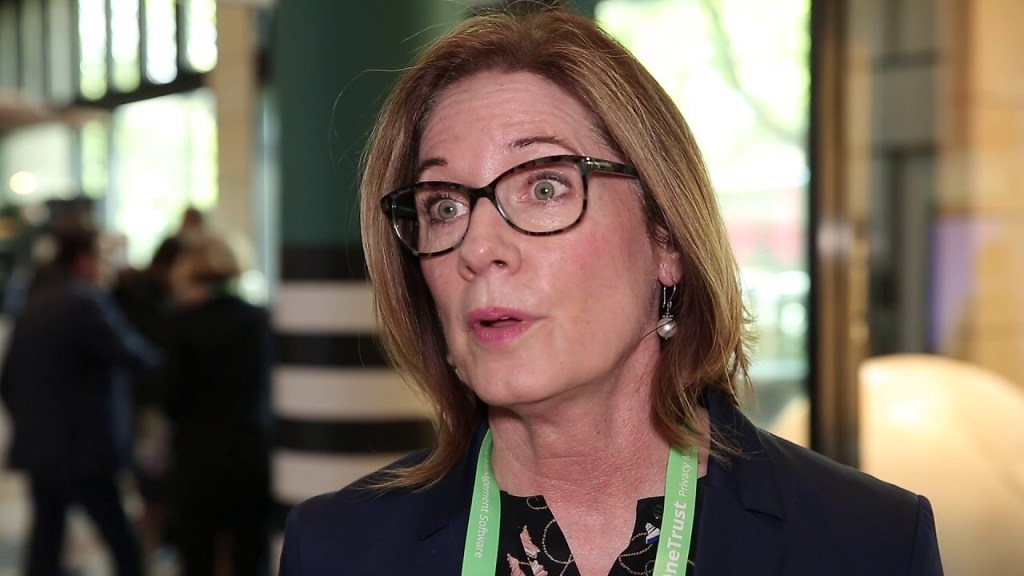
Elizabeth Denham, UK Information Commissioner
The Information Commissioner’s Office (ICO) is a quasi-Governmental organisation reliant on public funding. Their stated aim is to enforce data access rights of people in the UK and also to adjudicate on data protection issues: in other words to monitor that your personal data held by companies and Government organisations is kept safe.
So we can naturally expect ICO to fully comply with data protection legislation and be extra specially careful with their own handling of other people’s data.
Can’t we?
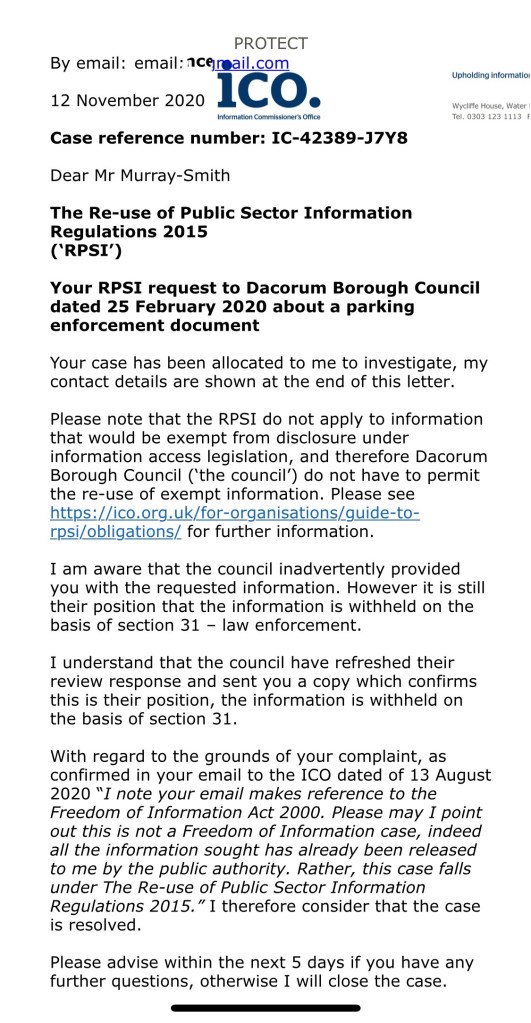
In a delicious piece of timing just after I’d written yesterday’s blog post about The Ministry of Justice emailing data to the wrong person ICO go and do the same by sending a letter in error to me which was intended for a third party, just like the error MoJ made!
I have of course deleted the email address of the intended recipient of this letter.
It seems that Dacorum Borough Council also suffers from the problem of email incontinence as they appear to have sent the intended recipient of the ICO letter some information despite claiming an apparent exemption over the data sent!
The ICO letter states:
I am aware that the council inadvertently provided you with the requested information.
Significantly the letter also states the grounds for the council attempting to withhold this data (but clearly not managing to) were under section 31 – that is a claimed exemption from disclosure as the data is related to law enforcement.
One might hope the ICO takes appropriate action against itself for this data breach.
In all honesty I wouldn’t hold my breath.
ICO’s present logo. Strange use of lower case letters and an inappropriate full stop.
Like many of the UK’s regulatory bodies such as The Parliamentary and Health Service Ombudsman or The Local Government Ombudsman the ICO has selective blindness in relation to even large scale and ongoing breaches of GDPR and The Data Protection Act.
Ultimately the best most complainants can hope for is a letter from the ICO informing them that their complaint has been upheld and that ICO will keep a record of the data protection concerns logged regarding the data controller complained of. This does not of course produce the data that has been requested! Occasionally ICO will assist by instructing the data controller to supply data if it is being clearly withheld. However if the data controller is sufficiently obstreperous there exists enough “trapdoors” in the relevant legislation that a (often misapplied) exemption will be used to avoid supply of the data.
The efforts organisations used to evade production of data include the mishandling of applications such as considering a subject access request for personal data as if it were a Data Protection Act request and so rejecting it without giving sufficient grounds to the requester. A further trick is to label everything as the personal data of a third party and thus exempt from disclosure: on this basis large scale parts of any data disclosed can be redacted (meaning blanked out).
In these circumstances ICO becomes like a turtle placed on its back: it spins around to no real effect.
Let’s look at the wider picture. A key thing to recall about most of the non-departmental public bodies supposed to supervise how the law or organisations work in Britain is that they rarely do. These supervisory bodies often exist instead to confirm the decisions made by the lower organisation or as a way to diffuse complaints safely and without litigation. Having said this ICO is better than most and does occasionally pursue misconducting organisations through the courts. But due to the pressure of time and resources they also habitually pursue only those organisations who have committed a blatant breach of the law which has been made public, or who would be less likely to defend themselves in court and thus drive up ICO’s expenses. The majority of the fines issued in successful judgments are not paid.
One example of this willingness to turn a blind eye on the part of ICO: a 2017 significant data breach by the NHS involving some 50,000 patients medical records – the largest loss of data in NHS history – was not prosecuted by ICO. This is a matter I will comment on in detail in a blog another day.





 Legal Babble